

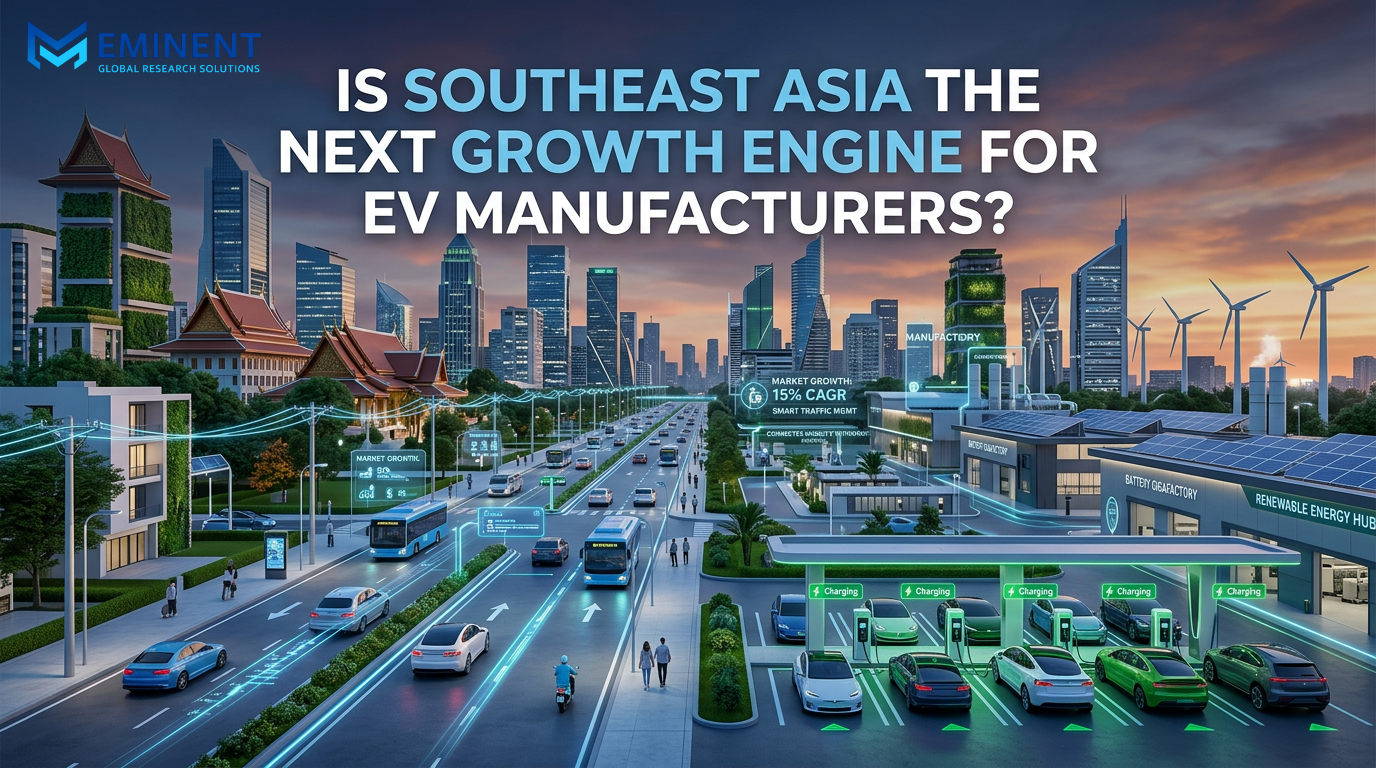
The global electric vehicle (EV) industry is entering a new phase of growth. While North America, Europe, and China have dominated the first wave of EV adoption, manufacturers are increasingly looking beyond these established markets to sustain long-term expansion. Among the emerging opportunities, Southeast Asia is attracting significant attention from automakers, battery producers, and mobility technology providers.
With a population exceeding 680 million, rapid urbanization, rising middle-class income, supportive government policies, and increasing environmental awareness, Southeast Asia is positioning itself as one of the most promising growth markets for electric mobility.
However, market potential alone does not guarantee success. EV manufacturers must navigate diverse regulatory environments, infrastructure challenges, consumer preferences, and competitive dynamics to establish a sustainable presence in the region.
The question is no longer whether Southeast Asia will participate in the EV revolution—it is whether the region could become the next major strategic growth engine for global electric vehicle manufacturers.
Why Southeast Asia Is Gaining Attention
For many years, EV adoption in Southeast Asia lagged behind more mature automotive markets due to limited charging infrastructure, high vehicle costs, and lower consumer awareness.
Today, the situation is changing rapidly.
Governments across the region are introducing incentives designed to accelerate EV adoption and attract investment in local manufacturing. Several countries are positioning themselves as future hubs for electric vehicle production, battery manufacturing, and supply chain development.
The region also benefits from strong economic fundamentals:
- Growing urban populations
- Rising disposable income
- Expanding middle class
- Increasing digital connectivity
- Strong demand for mobility solutions
These factors are creating favorable conditions for long-term EV market growth.
Government Support Is Accelerating Market Development
Government policy remains one of the strongest drivers of EV adoption globally, and Southeast Asia is no exception.
Countries across the region have launched initiatives that include:
- Tax incentives for EV purchases
- Reduced import duties
- Manufacturing subsidies
- Charging infrastructure investments
- Battery ecosystem development programs
Governments view EVs not only as an environmental solution but also as an opportunity to attract foreign investment, create high-value manufacturing jobs, and strengthen industrial competitiveness.
This policy support is encouraging both established automakers and emerging EV brands to expand their presence in the region.
For manufacturers evaluating international growth opportunities, policy alignment significantly improves market attractiveness.
A Growing Middle Class Creates Demand Potential
One of Southeast Asia’s most compelling advantages is its expanding consumer base.
Economic growth has led to rising purchasing power across many markets, creating new opportunities for vehicle ownership.
Consumers are becoming increasingly receptive to:
- Sustainable transportation
- Smart mobility solutions
- Connected vehicle technologies
- Lower operating costs
- Digital-first ownership experiences
While affordability remains an important consideration, growing awareness of fuel savings and environmental benefits is improving consumer interest in EVs.
Manufacturers that can deliver cost-effective models tailored to local market needs may benefit significantly from this transition.
The Battery Supply Chain Advantage
Southeast Asia occupies a strategically important position within the global EV supply chain.
The region possesses valuable natural resources essential for battery production and is becoming increasingly important in battery manufacturing investments.
As global competition for battery materials intensifies, supply chain localization is becoming a strategic priority for automakers.
Benefits of regional supply chain development include:
- Reduced transportation costs
- Improved supply security
- Faster production timelines
- Lower geopolitical risk exposure
- Enhanced manufacturing flexibility
Companies that integrate manufacturing and supply chain operations within Southeast Asia may strengthen long-term competitiveness while supporting local economic development goals.
Infrastructure Remains a Critical Challenge
Despite strong growth potential, infrastructure remains one of the most significant barriers to widespread EV adoption.
Charging networks in many Southeast Asian markets are still developing and often remain concentrated in major urban areas.
Challenges include:
- Limited charging station coverage
- Grid capacity concerns
- Charging speed limitations
- Rural accessibility gaps
- Infrastructure investment requirements
Manufacturers cannot rely solely on vehicle sales strategies.
Successful market expansion will require collaboration with:
- Governments
- Utility providers
- Charging network operators
- Technology companies
- Real estate developers
Companies that actively contribute to ecosystem development may gain stronger market positioning and accelerate consumer adoption.
Increasing Competition in the Region
The opportunity presented by Southeast Asia has not gone unnoticed.
Global automakers, regional manufacturers, and emerging EV startups are all competing to establish market share.
Competition is intensifying across several areas:
- Vehicle pricing
- Technology innovation
- Manufacturing investments
- Dealer networks
- Charging ecosystems
- Brand positioning
Chinese EV manufacturers have been particularly aggressive in expanding throughout Southeast Asia, leveraging competitive pricing, strong battery capabilities, and rapid production scalability.
This increasing competition means that success will depend on more than simply entering the market.
Manufacturers must develop localized strategies that reflect consumer preferences, regulatory requirements, and market-specific mobility needs.
Localization Will Determine Long-Term Success
One of the most important lessons from previous automotive expansion efforts is that localization matters.
Consumer preferences vary significantly across Southeast Asia’s diverse markets.
Factors influencing purchasing decisions include:
- Vehicle size preferences
- Price sensitivity
- Driving conditions
- Infrastructure availability
- Brand perceptions
- Financing accessibility
Companies that adapt products and business models to local market realities may outperform competitors relying on standardized global strategies.
Localization extends beyond vehicle design.
Successful manufacturers often invest in:
- Local production facilities
- Regional partnerships
- Market-specific marketing campaigns
- Customized financing solutions
- After-sales service networks
These investments help build trust and strengthen long-term customer relationships.
The Future of EV Growth in Southeast Asia
The next decade could prove transformative for Southeast Asia’s automotive sector.
As infrastructure improves, battery costs decline, and government support continues, EV adoption is expected to accelerate significantly.
The region offers a unique combination of:
- Strong demographic growth
- Expanding consumer demand
- Strategic supply chain advantages
- Supportive industrial policies
- Emerging manufacturing capabilities
For global automakers facing increasingly competitive mature markets, Southeast Asia may represent one of the most attractive expansion opportunities available today.
However, capturing this opportunity will require more than product availability. Success will depend on strategic market entry planning, ecosystem development, localization capabilities, and long-term investment commitment.
For industry leaders, the key question is not whether Southeast Asia will become an important EV market—but which companies will establish leadership positions before the market reaches maturity.
As the global transition toward electric mobility accelerates, Southeast Asia is emerging as one of the most important regions to watch.