

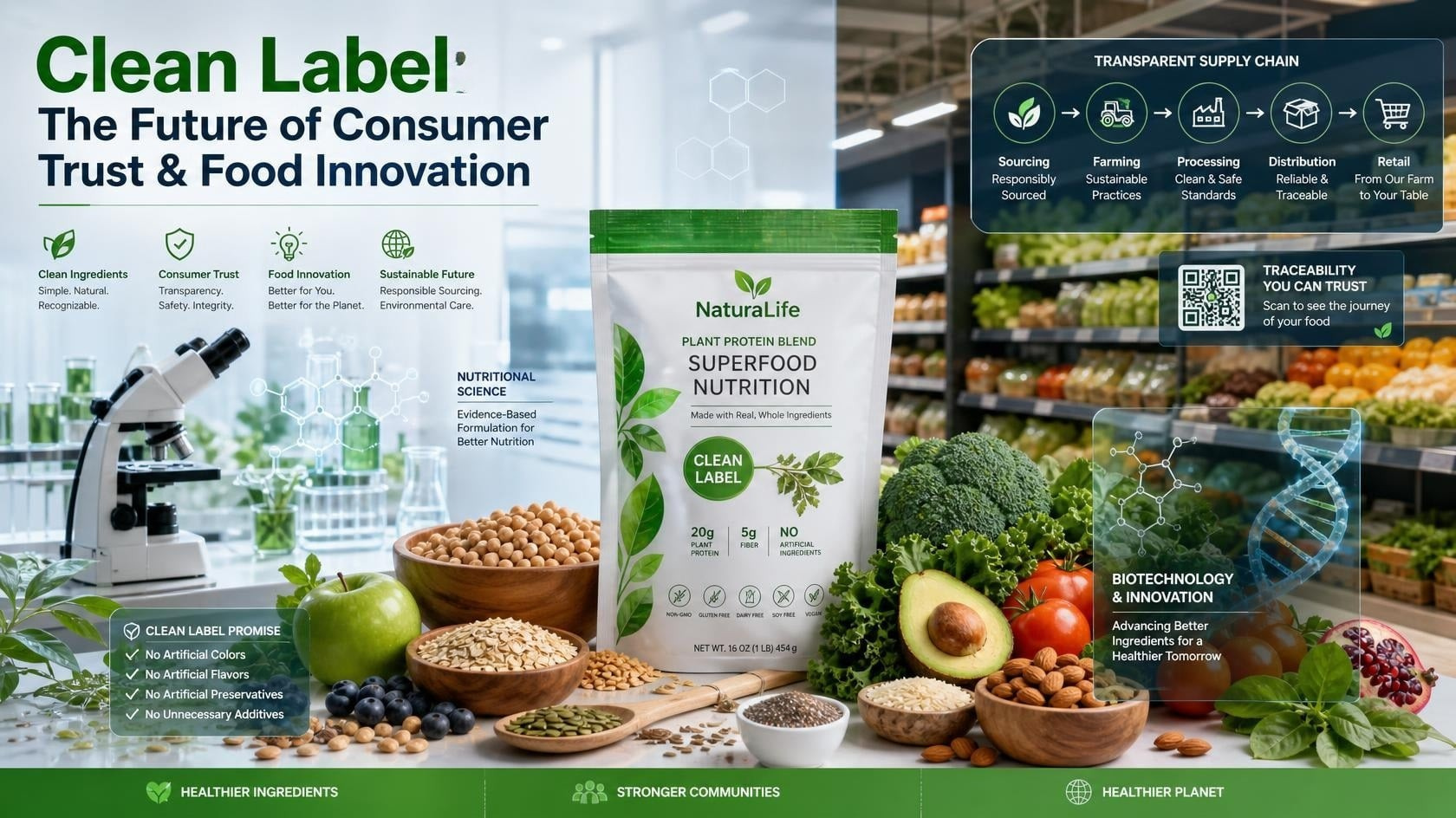
The global food and beverage industry is undergoing a profound transformation, driven by a consumer base that is more informed, health-conscious, and ingredient-aware than ever before. What began as a niche preference for products with simple, recognizable ingredients has evolved into one of the most influential movements shaping product innovation, brand strategy, and supply chain decisions worldwide.
The clean label movement is no longer just about removing artificial colours, preservatives, or additives from food products. Today, it represents a broader consumer expectation centered on transparency, authenticity, sustainability, and trust. Consumers want to understand not only what is in their food but also where ingredients come from, how they are processed, and whether they align with their health and environmental values.
As governments tighten food regulations and retailers demand greater transparency from suppliers, clean label products are becoming a strategic imperative rather than a marketing trend.
For food manufacturers, ingredient suppliers, and consumer brands, the critical question is no longer whether clean label matters it is whether they can innovate fast enough to meet evolving consumer expectations while maintaining product performance, affordability, and scalability.
The Evolution of Clean Label
The clean label movement initially emerged from growing concerns about artificial ingredients and highly processed foods. Consumers began seeking products with shorter ingredient lists and familiar kitchen cupboard ingredients.
Over the last decade, however, clean label has expanded into a much broader concept encompassing:
- Ingredient transparency
- Natural formulations
- Minimal processing
- Sustainable sourcing
- Ethical production
- Non-GMO ingredients
- Plant-based alternatives
- Functional nutrition
Today’s consumers associate clean label with trust rather than simply “natural” ingredients.
Brands that clearly communicate ingredient sourcing, manufacturing practices, and scientific validation are increasingly viewed as more credible and reliable.
This evolution has transformed clean label from a packaging claim into a comprehensive brand strategy.
Consumer Behaviour Is Driving Market Growth
Health and wellness continue to be major purchasing drivers across global markets.
Consumers are actively reading ingredient labels, comparing products, and researching nutritional information before making purchasing decisions.
Several factors continue to strengthen demand for clean label products:
- Rising health awareness
- Increased food allergy concerns
- Growing interest in preventive nutrition
- Digital access to ingredient information
- Demand for sustainable products
- Greater focus on family health
Younger generations, particularly Millennials and Generation Z, have accelerated this trend by prioritizing transparency and purpose-driven brands.
These consumers expect companies to provide clear explanations regarding ingredient origins, manufacturing methods, and environmental impact.
As purchasing decisions become increasingly values-based, clean label positioning strengthens both customer loyalty and brand differentiation.
Innovation Beyond Ingredient Removal
Many companies initially approached clean label by simply eliminating artificial additives.
Today, successful innovation requires much more sophisticated product development.
Manufacturers must balance:
- Taste
- Texture
- Shelf life
- Nutritional value
- Food safety
- Cost efficiency
- Consumer expectations
This has accelerated investment in advanced food science technologies including:
- Precision fermentation
- Natural preservation systems
- Plant-derived functional ingredients
- Biotechnology-enabled food ingredients
- Enzyme-based processing
- Natural colour solutions
Rather than replacing one ingredient with another, companies are redesigning entire formulations using science-backed innovation.
This shift is creating new opportunities for ingredient manufacturers specializing in natural, functional, and sustainable solutions.
Clean Label and Premiumization
Consumers increasingly associate clean label products with higher quality.
As a result, clean label has become one of the strongest drivers of premiumization across multiple food categories including dairy, beverages, bakery, snacks, confectionery, and nutritional products.
Premium products often emphasize:
- Organic ingredients
- Natural flavours
- Sustainable sourcing
- Functional health benefits
- Minimal processing
- Scientific credibility
Consumers are frequently willing to pay higher prices when they believe products deliver superior quality, safety, and transparency.
For brands, clean label therefore represents both a growth opportunity and a value creation strategy.
Supply Chain Transparency Is Becoming Essential
Clean label extends far beyond formulation.
Consumers increasingly expect visibility throughout the entire supply chain.
Leading food companies are investing in:
- Ingredient traceability systems
- Supplier verification programs
- Sustainable sourcing initiatives
- Digital product passports
- Blockchain-enabled transparency
- Responsible procurement frameworks
Retailers and regulators are also placing greater emphasis on documentation and compliance, making transparency a competitive necessity.
Companies capable of demonstrating responsible sourcing and ingredient integrity are better positioned to strengthen consumer confidence and retailer relationships.
Biotechnology Is Supporting the Next Generation of Clean Label
Biotechnology is playing an increasingly important role in helping manufacturers meet clean label expectations.
Advanced technologies now enable the production of natural ingredients with improved consistency, sustainability, and scalability.
Examples include:
- Fermentation-derived natural flavours
- Natural sweeteners
- Plant proteins
- Functional fibres
- Bio-based preservatives
- Natural antioxidants
These innovations help manufacturers reduce reliance on synthetic ingredients while maintaining product quality and operational efficiency.
The convergence of biotechnology and food science is enabling companies to deliver products that satisfy both consumer preferences and manufacturing requirements.
Challenges Facing the Industry
Despite strong market momentum, clean label implementation is not without challenges.
Companies continue to face issues such as:
- Higher ingredient costs
- Reformulation complexity
- Shelf-life management
- Supply chain consistency
- Consumer education
- Global regulatory differences
Balancing affordability with premium ingredient sourcing remains one of the industry’s biggest challenges.
Organizations must also avoid “cleanwashing”—making vague or misleading clean label claims without sufficient scientific or regulatory support.
Long-term success depends on building genuine transparency rather than relying solely on marketing messages.
Strategic Implications for Food Companies
The clean label movement is reshaping competitive strategy across the global food industry.
Leading companies are integrating clean label principles into:
- Product innovation roadmaps
- Research and development investments
- Ingredient sourcing strategies
- Sustainability initiatives
- Regulatory planning
- Consumer engagement programs
Businesses that treat clean label as part of a broader innovation strategy rather than an isolated marketing claim are likely to create stronger competitive positioning.
Investment in food science, biotechnology, digital traceability, and consumer education will become increasingly important as market expectations continue to evolve.
Conclusion
Clean label products are expected to remain a major driver of consumer demand, but the definition of “clean” will continue to evolve.
The next phase of growth will be shaped by science-backed innovation, transparent supply chains, sustainable ingredient sourcing, and personalized nutrition.
For food manufacturers, ingredient suppliers, and consumer brands, success will depend on delivering products that combine simplicity with scientific credibility, sustainability, and measurable consumer value.
At Eminent Global Research Solutions, we believe the clean label movement represents more than a product trend it is a strategic transformation that is redefining food innovation, consumer trust, and competitive advantage across the global food and beverage industry.