

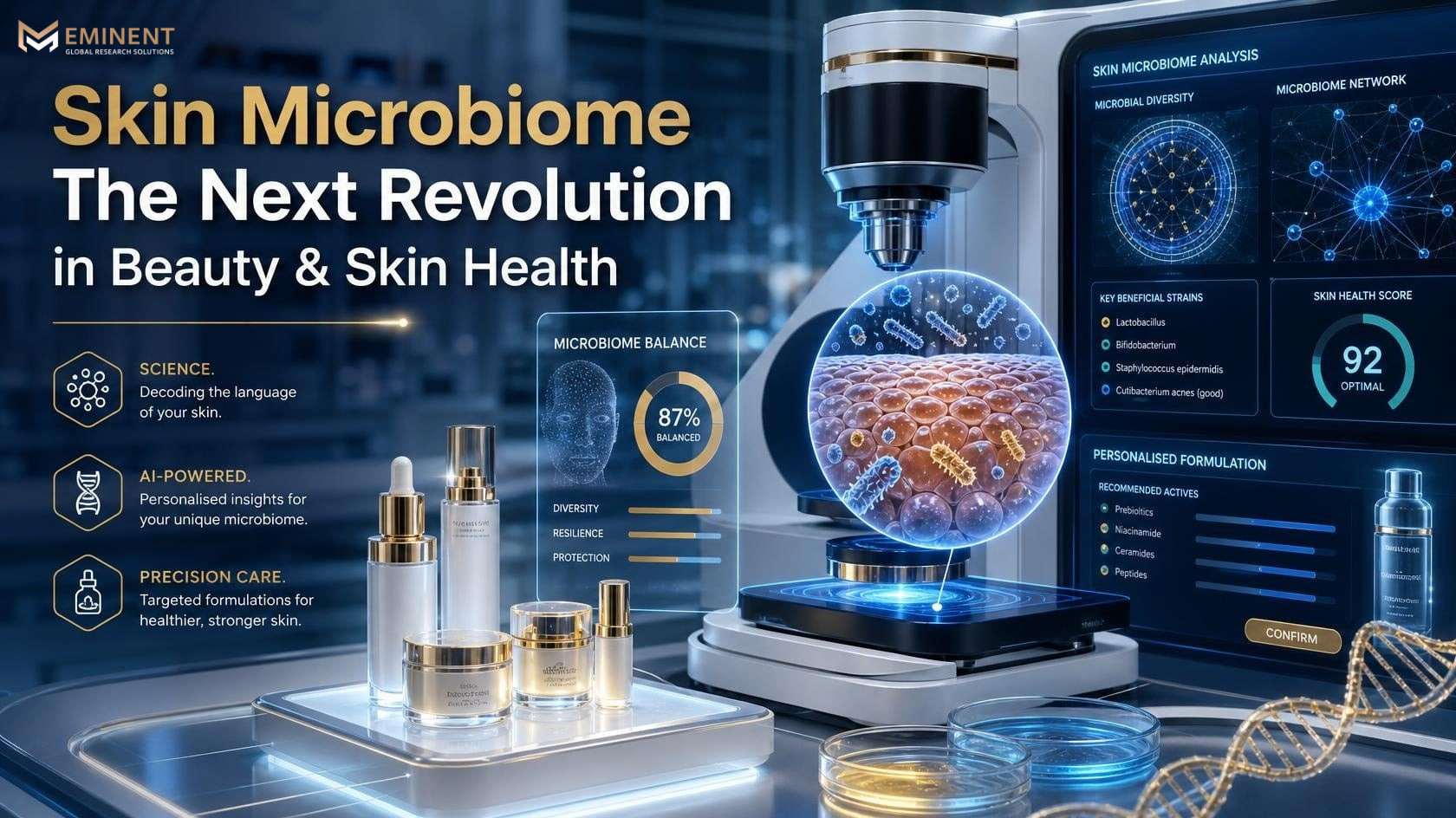
The beauty industry is experiencing one of its most significant transformations in decades. For years, skincare innovation has focused on anti-aging ingredients, hydration technologies, and cosmetic enhancement. Today, scientific research is shifting attention to an entirely new frontier—the skin microbiome.
Often referred to as the body’s invisible ecosystem, the skin microbiome consists of trillions of microorganisms, including bacteria, fungi, viruses, and other microbes that naturally live on the skin’s surface. Far from being harmful, these microorganisms play a critical role in maintaining skin health, protecting against pathogens, regulating inflammation, and supporting the skin barrier.
As biotechnology, dermatology, and microbiology converge, the skin microbiome is emerging as one of the most promising areas of innovation in the global beauty industry. Rather than treating skincare as a cosmetic routine, companies are beginning to position products as scientifically designed solutions that support long-term skin health.
For beauty brands, ingredient manufacturers, biotechnology companies, and healthcare innovators, this represents more than a scientific breakthrough—it is a strategic opportunity to redefine consumer engagement, develop premium products, and build stronger trust through evidence-based innovation.
Understanding the Skin Microbiome
Every person’s skin hosts a unique microbial ecosystem that functions as a natural defence system. These beneficial microorganisms help maintain the skin’s pH balance, strengthen its protective barrier, reduce harmful bacteria, and support immune responses.
When this delicate balance is disrupted by pollution, excessive cleansing, harsh cosmetic ingredients, stress, UV exposure, or antibiotics, consumers may experience:
- Acne
- Eczema
- Dryness
- Rosacea
- Increased sensitivity
- Premature skin ageing
Instead of simply treating visible symptoms, microbiome-based skincare focuses on restoring and maintaining the natural balance of this ecosystem.
This represents a fundamental shift from traditional cosmetic approaches towards preventive skin health.
Why the Beauty Industry Is Investing in Microbiome Science
The global beauty market is becoming increasingly science-driven.
Consumers no longer purchase skincare products based solely on branding or fragrance. They increasingly demand:
- Clinically supported ingredients
- Transparent scientific evidence
- Personalised recommendations
- Preventive skincare
- Long-term wellness benefits
Skin microbiome research aligns perfectly with these evolving expectations.
Leading cosmetic companies are investing heavily in microbiome research because it offers opportunities to create products that work with the skin’s natural biology rather than simply masking cosmetic concerns.
Innovation areas include:
- Probiotic skincare
- Prebiotic formulations
- Postbiotic active ingredients
- Barrier-repair technologies
- Personalised microbiome analysis
- Skin health diagnostics
This growing scientific foundation is transforming skincare into a health-oriented category supported by biotechnology and clinical research.
Biotechnology Is Driving the Next Generation of Skincare
Microbiome innovation would not be possible without rapid advances in biotechnology.
Modern sequencing technologies, artificial intelligence, molecular biology, and precision fermentation now allow researchers to analyse complex microbial communities with unprecedented accuracy.
These technologies help scientists understand:
- Which bacteria support healthy skin
- How microbial diversity changes with age
- The relationship between the microbiome and inflammation
- Environmental impacts on skin health
- Personal differences between consumers
This knowledge enables beauty companies to design highly targeted products rather than broad “one-size-fits-all” formulations.
The result is skincare that becomes increasingly personalised, predictive, and preventative.
Personalisation Will Define the Future of Beauty
One of the greatest commercial opportunities emerging from microbiome research is personalised skincare.
Every individual possesses a distinct skin microbiome influenced by genetics, diet, climate, lifestyle, stress, and environmental exposure.
Future skincare journeys may begin with digital diagnostics that analyse a consumer’s skin microbiome before recommending customised formulations.
Potential innovations include:
- AI-powered skin analysis
- At-home microbiome testing
- Personalised skincare subscriptions
- Adaptive formulations
- Real-time skin monitoring
- Digital skin health platforms
This level of personalisation creates stronger consumer engagement while generating recurring revenue opportunities through subscription services and continuous product optimisation.
Premiumisation Through Science
Consumers are increasingly willing to pay higher prices for products that deliver measurable benefits supported by credible scientific research.
Microbiome-based skincare naturally fits into this premium positioning because it combines:
- Clinical validation
- Advanced biotechnology
- Preventive wellness
- Personalisation
- Evidence-based claims
Rather than competing primarily on marketing, brands can differentiate themselves through scientific credibility.
This shift also encourages greater collaboration between beauty companies, biotechnology firms, dermatologists, universities, and healthcare institutions.
As science becomes central to product development, research partnerships may become as valuable as advertising campaigns.
Challenges That Companies Must Address
Despite its enormous potential, microbiome-based skincare also presents several challenges.
Scientific complexity remains one of the largest barriers. The skin microbiome varies significantly between individuals, making universal solutions difficult to develop.
Companies must also navigate:
- Regulatory compliance
- Clinical validation requirements
- Consumer education
- Standardisation of microbiome testing
- Long-term efficacy studies
- Responsible marketing claims
Consumers are becoming increasingly sceptical of unsupported scientific claims.
Brands that overstate microbiome benefits without robust clinical evidence risk damaging consumer trust.
Success will depend on balancing innovation with transparency and scientific integrity.
The Consulting Perspective
The rise of microbiome science extends beyond product development.
It influences strategic decisions across:
- Research and development
- Intellectual property
- Regulatory affairs
- Commercialisation
- Market positioning
- Strategic partnerships
Companies entering this space require multidisciplinary capabilities that combine biotechnology, dermatology, data analytics, formulation science, and regulatory expertise.
Consulting firms can support organisations by identifying white-space opportunities, evaluating technology partnerships, assessing competitive landscapes, developing market entry strategies, and navigating evolving regulatory frameworks.
As competition intensifies, commercial success will depend not only on scientific discovery but also on execution excellence.
The Future of Skin Health
The skin microbiome is redefining how consumers think about beauty.
Future skincare products are likely to become increasingly intelligent, personalised, and health-focused.
Instead of asking, “Which cream reduces wrinkles?” consumers may begin asking, “Which product supports my skin’s biological ecosystem?”
This represents a profound shift from cosmetic enhancement to biological optimisation.
The organisations that invest early in microbiome research, biotechnology capabilities, and consumer education may shape the next decade of beauty innovation.
For the global beauty industry, the microbiome is more than a scientific trend—it has the potential to become the foundation of an entirely new generation of skincare.