

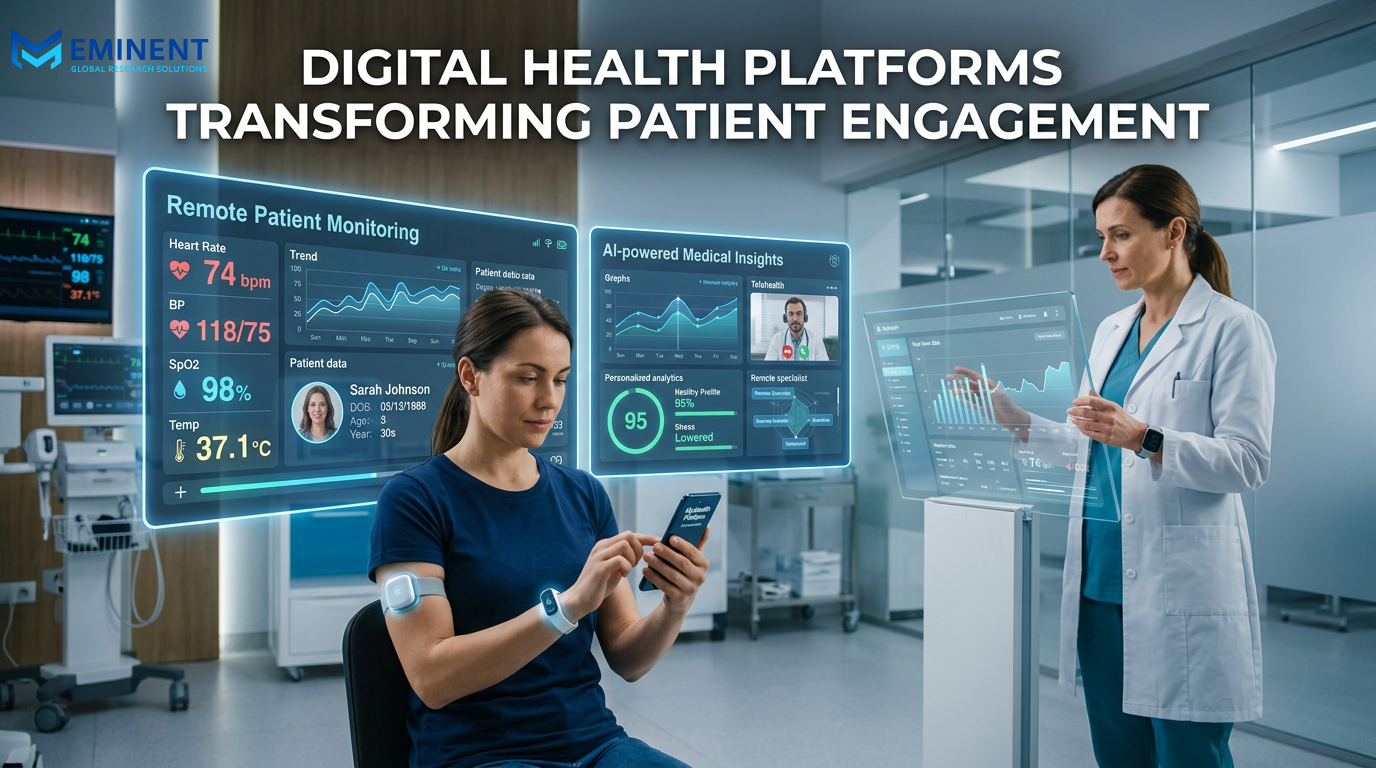
The healthcare industry is undergoing a fundamental transformation driven by digital technologies, changing patient expectations, and the growing demand for personalized care experiences. At the center of this shift are digital health platforms, which are increasingly becoming critical tools for improving patient engagement, enhancing clinical outcomes, and creating more connected healthcare ecosystems.
Historically, patient engagement was largely confined to in-person interactions between healthcare providers and patients. Communication often occurred only during appointments, leaving limited opportunities for continuous monitoring, education, or proactive intervention. Today, digital health platforms are changing that dynamic by enabling healthcare organizations to engage patients throughout their healthcare journey.
From telehealth services and mobile health applications to remote patient monitoring and AI-powered health assistants, digital platforms are redefining how healthcare is delivered and experienced. As healthcare systems continue transitioning toward value-based care models, patient engagement is emerging as a strategic priority rather than a supplementary service.
For healthcare providers, pharmaceutical companies, payers, and technology firms, the question is no longer whether digital health should be part of patient engagement strategies—it is how effectively these platforms can be leveraged to improve outcomes, strengthen relationships, and create sustainable competitive advantages.
The Evolution of Patient Engagement
Patient engagement has become one of the most important determinants of healthcare effectiveness. Engaged patients are more likely to adhere to treatment plans, participate in preventive care programs, manage chronic conditions effectively, and make informed healthcare decisions.
However, traditional healthcare models often struggle to maintain consistent engagement outside clinical settings. Missed appointments, medication non-adherence, and limited patient education contribute significantly to poor health outcomes and rising healthcare costs.
Digital health platforms address these challenges by creating continuous connections between patients and healthcare providers. Through mobile applications, patient portals, wearable devices, and virtual care solutions, healthcare organizations can deliver personalized support beyond the walls of hospitals and clinics.
These platforms transform healthcare from a reactive system focused on illness treatment into a proactive model centered on prevention, monitoring, and long-term wellness management.
Why Digital Health Platforms Are Gaining Momentum
Several factors are accelerating the adoption of digital health solutions worldwide.
First, consumers increasingly expect healthcare experiences that mirror the convenience and personalization they receive in other industries. Patients want easy appointment scheduling, digital communication channels, real-time access to health information, and personalized recommendations.
Second, healthcare systems face mounting pressure to improve efficiency while managing growing patient populations. Digital platforms help streamline administrative processes, reduce unnecessary visits, and optimize resource utilization.
Third, advancements in technology—including artificial intelligence, cloud computing, wearable sensors, and data analytics—have significantly expanded the capabilities of digital health ecosystems.
As a result, healthcare organizations are investing heavily in digital transformation initiatives designed to improve both patient experience and operational performance.
Key Benefits of Digital Health Platforms
Digital health platforms deliver value across multiple dimensions of healthcare delivery.
Enhanced Patient Communication
Modern digital platforms facilitate continuous communication between patients and healthcare providers. Secure messaging, appointment reminders, medication alerts, and educational content help keep patients informed and engaged.
This ongoing interaction improves trust, strengthens provider-patient relationships, and encourages more active participation in healthcare decisions.
Improved Chronic Disease Management
Chronic conditions such as diabetes, cardiovascular disease, and respiratory disorders require ongoing monitoring and lifestyle management.
Digital health solutions enable remote monitoring of vital signs, medication adherence tracking, symptom reporting, and automated alerts. These capabilities allow healthcare providers to intervene earlier when issues arise and reduce the likelihood of costly complications.
Personalized Healthcare Experiences
Artificial intelligence and advanced analytics enable digital platforms to deliver highly personalized care recommendations.
Patients can receive customized wellness plans, preventive health guidance, medication reminders, and behavioral coaching tailored to their individual health profiles.
This personalization improves engagement while supporting better health outcomes.
Greater Accessibility and Convenience
Telehealth and mobile health applications have expanded healthcare access for patients in rural, underserved, and mobility-limited populations.
Virtual consultations eliminate geographical barriers and reduce travel burdens, making healthcare more accessible and patient-centric.
The Role of Data and Artificial Intelligence
Data is becoming the foundation of modern patient engagement strategies.
Digital health platforms collect vast amounts of information from electronic health records, wearable devices, patient-reported outcomes, and connected medical technologies.
Artificial intelligence can analyze this data to identify risk patterns, predict health events, and recommend proactive interventions.
Examples include:
- Predicting medication non-adherence
- Identifying high-risk patients
- Personalizing treatment recommendations
- Detecting early signs of disease progression
- Optimizing care coordination
As AI capabilities continue to evolve, digital health platforms will become increasingly intelligent and responsive to individual patient needs.
Challenges to Adoption
Despite their potential, digital health platforms face several challenges.
Data Privacy and Security
Healthcare data is highly sensitive, making cybersecurity and privacy protection critical priorities.
Organizations must ensure compliance with evolving regulations while maintaining patient trust.
Digital Literacy Gaps
Not all patients possess the same level of comfort with digital technologies.
Healthcare providers must design user-friendly platforms and offer support resources to ensure equitable access across diverse populations.
Integration Complexity
Many healthcare organizations operate fragmented technology systems.
Successfully integrating digital health platforms with electronic health records, clinical workflows, and payer systems remains a significant operational challenge.
The Competitive Advantage of Digital Engagement
As healthcare becomes increasingly consumer-driven, patient engagement is emerging as a key differentiator.
Healthcare organizations that successfully implement digital engagement strategies can benefit from:
- Higher patient satisfaction
- Improved treatment adherence
- Better clinical outcomes
- Reduced healthcare costs
- Stronger patient retention
- Enhanced brand reputation
For pharmaceutical companies, digital health platforms also create opportunities to support patients throughout treatment journeys, improve medication adherence, and generate real-world evidence.
Meanwhile, health insurers can use digital engagement tools to encourage preventive care and reduce long-term healthcare expenditures.
The Future of Patient Engagement
The future of healthcare will likely be defined by continuous, personalized, and technology-enabled patient interactions.
Emerging innovations such as AI-powered health assistants, digital therapeutics, predictive analytics, and remote monitoring ecosystems will further expand the role of digital platforms in healthcare delivery.
As healthcare systems increasingly focus on prevention, outcomes, and patient-centered care, digital health platforms are becoming foundational infrastructure rather than optional enhancements.
Organizations that invest early in robust digital engagement capabilities may be better positioned to improve outcomes, strengthen patient relationships, and compete in the evolving healthcare landscape.
The rise of digital health is not simply a technology trend it represents a fundamental reimagining of how healthcare organizations connect with, support, and empower patients in the modern era.