

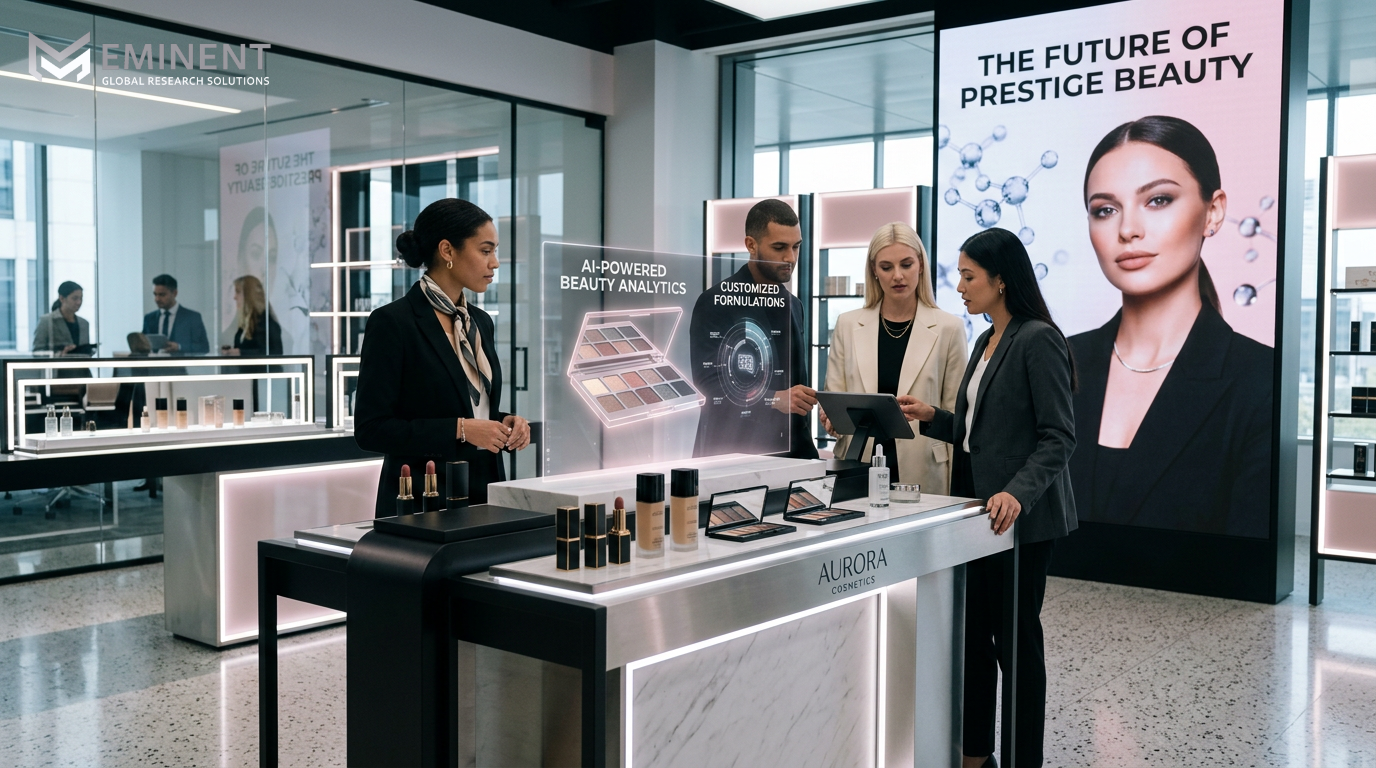
The relaunch of Marc Jacobs Beauty through a global Sephora rollout marks one of the most significant prestige beauty comebacks in recent years. More than a nostalgic brand revival, the move highlights how global beauty companies are reshaping growth strategies around premiumization, retail partnerships, experiential branding, and emotionally driven consumer engagement.
Coty’s decision to revive Marc Jacobs Beauty demonstrates how prestige cosmetics are increasingly becoming a convergence point for fashion, entertainment, luxury branding, and high-performance beauty innovation. In a highly competitive global beauty market, companies are no longer relying solely on product quality or celebrity appeal. Instead, they are building immersive brand ecosystems designed to strengthen consumer loyalty, cultural relevance, and omnichannel retail expansion.
The relaunch also reflects a broader transformation occurring within the prestige beauty sector where heritage brands are being reengineered for a new generation of consumers shaped by social media, digital commerce, self-expression trends, and experiential luxury.
For beauty companies, retailers, and investors, the Marc Jacobs Beauty comeback highlights the growing importance of strategic brand reinvention and globally scalable retail ecosystems in the evolving prestige beauty economy.
Prestige Beauty Is Becoming Experience-Led
The prestige beauty market has evolved significantly over the past decade.
Consumers today are increasingly influenced by:
- Digital beauty culture
- Social media aesthetics
- Creator-driven trends
- Personal identity expression
- Experiential luxury purchasing
- Emotional brand connection
As a result, beauty brands are moving beyond traditional cosmetic positioning toward immersive lifestyle-driven experiences.
Marc Jacobs Beauty’s relaunch strongly reflects this shift.
The new collection emphasizes:
- Bold color expression
- Playful packaging
- High-impact performance
- Collectible product design
- Fashion-inspired identity
This approach aligns with the growing consumer preference for beauty products that function as both cosmetic tools and forms of personal expression.
Prestige beauty increasingly operates within the broader creator economy where visual storytelling, social engagement, and emotional resonance can significantly influence purchasing behavior.
Brands capable of creating culturally relevant and visually distinctive ecosystems may gain stronger long-term engagement in highly saturated beauty markets.
Brand Revivals Are Becoming Strategic Growth Drivers
The return of Marc Jacobs Beauty also highlights how established beauty brands with strong emotional equity are becoming valuable strategic assets.
Beauty companies are increasingly revisiting discontinued or dormant brands that maintain strong consumer nostalgia and social media relevance.
However, modern beauty revivals require more than simply relaunching legacy products.
Successful comebacks must balance:
- Brand heritage
- Contemporary consumer expectations
- Digital relevance
- Product innovation
- Retail scalability
Coty appears to be positioning Marc Jacobs Beauty not as a direct continuation of the original line, but as a reimagined prestige beauty platform designed for today’s market dynamics.
This strategy reflects broader industry recognition that nostalgia alone is insufficient for long-term commercial success. Brands must evolve while preserving enough identity continuity to maintain emotional consumer connection.
The ability to modernize legacy brands effectively may become an increasingly important competitive capability across luxury and prestige consumer sectors.
Sephora’s Role Highlights the Power of Retail Ecosystems
The global Sephora rollout is strategically significant because prestige beauty success increasingly depends on integrated retail ecosystems rather than standalone product launches.
Modern beauty retail has evolved into a hybrid ecosystem combining:
- Physical retail experiences
- Digital commerce
- Social media engagement
- Creator partnerships
- Loyalty platforms
- Community-driven discovery
Sephora remains one of the most influential global beauty retail platforms due to its ability to integrate:
- Omnichannel distribution
- Consumer data insights
- Experiential retail
- Influencer culture
- Premium beauty curation
By partnering with Sephora for a phased global rollout, Coty gains access to a highly engaged prestige beauty consumer base while maximizing digital visibility and retail scalability.
This demonstrates how strategic retail partnerships are becoming increasingly important for luxury beauty growth strategies.
Beauty brands today compete not only through product innovation, but also through retail integration and consumer ecosystem positioning.
Premiumization Continues to Drive Beauty Growth
The Marc Jacobs Beauty relaunch also reflects the ongoing premiumization trend across the global beauty industry.
Consumers increasingly seek:
- Luxury positioning
- High-performance formulations
- Exclusive brand experiences
- Elevated packaging aesthetics
- Personalized identity expression
Prestige beauty continues outperforming many mass-market categories because consumers often perceive premium beauty purchases as emotionally rewarding lifestyle investments rather than simple functional products.
This dynamic becomes especially important in periods of economic uncertainty where consumers may reduce larger discretionary purchases but continue spending on smaller accessible luxury items such as prestige cosmetics.
Premium beauty brands that successfully combine:
- Fashion credibility
- Emotional storytelling
- Product innovation
- Digital engagement
- Retail exclusivity
may strengthen resilience in changing consumer environments.
Marc Jacobs Beauty’s emphasis on maximalist color, expressive identity, and tactile luxury aligns strongly with this premiumization movement.
Beauty Competition Is Becoming More Intense
The prestige beauty market is becoming increasingly competitive as established corporations, celebrity founders, luxury fashion houses, and digitally native brands compete for consumer attention.
Key competitive pressures now include:
- Faster product cycles
- Influencer-driven trends
- Social commerce acceleration
- Shorter consumer attention spans
- Increasing innovation expectations
In this environment, beauty companies must continuously balance:
- Brand differentiation
- Retail visibility
- Product innovation
- Consumer engagement
- Global scalability
Coty’s relaunch strategy demonstrates how large beauty conglomerates are leveraging brand portfolios, licensing agreements, and global distribution capabilities to maintain relevance in rapidly evolving beauty ecosystems.
The ability to reactivate culturally significant brands may become increasingly valuable as consumer acquisition costs continue rising across digital channels.
Fashion and Beauty Integration Is Strengthening
The relaunch also reinforces the growing convergence between fashion and beauty industries.
Fashion brands increasingly view beauty as:
- A scalable revenue category
- A brand accessibility tool
- A global lifestyle extension
- A digital engagement platform
Beauty products often provide luxury fashion houses with broader consumer reach and recurring purchase opportunities compared to apparel alone.
At the same time, consumers increasingly expect beauty brands to reflect broader lifestyle aesthetics connected to:
- Fashion identity
- Personal branding
- Social expression
- Cultural participation
Marc Jacobs Beauty’s relaunch strongly emphasizes this integration between fashion creativity and cosmetic expression.
The Future of Prestige Beauty
The return of Marc Jacobs Beauty reflects a broader transformation occurring across the global prestige beauty market.
Future growth will likely be driven by:
- Experiential branding
- Omnichannel retail ecosystems
- Premiumization
- Social commerce
- Emotional consumer engagement
- AI-driven personalization
- Cross-industry collaborations
As competition intensifies, beauty companies may increasingly need to combine:
- Strong intellectual property
- Global retail partnerships
- Digital-first marketing
- Product innovation
- Cultural relevance
For consulting firms, beauty brands, retailers, and investors, this evolving landscape creates growing demand for expertise in:
- Prestige brand strategy
- Consumer engagement ecosystems
- Omnichannel retail expansion
- Beauty innovation planning
- Luxury positioning
- Digital commerce transformation
The future of prestige beauty may be shaped less by standalone product launches and more by how effectively brands build immersive global consumer ecosystems.