

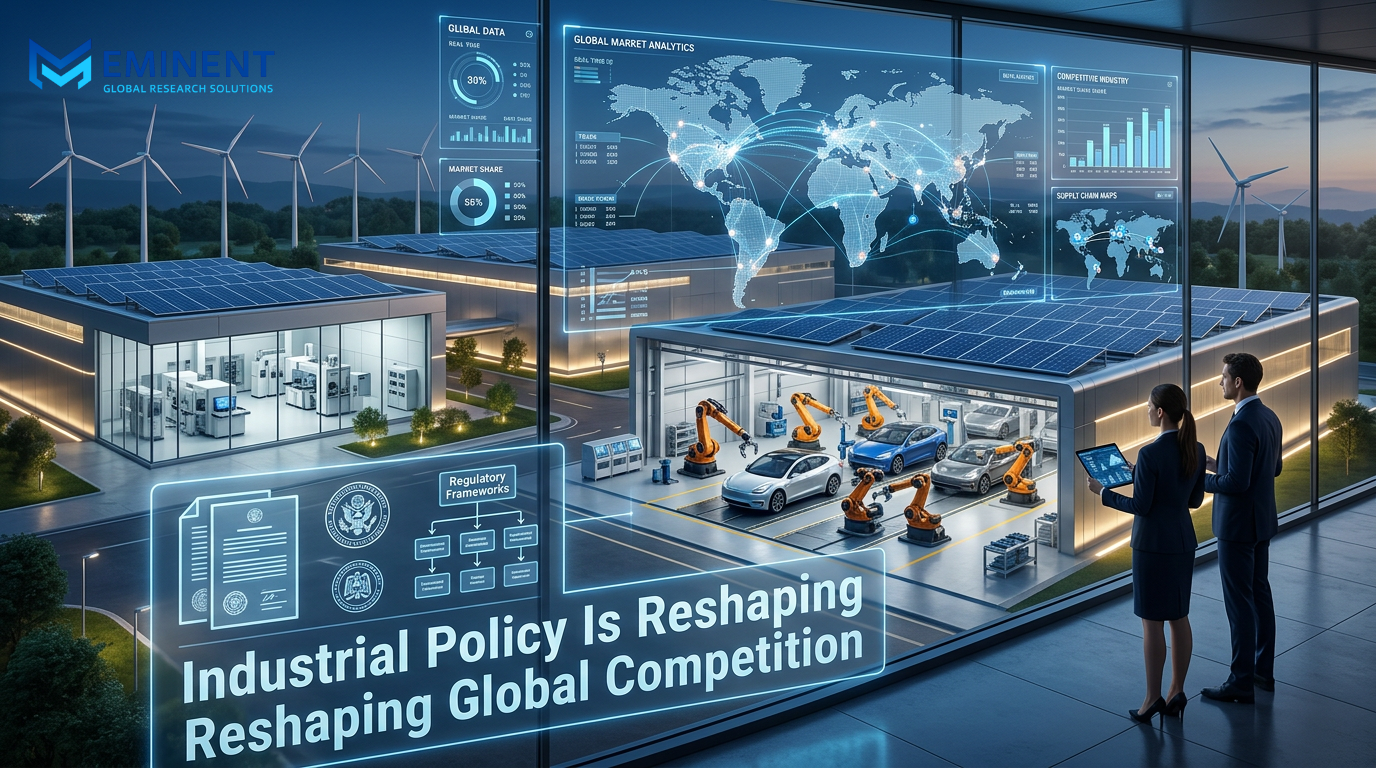
A recent OECD analysis has sparked significant discussion across global business and policy circles by concluding that nearly 60% of the global market share gains achieved by Chinese firms over the past two decades can be linked to government subsidies and state-backed support mechanisms. The findings highlight a broader debate about industrial policy, global competitiveness, and the future structure of international trade.
For businesses operating in manufacturing, technology, renewable energy, automotive, semiconductors, and industrial sectors, the report serves as a reminder that competitive advantage is increasingly shaped not only by innovation and operational efficiency but also by government-backed industrial strategies.
From a consulting perspective, the findings reinforce the importance of geopolitical risk assessment, supply chain diversification, industrial policy monitoring, and strategic market positioning. As governments worldwide expand support for domestic industries, companies must adapt to an environment where policy and economics are becoming increasingly interconnected.
The Rise of Industrial Policy as a Competitive Force
Over the past decade, industrial policy has re-emerged as a major driver of economic strategy across both developed and emerging economies.
Governments are investing heavily in strategic sectors including:
- Electric vehicles
- Renewable energy
- Semiconductors
- Advanced manufacturing
- Artificial intelligence
- Critical minerals
- Aerospace technologies
While state support has long existed in various forms, the scale and sophistication of modern industrial policies have expanded significantly.
According to OECD analysis, industrial subsidies across major global sectors reached approximately $108 billion in 2024, representing one of the highest levels recorded in recent decades.
The report indicates that Chinese manufacturers received substantially higher levels of support than many international competitors, often through grants, tax incentives, and below-market financing arrangements.
This has helped accelerate China’s global expansion across multiple industries.
Understanding the OECD Findings
The OECD’s analysis examined hundreds of major manufacturing companies across multiple industrial sectors and found a strong relationship between subsidies and market share growth. The organization concluded that subsidies contributed significantly to market expansion for supported firms, particularly those headquartered in China.
The study found that:
- Chinese firms received significantly higher levels of support than many global competitors.
- Subsidies contributed substantially to market share gains.
- Market share growth often occurred without corresponding increases in productivity or profitability.
- Subsidized firms were able to compete more aggressively on pricing and investment strategies.
The findings suggest that government support can influence competitive outcomes beyond traditional measures of operational performance.
For businesses competing in global markets, this changes how competitive landscapes must be evaluated.
Beyond Innovation: The New Competitive Equation
Historically, companies gained market leadership through:
- Product innovation
- Cost efficiency
- Brand strength
- Distribution capabilities
- Customer experience
While these factors remain critical, industrial policy is becoming an increasingly important component of competitive strategy.
Companies operating in sectors receiving significant government support may benefit from:
- Lower financing costs
- Accelerated capacity expansion
- Enhanced research funding
- Reduced operational risk
- Faster commercialization timelines
This creates a more complex competitive environment where corporate strategy and government policy are closely intertwined.
Organizations that fail to monitor policy developments may underestimate emerging competitive threats.
Implications for Global Supply Chains
The OECD findings arrive at a time when many multinational organizations are reassessing global supply chain strategies.
Over the past several years, businesses have faced disruptions caused by:
- Geopolitical tensions
- Trade disputes
- Pandemic-related disruptions
- Rising transportation costs
- Regionalization of manufacturing
The growing influence of state-supported industrial ecosystems adds another layer of complexity.
Companies increasingly need to evaluate:
- Supplier concentration risks
- Country-specific policy advantages
- Trade exposure
- Tariff vulnerabilities
- Long-term manufacturing resilience
As governments actively support domestic industries, supply chains may become more geographically fragmented and strategically managed.
Organizations that diversify sourcing networks and strengthen regional manufacturing capabilities may be better positioned to manage future uncertainty.
Strategic Implications for Manufacturing and Technology Companies
For industrial companies, the report underscores the need for a broader strategic perspective.
Success in global markets is no longer determined solely by product competitiveness.
Companies should increasingly focus on:
1. Industrial Policy Intelligence
Organizations must actively monitor government incentives, subsidy programs, trade regulations, and industrial development initiatives across key markets.
Understanding policy trends can help businesses identify both opportunities and risks before competitors do.
2. Geographic Diversification
Overreliance on a single manufacturing hub or regional market may increase exposure to geopolitical and policy-related disruptions.
A diversified operational footprint can improve resilience and flexibility.
3. Strategic Partnerships
Collaborations with local governments, research institutions, and industry ecosystems can strengthen market access and improve competitive positioning.
4. Innovation Acceleration
As subsidies increasingly support industrial expansion, companies may need to accelerate innovation cycles to maintain differentiation beyond cost competition.
The Growing Role of Trade and Regulatory Strategy
The OECD report is also likely to influence future trade discussions.
Governments and regulators worldwide are increasingly scrutinizing:
- Market distortions
- Industrial overcapacity
- Subsidy practices
- Fair competition concerns
- Strategic dependency risks
As a result, companies may face evolving regulatory environments that impact:
- Cross-border investments
- Export opportunities
- Supply chain decisions
- Market entry strategies
Businesses operating internationally should prepare for greater regulatory complexity and potentially shifting trade relationships.
Proactive scenario planning and policy monitoring will become increasingly important strategic capabilities.
Opportunities Amid Rising Competition
Despite growing challenges, the changing industrial landscape also creates opportunities.
Organizations that understand how industrial policies shape markets can:
- Identify high-growth sectors early
- Optimize investment decisions
- Strengthen competitive positioning
- Build resilient supply chains
- Improve long-term strategic planning
The companies most likely to succeed will be those that combine operational excellence with sophisticated understanding of global policy environments.
In the future, competitive advantage may increasingly depend on the ability to navigate the intersection of business strategy, industrial policy, technology innovation, and geopolitical dynamics.
The Future of Global Industrial Competition
The OECD findings reflect a broader transformation occurring across the global economy.
Industrial competition is becoming increasingly influenced by:
- Government investment strategies
- National industrial policies
- Strategic technology development
- Supply chain security priorities
- Economic resilience initiatives
For businesses, this means traditional market analysis alone is no longer sufficient.
Organizations must develop a more comprehensive understanding of how policy decisions shape market outcomes and competitive dynamics.
Companies that integrate geopolitical intelligence, industrial policy analysis, and long-term strategic planning into decision-making processes may be best positioned to thrive in an increasingly complex global business environment.
As industrial policies continue expanding worldwide, the future of global competition will likely be defined not only by innovation and efficiency but also by how effectively companies adapt to a rapidly evolving policy-driven marketplace.