
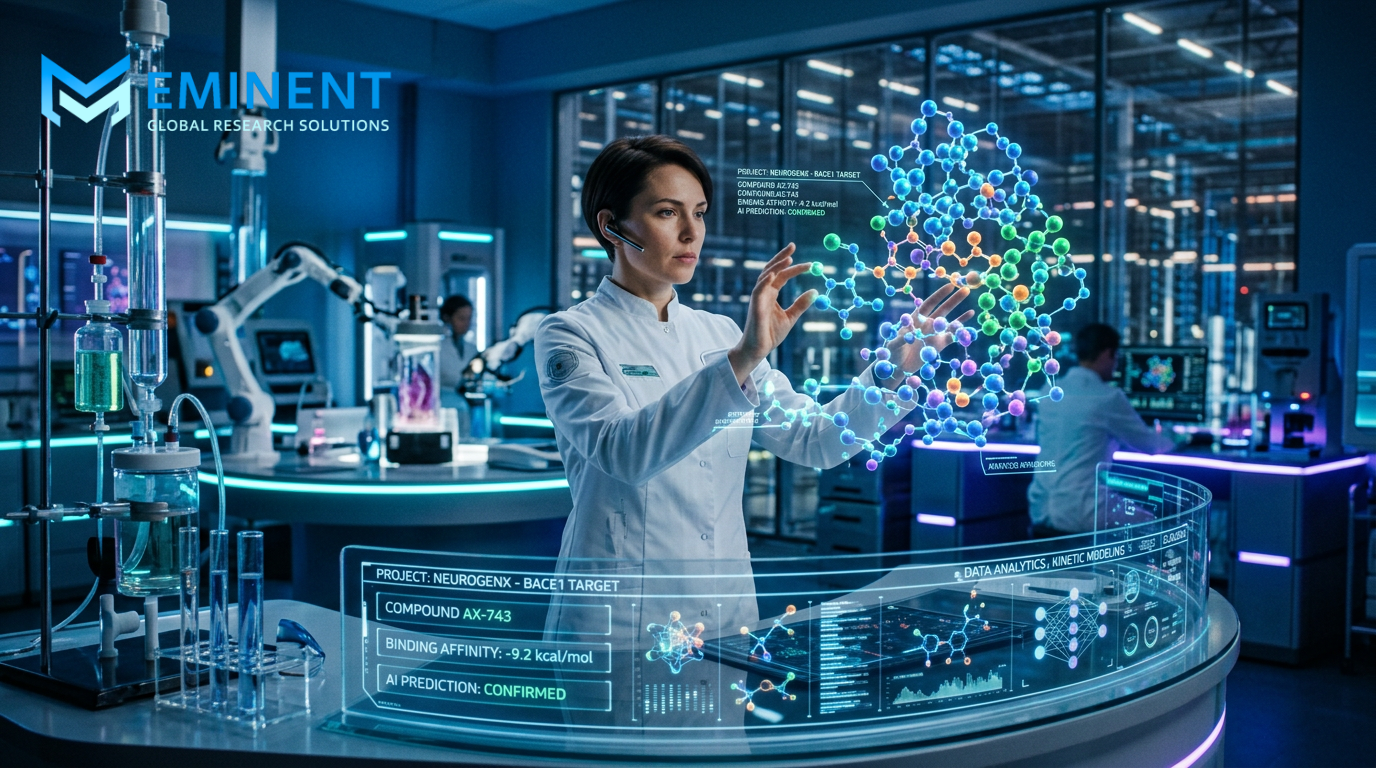
The pharmaceutical industry is entering a new era—one where algorithms, not just laboratories, play a central role in discovering life-saving therapies. This shift was underscored by Eli Lilly’s recent commitment of up to $2.75 billion in a strategic partnership with Insilico Medicine, announced on March 29, 2026.
The deal includes an upfront payment of $115 million, followed by milestone-based payments and royalties tied to the successful development and commercialization of AI-designed drugs. Beyond the headline figure, this partnership signals something far more significant: generative AI is moving from experimental use to core infrastructure in pharmaceutical R&D.
The Rise of AI in Drug Discovery
Traditional drug discovery is a long, expensive, and high-risk process. On average, it takes:
- 10–15 years to bring a drug to market
- Billions of dollars in investment
- High attrition rates, with most candidates failing in clinical trials
Generative AI is changing this paradigm. By leveraging machine learning models trained on vast biological and chemical datasets, companies can:
- Identify novel drug targets faster
- Design molecules with higher precision
- Predict toxicity and efficacy earlier in the pipeline
Companies like Insilico Medicine are at the forefront of this transformation, using AI to compress early-stage discovery timelines from years to months.
Why This Deal Matters
The scale and structure of this agreement reflect growing confidence in AI-driven drug development.
1. Validation of AI as a Core R&D Engine
Big pharma has been cautiously experimenting with AI for years. However, a multi-billion-dollar commitment from a major player like Eli Lilly represents a shift from pilot projects to strategic integration.
This is not just about improving efficiency—it’s about redefining how drugs are discovered and developed.
2. Risk-Sharing Through Milestone-Based Models
The deal structure—combining upfront payments with milestone-based payouts—highlights the inherent uncertainty in drug development.
For Eli Lilly:
- Reduces upfront risk
- Aligns payments with tangible progress
- Ensures capital efficiency
For Insilico Medicine:
- Provides funding for innovation
- Offers long-term upside through royalties
This model reflects a broader trend toward performance-linked partnerships in pharma innovation.
3. Acceleration of Pipeline Development
Speed is a critical competitive advantage in pharma. The ability to identify and develop drug candidates faster can:
- Shorten time-to-market
- Extend patent life
- Increase revenue potential
AI-driven platforms enable companies to move faster from target identification to preclinical and clinical stages, fundamentally reshaping pipeline dynamics.
The Expanding Role of Generative AI in Pharma
Generative AI is no longer limited to data analysis—it is actively creating new molecular entities.
Key applications include:
Molecule Generation
AI models can design entirely new compounds optimized for specific biological targets.
Target Identification
Machine learning helps uncover previously unknown disease pathways and therapeutic targets.
Clinical Trial Optimization
AI can improve patient selection, trial design, and outcome prediction.
Drug Repurposing
Existing drugs can be re-evaluated for new indications, reducing development costs and timelines.
Together, these capabilities are transforming AI from a supporting tool into a primary innovation driver.
Challenges and Risks
Despite its promise, AI-driven drug discovery comes with significant challenges:
1. High Commercial Uncertainty
Even with AI, drug development remains inherently risky. Many candidates will still fail in clinical trials.
2. Data Quality and Integration
AI models are only as good as the data they are trained on. Ensuring high-quality, diverse datasets is critical.
3. Regulatory Complexity
Regulators are still adapting to AI-driven methodologies, creating uncertainty in approval pathways.
4. Cost vs. Value Realization
While AI can reduce early-stage costs, the overall ROI depends on successful commercialization—making portfolio management crucial.
Consulting Perspective: The Need for a Techno-Commercial Approach
The Eli Lilly–Insilico deal highlights a critical need: pharma companies must go beyond technology adoption and focus on value-driven implementation.
At Eminent Global Research Solutions, we see this as a classic case where a techno-commercial approach becomes essential.
1. Strategic AI Integration
Pharma companies must identify where AI can deliver the highest impact—whether in discovery, clinical development, or lifecycle management.
Blind adoption can lead to wasted investment and fragmented systems.
2. Portfolio and Risk Management
AI-driven pipelines require new frameworks for:
- Evaluating probability of success
- Managing milestone-based investments
- Balancing high-risk, high-reward projects
Consulting support can help companies build risk-adjusted portfolio strategies.
3. Cost Optimization and ROI Tracking
With large upfront and milestone commitments, tracking ROI becomes critical.
Organizations need:
- Clear performance metrics
- Financial modeling tools
- Continuous evaluation of project viability
4. Partnership Strategy
Collaborations like this are becoming the norm. Companies must:
- Identify the right partners
- Structure win-win agreements
- Ensure alignment on long-term goals
5. Scalable AI Adoption
Moving from isolated AI projects to enterprise-wide implementation requires:
- Strong data infrastructure
- Integration with existing R&D systems
- Cross-functional alignment
Industry Implications
This deal is likely to trigger a ripple effect across the pharmaceutical industry:
- Increased investment in AI-driven biotech firms
- More partnerships between big pharma and AI startups
- Greater competition in AI-enabled drug pipelines
- Faster innovation cycles across therapeutic areas
In the coming years, companies that fail to integrate AI effectively risk falling behind in both innovation and market competitiveness.
The Future of AI-Driven Pharma
The convergence of AI, biology, and data science is setting the stage for a new era in healthcare.
We can expect:
- Faster drug discovery timelines
- More personalized therapies
- Reduced development costs
- Improved success rates in clinical trials
Ultimately, the goal is not just efficiency—but better patient outcomes at scale.
Conclusion
Eli Lilly’s $2.75 billion partnership with Insilico Medicine is more than a headline—it’s a clear signal that AI is becoming central to the future of pharmaceutical innovation.
However, success in this new landscape requires more than cutting-edge technology. It demands a balanced approach that integrates innovation with commercial discipline.
For pharma companies, the challenge is clear:
Adopt AI not just as a tool—but as a strategic capability, supported by robust techno-commercial frameworks.
Those who get this right will not only accelerate drug discovery but also redefine the economics of the industry—gaining a decisive edge in an increasingly competitive and complex market.