

Introduction
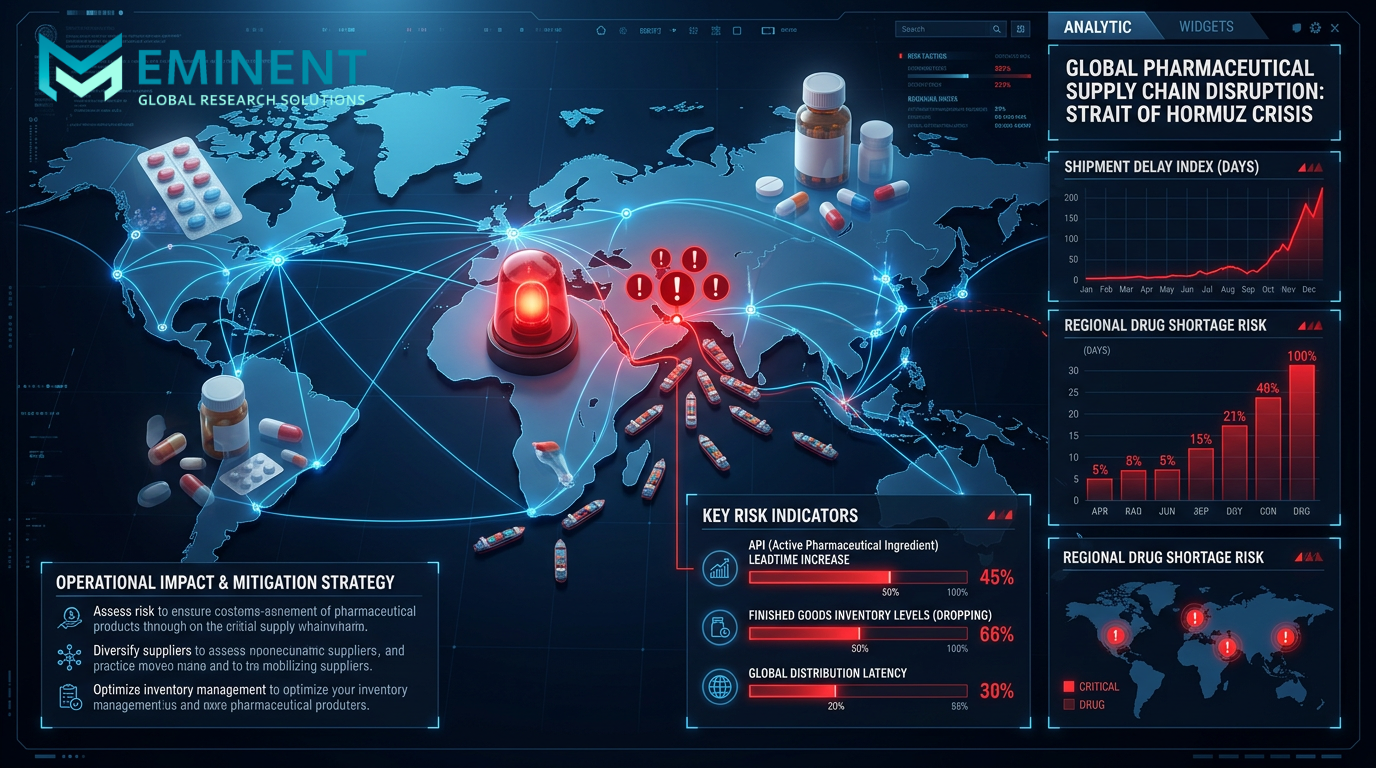
The escalating tensions in the Strait of Hormuz in 2026 have evolved from an energy crisis into a critical healthcare supply chain risk. What began as geopolitical friction has now exposed structural vulnerabilities in the global pharmaceutical ecosystem—particularly impacting the flow of generic drugs to the United States.
With India supplying a significant share of U.S. generics and heavily relying on maritime routes through the Middle East, disruptions in this strategic chokepoint are triggering ripple effects across cost, availability, and healthcare resilience.
The Strategic Importance of the Strait of Hormuz
The Strait of Hormuz is one of the world’s most critical maritime corridors, handling a substantial portion of global energy and trade flows. In 2026, escalating conflict led to near-total disruption of shipping activity, with tanker traffic dropping drastically and vessels stranded due to safety and insurance concerns.
Recent developments, including naval blockades and restricted vessel movement, have further intensified uncertainty. Shipping activity remains limited, with thousands of vessels stalled and transit conditions unclear.
While the immediate narrative has centered on oil prices, the secondary impact on non-energy sectors like pharmaceuticals is far more systemic and long-term.
Why Generic Drugs Are at Risk
1. Heavy Dependence on India
India is the largest supplier of generic medicines to the U.S., with a significant volume transported via Middle Eastern shipping routes.
2. Upstream Dependency on China
India’s pharma industry relies on China for key intermediates and APIs (Active Pharmaceutical Ingredients). Any disruption in shipping routes delays both raw material inflow and finished drug outflow.
3. Logistics Bottlenecks
The crisis has triggered:
- Increased freight and insurance costs
- Shipment delays across key export markets
- Rerouting challenges adding weeks to delivery timelines
Emerging Impacts on the U.S. Healthcare System
The U.S. generic drug market—built on cost efficiency and global sourcing—is now facing:
- Potential drug shortages for essential therapies
- Price volatility due to rising input and logistics costs
- Inventory stress across pharmacies and hospitals
Even if short-term buffers (3–6 months inventory) provide temporary relief, sustained disruption could lead to spot shortages and procurement challenges.
Cost Pressures Across the Value Chain
The Hormuz crisis is not just a logistics issue—it is a cost escalation event:
- Energy costs for pharma manufacturing have risen 20–30%
- Petrochemical-linked solvents and intermediates are becoming expensive
- Global suppliers are increasing prices on APIs and excipients by up to 20%
This directly impacts:
- Generic drug pricing models
- Contract manufacturing margins
- Healthcare affordability
Consulting Perspective: Building Resilient Pharma Supply Chains
For organizations navigating this disruption, a techno-commercial strategy is no longer optional—it is essential.
1. Multi-Sourcing & Supplier Diversification
- Reduce overdependence on single geographies
- Develop regional supplier ecosystems (India + Southeast Asia + Europe)
2. Nearshoring & Strategic Manufacturing
- Explore localized production for critical drugs
- Balance cost vs. resilience trade-offs
3. Intelligent Inventory Optimization
- Move from “just-in-time” to “just-in-case + smart buffering”
- Use predictive analytics to manage stock without excessive capital lock-in
4. Supply Chain Digitalization
- Real-time visibility across suppliers and logistics
- AI-driven risk forecasting for geopolitical disruptions
5. Contract & Pricing Strategy Redesign
- Flexible contracts with suppliers
- Dynamic pricing models to absorb volatility
The Bigger Picture: From Efficiency to Resilience
The global pharmaceutical industry has long been optimized for cost efficiency, relying on lean supply chains and global arbitrage. The Strait of Hormuz crisis demonstrates that this model is fragile in the face of geopolitical shocks.
Future-ready organizations will shift toward:
- Resilient supply networks
- Distributed manufacturing models
- Risk-adjusted cost frameworks
Conclusion
The 2026 Strait of Hormuz disruption is more than a temporary crisis—it is a strategic inflection point for the pharmaceutical industry.
For stakeholders across the value chain—from manufacturers to healthcare providers—the focus must shift from cost minimization to continuity assurance.
At Eminent Global Research Solutions, we help organizations navigate such disruptions through market intelligence, supply chain strategy, and techno-commercial insights, enabling them to build resilient, future-proof operations in an increasingly uncertain world.