

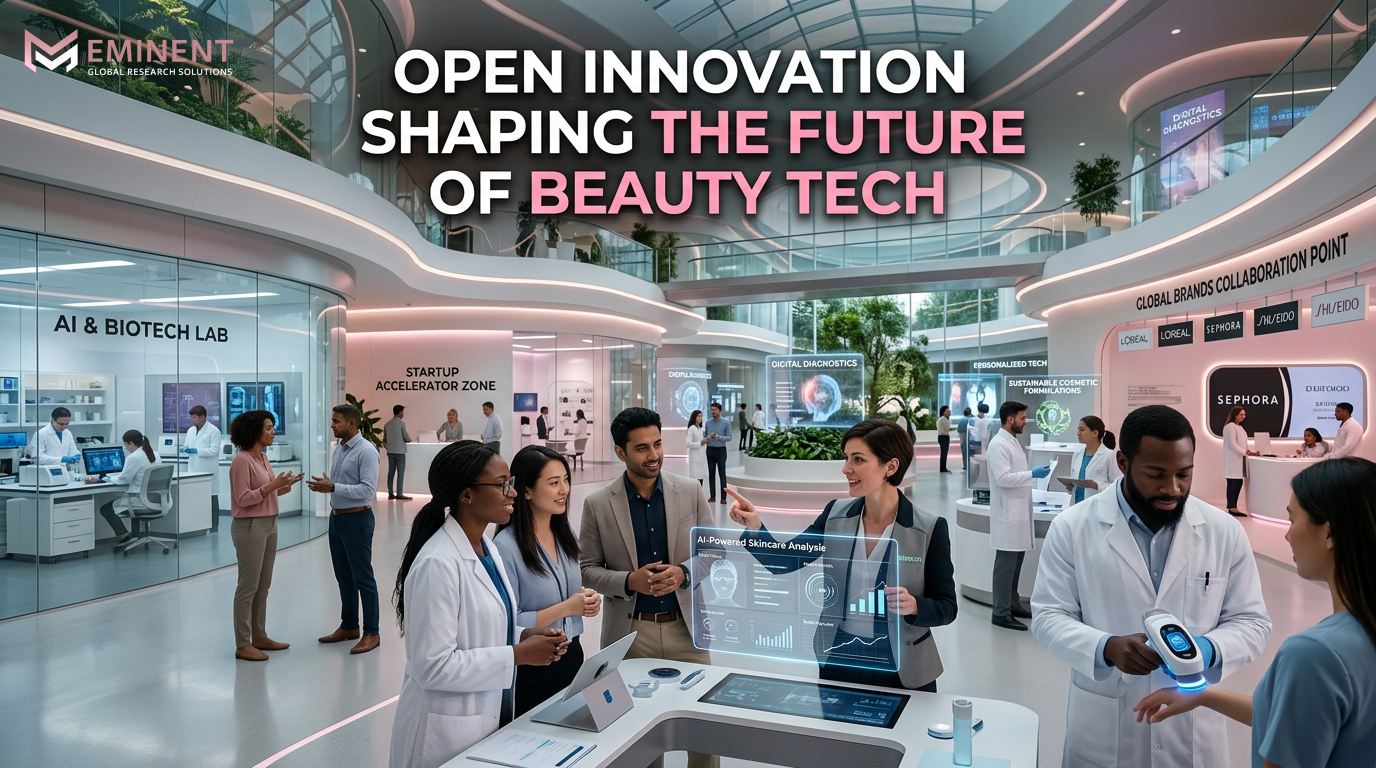
The beauty industry is undergoing one of the most significant transformations in its history, driven by rapid advancements in artificial intelligence, biotechnology, personalization, digital commerce, and connected consumer experiences. In this evolving landscape, innovation is no longer confined to internal R&D laboratories. Instead, global beauty leaders are increasingly adopting open innovation models that combine internal expertise with external entrepreneurial ecosystems to accelerate the development of next-generation beauty solutions.
L’Oréal’s Open Innovation program represents one of the clearest examples of this strategic shift.
By collaborating with startups, venture platforms, accelerators, research institutions, and technology partners, L’Oréal is building a highly interconnected innovation ecosystem designed to identify emerging technologies early and rapidly integrate them into the future beauty market.
The company’s partnerships with organizations such as Station F, Founders Factory, and Partech Ventures demonstrate how large consumer brands are increasingly leveraging startup ecosystems to accelerate digital transformation, improve consumer engagement, and strengthen long-term competitiveness.
At the same time, initiatives such as the L’Oréal North Asia Big Bang Beauty Tech Innovation Program highlight how regional innovation ecosystems are becoming strategically important in shaping localized beauty technology solutions and consumer experiences.
For companies operating across beauty, consumer technology, healthcare, biotechnology, and digital commerce sectors, L’Oréal’s approach reflects a broader evolution toward collaborative innovation models where ecosystem partnerships become critical drivers of growth and market leadership.
Why Open Innovation Is Becoming Essential
Historically, large consumer companies relied heavily on internal R&D departments to develop products, technologies, and brand innovations.
However, technological disruption is now occurring at a pace that makes it increasingly difficult for even the largest organizations to innovate entirely internally.
Emerging technologies such as:
- Artificial intelligence
- Augmented reality
- Biotechnology
- Personalized diagnostics
- Connected devices
- Generative AI
- Digital wellness platforms
are evolving rapidly across multiple industries simultaneously.
As a result, companies are increasingly turning to open innovation strategies that allow them to:
- Access external talent and ideas
- Accelerate technology adoption
- Reduce innovation risk
- Identify emerging consumer trends earlier
- Build flexible innovation pipelines
Open innovation enables organizations to collaborate with startups and technology specialists capable of moving faster than traditional corporate structures.
For beauty companies, this approach is particularly valuable because consumer expectations are changing rapidly and digital engagement increasingly influences purchasing behavior.
Beauty Is Becoming a Technology Industry
L’Oréal’s open innovation strategy reflects a larger transformation where beauty is evolving beyond traditional cosmetics into a highly technology-driven industry.
Modern beauty innovation increasingly involves:
- AI-powered skincare analysis
- Personalized beauty recommendations
- Virtual try-on technologies
- Biotechnology-based ingredients
- Smart beauty devices
- Digital diagnostics
- Data-driven consumer engagement
Consumers now expect beauty experiences that are:
- Personalized
- Interactive
- Digitally integrated
- Science-backed
- Sustainable
- Community-driven
This convergence of beauty and technology has created what many now describe as the “Beauty Tech” economy.
Companies that successfully integrate digital ecosystems into beauty experiences may strengthen:
- Consumer loyalty
- Premium positioning
- Data intelligence
- Omnichannel engagement
- Product differentiation
L’Oréal’s innovation partnerships indicate recognition that future beauty leadership may depend as much on technological capability as on product formulation itself.
Startup Ecosystems Are Driving Faster Innovation
Partnerships with startup accelerators and venture ecosystems are becoming increasingly important for global consumer brands.
Organizations such as Station F, Founders Factory, and Partech Ventures provide access to:
- Early-stage startups
- Emerging technologies
- Entrepreneurial talent
- Experimental business models
- Rapid product innovation
For large corporations, these ecosystems function as external innovation engines capable of identifying disruptive trends before they reach mainstream markets.
Rather than building every technology internally, companies can:
- Pilot new solutions faster
- Test emerging consumer experiences
- Acquire innovation capabilities strategically
- Reduce development timelines
This model improves organizational agility in highly competitive markets.
In beauty, startup-driven innovation is particularly important because consumer trends often evolve rapidly through:
- Social media culture
- Influencer ecosystems
- Creator-driven commerce
- Gen Z and younger consumer behavior
Open innovation partnerships allow established brands to remain culturally and technologically relevant in fast-changing environments.
Regional Innovation Programs Are Becoming Strategically Important
L’Oréal’s North Asia Big Bang Beauty Tech Innovation Program also highlights the increasing importance of localized innovation ecosystems.
Consumer behavior, beauty preferences, and digital adoption patterns vary significantly across global markets.
North Asia in particular has become one of the most advanced beauty technology markets due to:
- High digital engagement
- Strong e-commerce infrastructure
- AI adoption
- Mobile-first consumer ecosystems
- Rapid beauty trend cycles
Regional innovation programs allow companies to:
- Develop localized beauty technologies
- Identify region-specific consumer insights
- Build market-specific partnerships
- Accelerate innovation commercialization
This regionalized approach is becoming increasingly important because beauty innovation is no longer globally uniform.
The future beauty market may increasingly depend on a company’s ability to combine global scale with localized innovation agility.
AI and Data Are Reshaping Consumer Engagement
One of the most important drivers behind beauty open innovation is the growing role of AI and data-driven personalization.
Beauty companies now collect and analyze large volumes of consumer data involving:
- Skin conditions
- Product preferences
- Shopping behavior
- Lifestyle patterns
- Engagement history
AI-powered systems can use this information to create:
- Personalized product recommendations
- Virtual consultations
- Predictive skincare insights
- Customized beauty routines
- Interactive shopping experiences
Open innovation ecosystems help companies integrate advanced AI capabilities more rapidly into consumer-facing platforms.
As personalization becomes more sophisticated, beauty companies may increasingly function as digital wellness and lifestyle platforms rather than traditional cosmetics brands alone.
Sustainability and Biotechnology Are Becoming Core Innovation Areas
Open innovation strategies also support faster advancement in:
- Sustainable packaging
- Green chemistry
- Biotechnology ingredients
- Circular beauty systems
- Responsible sourcing
- Water-efficient formulations
Consumers increasingly expect beauty brands to combine innovation with environmental responsibility.
Collaborating with startups and biotech companies enables organizations to accelerate development of:
- Fermentation-derived ingredients
- Bioengineered actives
- Low-impact manufacturing technologies
- Sustainable material alternatives
The convergence of biotechnology and beauty is creating entirely new categories within skincare, wellness, and preventive beauty.
Companies that integrate sustainability into innovation ecosystems may strengthen both regulatory positioning and consumer trust.
Open Innovation Is Changing Corporate Strategy
L’Oréal’s approach reflects a broader transformation in how large corporations approach growth and innovation.
Future competitive advantage may increasingly depend on:
- Ecosystem collaboration
- Strategic partnerships
- Startup integration
- Venture investment capabilities
- Data-driven innovation
- Agile commercialization models
Rather than relying solely on internal development pipelines, organizations are becoming ecosystem orchestrators capable of combining multiple innovation sources simultaneously.
This shift is reshaping not only product development but also:
- Corporate culture
- Investment strategy
- Consumer engagement
- Talent acquisition
- Digital transformation planning
The Future of Beauty Innovation
The success of open innovation initiatives in beauty demonstrates how the industry is evolving into a highly interconnected ecosystem combining:
- Technology
- Biotechnology
- AI
- Wellness
- Sustainability
- Digital commerce
- Consumer personalization
Over the next decade, beauty companies may increasingly compete on:
- Innovation speed
- Ecosystem partnerships
- AI integration
- Personalized experiences
- Digital consumer engagement
For consulting firms, investors, technology companies, and beauty brands, this transformation creates growing demand for expertise in:
- Open innovation strategy
- Beauty tech commercialization
- Startup partnership ecosystems
- AI-driven personalization
- Digital transformation
- Sustainable innovation planning
The future beauty industry may be defined not only by the products companies create — but by the innovation ecosystems they build around them.