
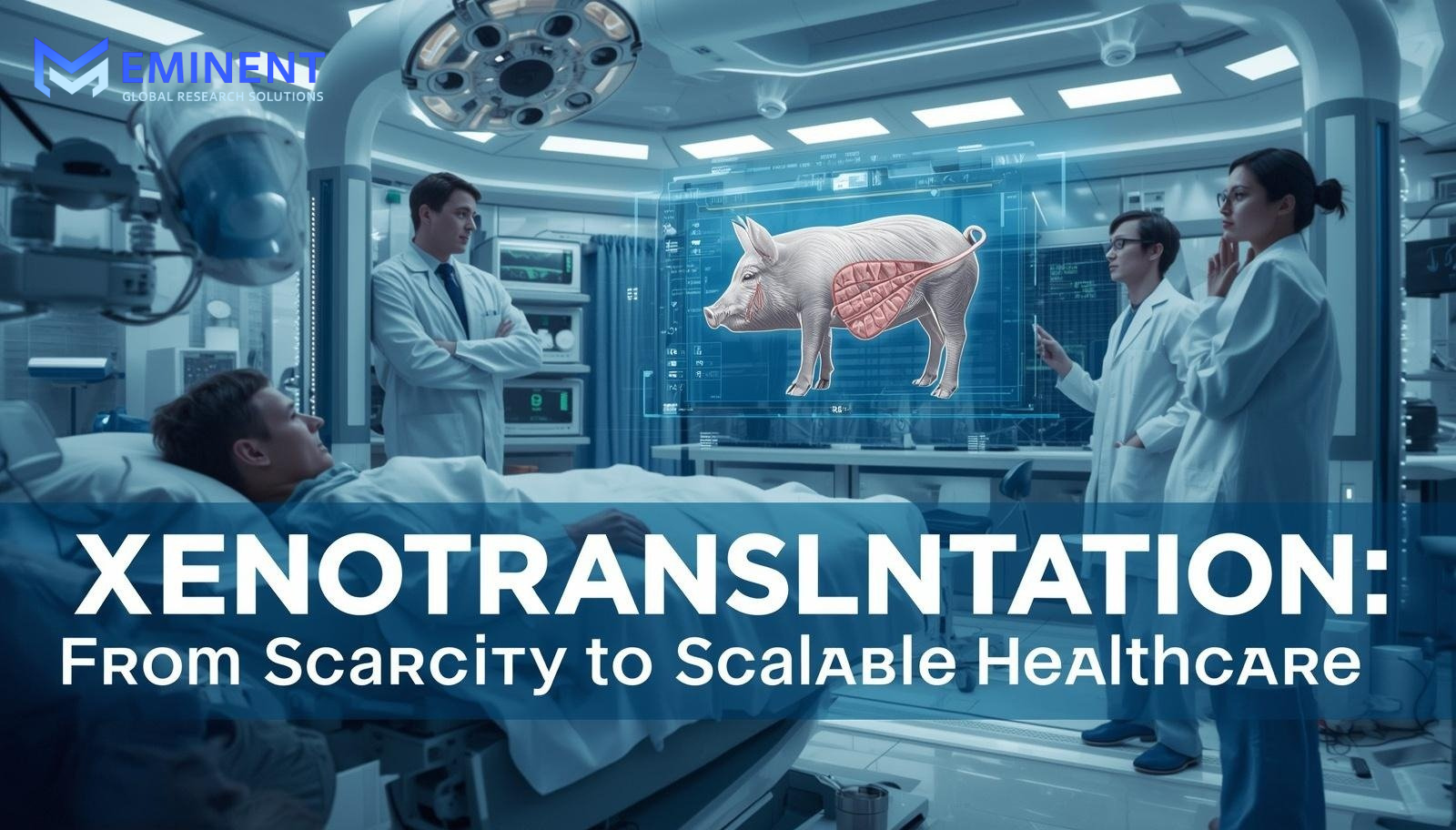
The global healthcare ecosystem has long been constrained by one of its most critical bottlenecks: the availability of transplantable human organs. Thousands of patients remain on waiting lists, with many never receiving the life-saving interventions they need. However, a recent breakthrough in xenotransplantation—where a genetically modified pig kidney functioned successfully in a human for 271 days—signals a transformative shift in how the world may approach organ transplantation.
At the center of this innovation is eGenesis, a biotechnology company leveraging advanced gene-editing technologies to bridge the gap between demand and supply in organ transplantation. This milestone is not merely a scientific achievement—it represents a potential paradigm shift for healthcare systems, insurers, policymakers, and consulting firms worldwide.
The Science Behind the Breakthrough
Xenotransplantation involves transplanting organs from one species into another, typically from pigs to humans due to physiological similarities. However, the primary challenge has always been immune rejection. The human immune system is highly sensitive to foreign tissues, often leading to rapid rejection of non-human organs.
Recent advances in gene editing—particularly CRISPR-based modifications—have enabled scientists to alter pig genomes to:
- Remove antigens that trigger immune rejection
- Add human-compatible genes
- Reduce the risk of cross-species viral transmission
The result is a new generation of “humanized” organs that can function effectively within the human body. The 271-day survival of a pig kidney in a human recipient marks the longest successful case to date, demonstrating both durability and functional viability.
From Scarcity to Supply: A Structural Shift in Healthcare
Traditionally, organ transplantation has operated under a scarcity-driven model. Demand far exceeds supply, leading to:
- Long waiting lists
- High mortality rates among patients awaiting transplants
- Black-market risks and ethical concerns
- Inefficiencies in allocation systems
Xenotransplantation introduces the possibility of a supply-driven model, where organs can be produced at scale. This transition has profound implications:
1. Predictable Availability
Instead of relying on unpredictable human donations, healthcare providers could access a consistent pipeline of organs.
2. Reduced Waiting Times
Patients could receive transplants earlier in disease progression, improving survival rates and quality of life.
3. Cost Optimization
While initial costs may be high, scalable production could reduce long-term treatment costs compared to chronic disease management.
Consulting Perspective: Strategic Implications
For consulting firms like Eminent Global Research Solutions, this breakthrough opens multiple advisory opportunities across the healthcare value chain.
1. Healthcare Infrastructure Transformation
Hospitals and transplant centers will need to adapt to new operational models:
- Integration of xenotransplant protocols
- Specialized training for surgical teams
- New post-operative monitoring frameworks
Consultants can guide institutions through this transition by designing scalable, compliant, and efficient care delivery systems.
2. Regulatory and Compliance Advisory
Xenotransplantation raises complex regulatory questions:
- Approval frameworks for genetically modified organs
- Long-term monitoring requirements
- Cross-border regulatory harmonization
Governments and regulatory bodies will require expert guidance to develop policies that balance innovation with patient safety.
3. Supply Chain and Biomanufacturing Strategy
The shift to a supply-driven model introduces an entirely new supply chain:
- Genetically modified livestock production
- Organ harvesting and preservation logistics
- Cold-chain infrastructure optimization
Consulting firms can help design resilient, ethical, and scalable supply chains tailored to this emerging sector.
4. Insurance and Financial Models
The economics of transplantation will evolve significantly:
- New reimbursement models for gene-edited organs
- Risk assessment for long-term outcomes
- Cost-benefit analysis versus traditional treatments
Insurers will need data-driven strategies to incorporate xenotransplantation into coverage plans, creating demand for actuarial and financial consulting expertise.
5. Ethical and Public Perception Strategy
Public acceptance remains a critical factor. Ethical concerns include:
- Animal welfare
- Genetic modification boundaries
- Long-term human health risks
Organizations will need clear communication strategies to build trust and transparency. Consultants can play a key role in stakeholder engagement and reputation management.
Competitive Landscape and Industry Evolution
This breakthrough is likely to accelerate competition among biotech firms, healthcare providers, and research institutions. Early movers will gain significant advantages in:
- Intellectual property
- Clinical expertise
- Market positioning
At the same time, partnerships between biotech companies, hospitals, and governments will become increasingly important. Strategic alliances will define the pace and scale of adoption.
Risks and Challenges
Despite its promise, xenotransplantation is not without risks:
- Unknown long-term complications
- Potential zoonotic infections
- High initial costs and infrastructure requirements
- Regulatory delays
Consultants must help clients navigate these uncertainties through scenario planning, risk mitigation frameworks, and phased implementation strategies.
The Road Ahead
The success of a genetically modified pig kidney functioning for 271 days is more than a milestone—it is a signal of what’s possible. As clinical trials expand and regulatory pathways become clearer, xenotransplantation could move from experimental to mainstream within the next decade.
For healthcare systems, this means a transition from reactive care to proactive, scalable solutions. For consulting firms, it represents a high-impact domain where strategic insight can shape the future of medicine.
Eminent Global Research Solutions is uniquely positioned to support this transformation—offering expertise in market research, strategic planning, and healthcare innovation advisory.