

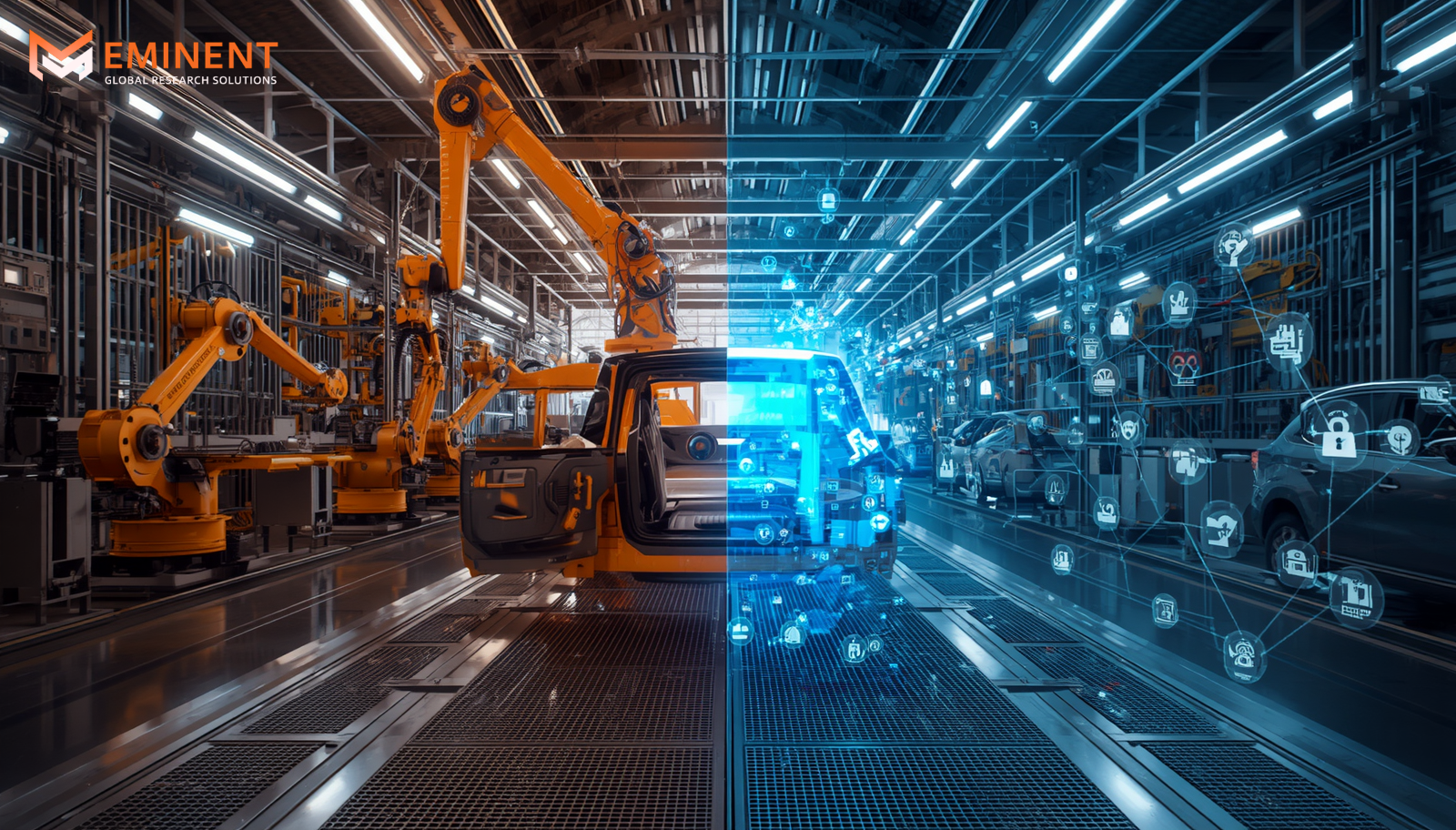
The global automotive industry is undergoing one of the most profound transformations in its history. For more than a century, competitive advantage was built on engineering excellence, manufacturing efficiency, vehicle performance, and mechanical innovation. Today, however, software is rapidly becoming the defining factor that differentiates one vehicle from another.
The rise of Software-Defined Vehicles (SDVs) marks a shift from hardware-centric automobiles to intelligent, connected platforms where functionality, performance, safety, and customer experience are continuously enhanced through software. Vehicles are evolving into digital products capable of receiving over-the-air (OTA) updates, integrating artificial intelligence, enabling autonomous features, and generating recurring revenue through digital services.
This transformation extends far beyond technology. It is redefining business models, supply chains, customer relationships, and the competitive landscape of the automotive sector.
For automakers, suppliers, and technology providers, the transition to software-defined mobility presents enormous opportunities—but also significant strategic challenges. Organizations that invest in software capabilities, cybersecurity, cloud infrastructure, and digital ecosystems today are likely to emerge as the market leaders of tomorrow.
From Mechanical Engineering to Digital Intelligence
Historically, vehicle innovation focused on engines, transmissions, suspension systems, fuel efficiency, and manufacturing quality. Once a vehicle left the factory, its capabilities remained largely unchanged throughout its lifecycle.
Software-Defined Vehicles fundamentally change this model.
Modern vehicles increasingly rely on centralized computing architectures that allow software to control critical functions, including:
- Advanced Driver Assistance Systems (ADAS)
- Battery and energy management
- Infotainment and connectivity
- Autonomous driving capabilities
- Predictive maintenance
- Vehicle diagnostics
- Performance optimization
- Personalized driver experiences
Instead of treating software as a supporting component, automakers are now designing vehicles where software becomes the primary platform driving continuous innovation.
This evolution enables vehicles to improve over time, creating a dynamic ownership experience rather than a static product.
Software Is Becoming the New Competitive Advantage
The transition to SDVs is shifting competitive differentiation from hardware specifications to digital capabilities.
Consumers increasingly evaluate vehicles based on:
- User interface quality
- Connectivity features
- Smartphone integration
- Autonomous capabilities
- Digital services
- Personalized experiences
- Software reliability
- OTA update functionality
This mirrors the transformation seen in the smartphone industry, where software ecosystems became more influential than hardware specifications alone.
As a result, automotive companies must begin competing not only with traditional manufacturers but also with technology firms that excel in software development, artificial intelligence, cloud computing, and user experience design.
The companies that build agile software development organizations may gain long-term advantages over those relying primarily on conventional engineering strengths.
Over-the-Air Updates Are Redefining Vehicle Ownership
One of the defining characteristics of Software-Defined Vehicles is the ability to deliver new features and improvements through Over-the-Air (OTA) software updates.
Rather than requiring dealership visits for every enhancement, manufacturers can remotely:
- Improve vehicle performance
- Fix software issues
- Enhance battery efficiency
- Add safety features
- Upgrade infotainment systems
- Introduce new digital services
This capability transforms vehicles into continuously evolving products.
For consumers, OTA updates improve convenience and extend vehicle value.
For manufacturers, they reduce maintenance costs, strengthen customer engagement, and create opportunities for ongoing revenue generation throughout the vehicle lifecycle.
Digital Services Are Creating New Revenue Models
Software-defined mobility also introduces entirely new business models.
Instead of relying solely on vehicle sales, automakers can generate recurring revenue through digital subscriptions and software-enabled services.
Potential revenue opportunities include:
- Premium navigation services
- Advanced driver assistance packages
- Autonomous driving upgrades
- Connected fleet management
- Entertainment subscriptions
- Performance enhancements
- Predictive maintenance services
- Insurance integration
This shift transforms automotive companies from product manufacturers into digital service providers.
Recurring software revenues may improve profitability while strengthening long-term customer relationships.
As the market matures, lifetime customer value could become more important than one-time vehicle sales.
Cybersecurity Becomes Mission Critical
As vehicles become increasingly connected, cybersecurity moves from an IT concern to a core business priority.
Software-defined vehicles process large volumes of sensitive information, including:
- Driver behavior
- Vehicle location
- Navigation history
- Biometric authentication
- Payment information
- Connected device data
Protecting this data while ensuring vehicle safety requires robust cybersecurity frameworks.
Manufacturers must address:
- Secure software development
- OTA update protection
- Threat detection
- Cloud security
- Data privacy compliance
- Vehicle communication security
Organizations that establish strong cybersecurity capabilities will strengthen customer trust while reducing regulatory and operational risks.
Strategic Partnerships Will Shape Industry Leadership
No single company possesses all the expertise required to build the software-defined vehicle ecosystem.
Success increasingly depends on collaboration between:
- Automotive manufacturers
- Semiconductor companies
- Cloud providers
- Artificial intelligence firms
- Cybersecurity specialists
- Telecommunications providers
- Software developers
These partnerships accelerate innovation while reducing development costs and time-to-market.
The future automotive value chain will likely become more interconnected, with ecosystems replacing traditional supplier relationships.
Companies capable of building strong strategic alliances may accelerate digital transformation while expanding competitive capabilities.
Organizational Transformation Is Equally Important
Transitioning to Software-Defined Vehicles requires more than adopting new technologies.
Automakers must fundamentally rethink organizational structures, talent strategies, and development processes.
This includes investments in:
- Software engineering talent
- Agile product development
- AI and machine learning capabilities
- Cloud-native infrastructure
- Digital product management
- DevSecOps practices
- Continuous software testing
Organizations that successfully integrate software development into traditional automotive engineering cultures will likely outperform competitors during the transition.
The ability to continuously innovate after vehicle production becomes as important as manufacturing excellence itself.
The Future of Mobility
Software-Defined Vehicles represent one of the most disruptive innovations in automotive history.
Future vehicles will increasingly function as intelligent digital platforms capable of learning, adapting, and improving throughout their operational lives.
Artificial intelligence, cloud connectivity, autonomous driving, and advanced digital ecosystems will redefine consumer expectations and industry competition.
For automotive manufacturers, suppliers, investors, and technology providers, software is no longer a supporting function—it is becoming the foundation of future mobility.
Consulting Angle
The shift toward Software-Defined Vehicles is transforming the automotive industry from hardware-centric manufacturing to software-driven mobility ecosystems. Competitive advantage will increasingly depend on digital platforms, OTA capabilities, cybersecurity, AI integration, and recurring software revenues rather than mechanical engineering alone. Companies that invest early in software capabilities, strategic technology partnerships, and scalable digital architectures will be better positioned to lead the next generation of connected and autonomous mobility.