

Introduction
Cell and gene therapies (CGTs) are reshaping the treatment landscape for complex diseases, including certain cancers, rare genetic disorders, and inherited conditions. These therapies offer the potential to address disease at the cellular or genetic level, creating new opportunities for personalized and potentially transformative treatment.
However, scientific progress alone does not guarantee commercial success. One of the most significant challenges facing the industry is the ability to manufacture these advanced therapies consistently, efficiently, and at a scale that supports broader patient access.
Traditional biopharmaceutical manufacturing models cannot always be transferred directly to cell and gene therapies. Living cells, viral vectors, complex starting materials, individualized production requirements, and stringent quality controls introduce additional operational challenges.
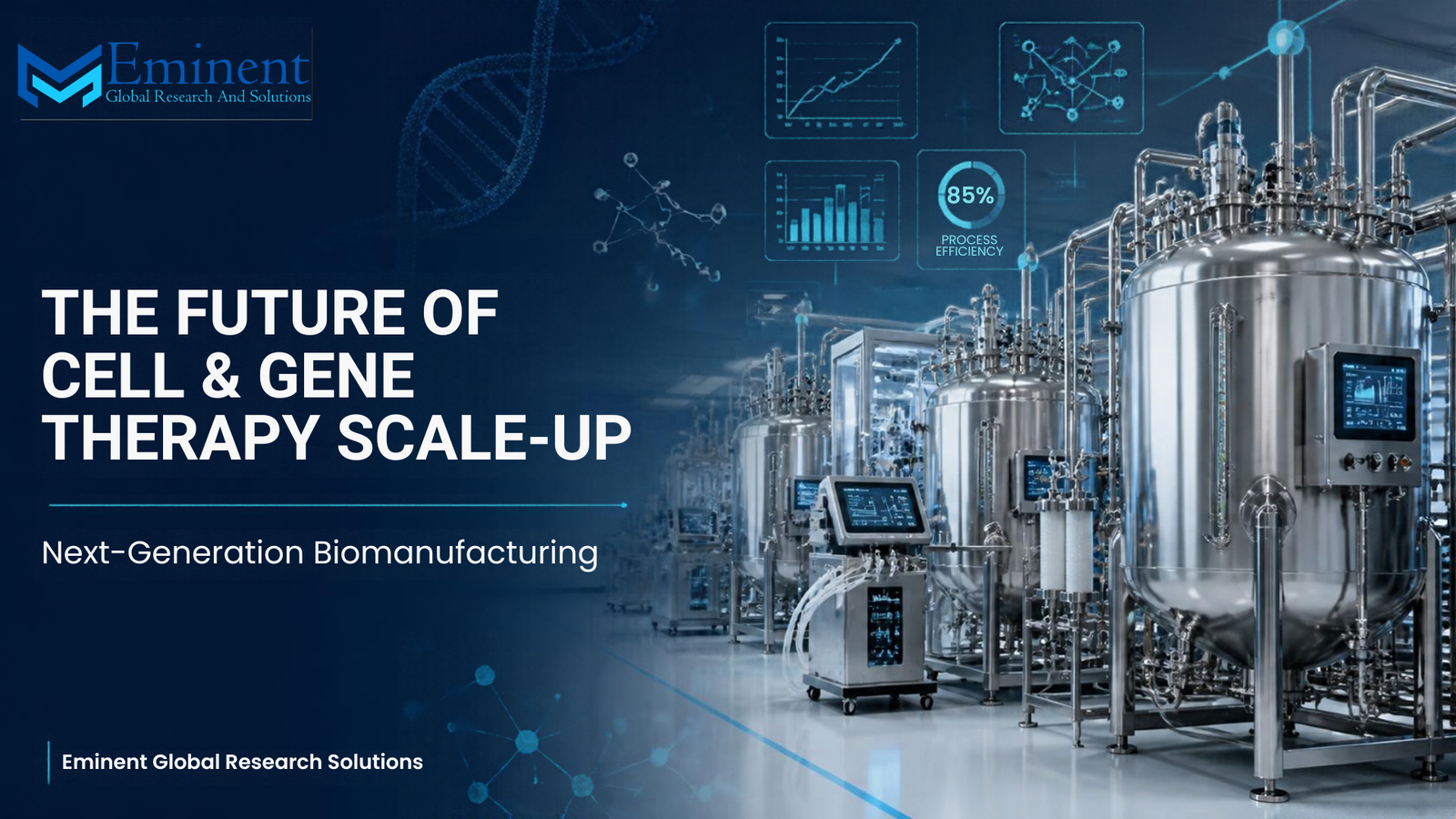
This is where next-generation biomanufacturing becomes strategically important. Advances in automation, closed processing systems, digital manufacturing, process analytics, and modular facilities are creating new possibilities for scaling CGT production.
For biotechnology companies, the challenge is no longer simply to develop an effective therapy. It is to build a manufacturing model capable of supporting clinical development, regulatory compliance, commercial supply, and long-term business growth.
1. Why Cell & Gene Therapy Manufacturing Needs a New Approach
Cell and gene therapies have manufacturing requirements that differ considerably from those of conventional small-molecule drugs and many established biologics.
Cell therapies may involve collecting cells, modifying or expanding them, testing their quality, and returning the finished product to the patient. Autologous therapies, which use a patient’s own cells, can require individual production batches and close coordination between manufacturing facilities and treatment centers.
Allogeneic therapies, which use cells from a donor or established cell source, may offer opportunities for larger production campaigns. However, they introduce their own challenges involving donor variability, product consistency, potency, and scale.
Gene therapies often require specialized production of viral vectors or other delivery systems, followed by purification, formulation, and extensive quality testing.
These differences create several industry-wide challenges:
Process variability: Biological starting materials and complex production processes can affect product consistency.
Capacity constraints: Specialized equipment, facilities, and qualified personnel may limit production throughput.
High manufacturing costs: Labor-intensive operations, complex quality testing, and low production yields can increase the cost per dose.
Long production timelines: Multiple processing, testing, and release stages can delay product availability.
Supply-chain complexity: Critical raw materials, specialized reagents, and temperature-controlled logistics can create vulnerabilities.
Consequently, scale-up requires more than increasing equipment capacity. It demands an integrated manufacturing strategy that considers process design, product quality, regulatory requirements, supply-chain resilience, and commercial demand.
2. Automation and Closed Processing Systems
Automation is becoming an important enabler of more consistent and scalable CGT manufacturing.
Many traditional cell-processing workflows rely on manual interventions. These activities can increase labor requirements, expose processes to contamination risks, and introduce variability between operators and manufacturing batches.
Automated platforms can standardize selected activities, including cell handling, liquid transfers, cell expansion, sample processing, and data collection. Closed processing systems can also reduce direct exposure of the product to the surrounding environment, helping control contamination risks.
The potential benefits extend beyond labor reduction. Automation can improve process repeatability, support more consistent documentation, and enable manufacturing teams to manage higher workloads without proportionally increasing manual interventions.
However, automation is not a universal solution. Different therapies may require different equipment configurations, and complex workflows can be difficult to standardize. Equipment integration, software validation, staff training, and change control must be addressed before automated systems are introduced into regulated production.
For companies evaluating manufacturing investments, the central question is not whether automation is possible, but which process steps offer the greatest improvement in quality, throughput, and total cost of ownership.
3. Continuous Processing and Modular Manufacturing
Continuous and intensified manufacturing approaches are attracting attention as companies seek to improve productivity and make better use of specialized facilities.
In appropriate processes, continuous operations can reduce intermediate holding times, improve equipment utilization, and create more consistent production conditions. Modular manufacturing, meanwhile, uses adaptable production units that can be configured or expanded according to the needs of a therapy or product portfolio.
These approaches may be particularly useful for organizations developing multiple CGT candidates with different production requirements.
Modular facilities can support phased investment, allowing a company to establish initial clinical manufacturing capacity before expanding toward commercial production. Standardized facility designs may also improve deployment speed and operational consistency across sites.
Nevertheless, continuous processing is not suitable for every cell or gene therapy. Some products require discrete batch operations, individualized handling, or specialized biological processing steps. Modular facilities also require careful consideration of environmental controls, utilities, equipment compatibility, and regulatory qualification.
The most effective manufacturing architecture will therefore depend on the therapy’s biological characteristics, production volumes, quality requirements, and projected commercial demand.
4. Digital Manufacturing and Real-Time Process Intelligence
Digital technologies are increasingly important in advanced biomanufacturing because they can connect process data, equipment performance, quality records, and production planning.
Process analytical technology, in-process monitoring, manufacturing execution systems, and digital process models can help manufacturers understand how operating conditions influence product quality.
For example, monitoring relevant process parameters during cell expansion or vector production can help identify deviations earlier. Better data integration can also improve traceability, support investigations, and provide evidence for process optimization.
Artificial intelligence and machine learning may further support anomaly detection, predictive maintenance, process development, and production scheduling when suitable data and validated analytical methods are available.
However, implementing digital manufacturing requires more than installing software. Data integrity, cybersecurity, system interoperability, model validation, and appropriate human oversight are essential. Manufacturers must also distinguish between promising analytical tools and applications that have demonstrated reliable performance in their specific production environments.
The strategic opportunity lies in turning manufacturing data into actionable intelligence that improves process understanding, reduces avoidable failures, and supports more predictable production outcomes.
5. Quality by Design and Regulatory Readiness
As CGT programs advance from research into clinical and commercial manufacturing, quality management becomes increasingly important.
Quality by Design (QbD) provides a framework for developing products and processes with a systematic understanding of the relationship between material attributes, process parameters, and critical quality attributes.
For CGT manufacturers, this can involve identifying parameters that influence identity, purity, potency, safety, and consistency. Appropriate analytical methods and process controls are essential to demonstrate that the final product meets established specifications.
Process changes introduced during scale-up require particular attention. Changes to equipment, production sites, raw materials, process conditions, or manufacturing platforms may affect product characteristics and require comparability assessments, additional testing, or regulatory engagement.
Regulatory expectations vary by product type and jurisdiction. Companies should therefore integrate regulatory strategy into process development rather than treating compliance as a final-stage activity.
A well-designed manufacturing process can reduce the risk of late-stage changes, improve inspection readiness, and strengthen confidence in the long-term supply of the therapy.
6. The CDMO and Strategic Partnership Opportunity
The complexity of CGT manufacturing has created opportunities for contract development and manufacturing organizations (CDMOs), technology providers, analytical laboratories, and specialized supply-chain partners.
Outsourcing can provide access to established facilities, experienced technical teams, and specialized equipment without requiring every biotechnology company to build its own manufacturing infrastructure.
However, outsourcing does not eliminate manufacturing risk. Companies must evaluate a partner’s process expertise, capacity, quality systems, technology-transfer capabilities, intellectual property protections, and ability to support future commercial volumes.
Technology transfer can be particularly challenging when a process has been developed at a small scale or under research conditions. Incomplete process documentation, limited analytical comparability, and differences between equipment platforms can delay clinical or commercial production.
Strategic partnerships should therefore be assessed as long-term operating relationships rather than short-term capacity purchases.
For emerging biotech companies, selecting the right manufacturing partner early can influence development timelines, capital requirements, regulatory readiness, and commercialization flexibility.
7. The Commercialization Challenge: Cost, Capacity, and Patient Access
Ultimately, next-generation biomanufacturing must deliver more than technical improvements. It must support a commercially sustainable model.
Manufacturing costs influence pricing, reimbursement discussions, investment decisions, and the feasibility of expanding treatment access. Low yields, failed batches, limited facility utilization, and complex logistics can undermine the economics of an otherwise promising therapy.
Companies should evaluate manufacturing performance using a combination of technical and commercial indicators, including:
Batch success and deviation rates.
Process yield and product recovery.
Production cycle time and facility utilization.
Cost per released dose.
Time required for technology transfer and process validation.
Supply reliability and manufacturing lead times.
Capacity requirements under different demand scenarios.
These measures help decision-makers compare manufacturing options and identify where capital investment is most likely to create value.
A scalable process is not necessarily the process with the highest theoretical output. It is the process that consistently delivers the required quality at an acceptable cost while supporting regulatory compliance and realistic commercial demand.
8. Strategic Priorities for Biopharmaceutical Companies
Organizations preparing to scale cell and gene therapies should consider five priorities.
First, design for manufacturability early. Manufacturing constraints should influence process development and product design before pivotal clinical stages.
Second, evaluate platform technologies critically. Standardized platforms can accelerate development, but their suitability must be demonstrated for each therapy and process.
Third, build data-driven operations. Integrated process monitoring and reliable manufacturing data can support quality management, optimization, and capacity planning.
Fourth, align manufacturing capacity with market scenarios. Companies should assess demand uncertainty, geographic expansion, treatment-center readiness, and the consequences of underutilized capacity.
Fifth, integrate market, technology, IP, and regulatory intelligence. Understanding competing manufacturing approaches, emerging technologies, patent positions, regulatory expectations, and partner capabilities can help organizations make better investment decisions.
These priorities are particularly important for biotechnology companies transitioning from clinical development to commercial supply, when manufacturing decisions become increasingly difficult and expensive to reverse.
Conclusion
Next-generation biomanufacturing will be a defining factor in the future of cell and gene therapy. Automation, closed processing, modular facilities, digital manufacturing, and improved process understanding offer opportunities to enhance consistency, increase operational efficiency, and support broader commercial production.
Yet no single technology will solve every scale-up challenge. Successful implementation requires a manufacturing strategy tailored to the therapy, supported by robust quality systems, appropriate regulatory planning, reliable supply chains, and realistic commercial forecasts.
For biotechnology innovators, the competitive advantage will increasingly depend on how effectively scientific innovation is translated into reproducible manufacturing and sustainable market delivery.
At Eminent Global Research Solutions, market intelligence, technology scouting, patent intelligence, and competitive landscape analysis can help organizations assess emerging manufacturing technologies, identify strategic white spaces, evaluate potential partners, and prioritize investments across the cell and gene therapy value chain.
The next phase of CGT innovation will not be determined by scientific breakthroughs alone. It will also depend on the industry’s ability to manufacture those breakthroughs reliably, economically, and at the scale required to reach patients.