

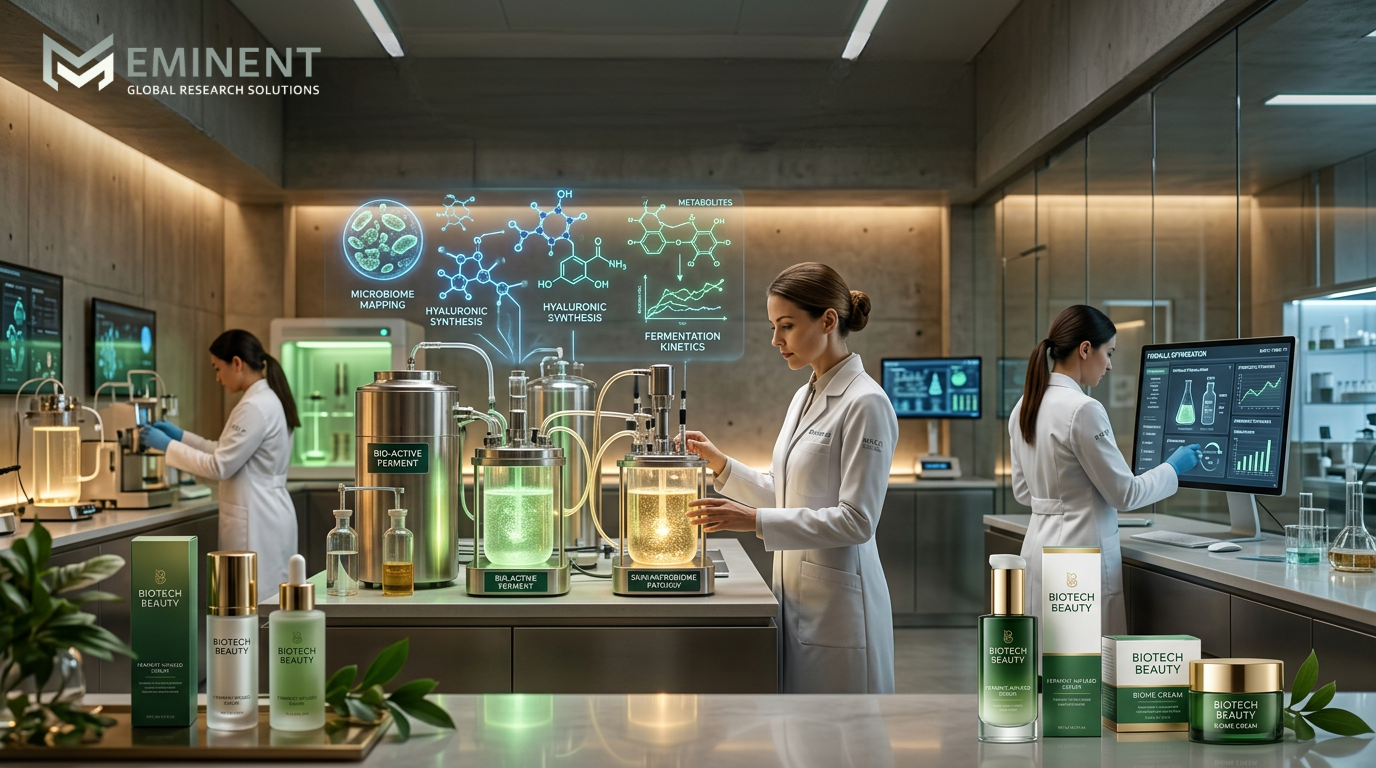
Lesaffre’s launch of Innosya Cosmetic Ingredients marks an important strategic shift in the global beauty and personal care industry. Known historically for its expertise in fermentation, microorganisms, nutrition, and food biotechnology, Lesaffre’s expansion into cosmetics reflects a growing convergence between the food, biotechnology, and beauty sectors.
This development signals more than the creation of a new cosmetic ingredient brand. It represents the accelerating transformation of beauty innovation toward science-backed, biotechnology-driven, and sustainability-focused solutions.
As consumer demand for clean beauty, sustainable sourcing, clinically validated ingredients, and preventive skincare continues to rise, fermentation-based biotechnology is emerging as one of the most promising innovation platforms in the B2B beauty ingredients market.
Companies capable of leveraging cross-industry capabilities, advanced fermentation infrastructure, and strong scientific positioning may gain significant competitive advantages in the next generation of cosmetic innovation.
The future beauty industry may increasingly be shaped not by traditional cosmetic formulation alone, but by biotechnology ecosystems capable of delivering scalable, sustainable, and high-performance active ingredients.
The Rise of Biotechnology in Beauty
The beauty industry has historically relied on plant extraction, synthetic chemistry, and petrochemical-derived ingredients to develop skincare and cosmetic formulations.
However, evolving consumer expectations and sustainability pressures are rapidly changing the innovation landscape.
Consumers today increasingly prioritize:
- Natural and sustainable ingredients
- Science-backed efficacy
- Ethical sourcing practices
- Transparency in formulation
- Biotechnology-enabled wellness solutions
At the same time, beauty companies face growing challenges associated with traditional ingredient sourcing, including agricultural land pressure, environmental impact, supply chain instability, and resource-intensive extraction methods.
Fermentation biotechnology offers an attractive alternative.
Using microorganisms and precision fermentation processes, companies can create highly targeted cosmetic ingredients with improved sustainability, scalability, and consistency compared to conventional extraction methods.
Lesaffre’s entry into the cosmetics market through Innosya demonstrates how industrial biotech expertise developed in food and health sectors can now be applied to beauty innovation.
Why Fermentation-Derived Ingredients Matter
Fermentation has been used for centuries in food production, pharmaceuticals, and industrial biotechnology. Today, advancements in synthetic biology, microbial engineering, and bioprocessing are significantly expanding its commercial applications.
In cosmetics, fermentation-derived ingredients offer several strategic advantages:
- Improved ingredient stability
- Enhanced bioavailability
- Greater formulation precision
- Reduced environmental impact
- Lower dependency on agricultural extraction
- Scalable manufacturing capabilities
Fermented active ingredients can also support claims related to skin longevity, microbiome balance, hydration, barrier protection, and anti-inflammatory performance.
As beauty consumers increasingly seek products supported by clinical and scientific credibility, fermentation-based actives align well with demand for efficacy-driven skincare.
This positions biotech-enabled cosmetic ingredients as a premium category within the evolving beauty market.
Lesaffre’s launch of Innosya specifically focuses on patented fermentation-based ingredients targeting skin aging and wellness applications, highlighting the growing overlap between biotechnology and preventive skincare.
Cross-Industry Convergence Is Reshaping Innovation
One of the most significant aspects of this market shift is the increasing convergence between industries that were previously considered separate.
Food companies, biotech firms, pharmaceutical organizations, and beauty brands are now operating within overlapping innovation ecosystems driven by:
- Microbiome science
- Fermentation technologies
- Precision biology
- Preventive wellness trends
- Sustainable manufacturing
- Personalized health solutions
This convergence creates opportunities for companies with cross-sector expertise to expand into adjacent markets more efficiently.
Industrial biotechnology players already possess many of the capabilities needed to compete in advanced cosmetic ingredient development, including:
- Large-scale fermentation infrastructure
- Microbial research expertise
- Bioprocess engineering
- Regulatory experience
- Ingredient quality control systems
As a result, companies from food and health industries may become increasingly influential within the beauty ingredients sector.
The entry of fermentation specialists into cosmetics also raises competitive pressure for traditional ingredient suppliers that rely primarily on conventional sourcing and formulation models.
Sustainability Is Becoming a Core Competitive Driver
Sustainability is no longer a secondary consideration within the beauty industry. It is becoming a central purchasing factor influencing both consumers and B2B cosmetic manufacturers.
Traditional cosmetic ingredient sourcing often depends on intensive agriculture, chemical processing, and resource-heavy extraction methods. As environmental scrutiny increases, brands are searching for lower-impact alternatives that align with sustainability goals.
Fermentation-based ingredients support this transition by enabling:
- Reduced land usage
- Lower water consumption
- Controlled production environments
- Improved supply chain resilience
- Reduced environmental variability
These advantages are particularly important as climate change, biodiversity concerns, and regulatory pressures continue reshaping global manufacturing priorities.
Companies that can demonstrate measurable sustainability benefits alongside product efficacy may strengthen both market positioning and long-term brand trust.
Innosya’s positioning around sustainable biotechnology reflects this broader industry transformation toward environmentally responsible innovation.
The B2B Beauty Ingredients Market Is Becoming More Science-Driven
The global B2B cosmetic ingredients market is evolving rapidly as beauty brands increasingly demand:
- Clinical validation
- Scientific differentiation
- Proprietary technologies
- High-performance actives
- Regulatory support
- Innovation partnerships
Ingredient suppliers are no longer competing solely on cost and formulation compatibility. Scientific expertise and innovation capabilities are becoming major differentiators.
This creates opportunities for biotechnology companies capable of providing:
- Patented ingredient platforms
- Research-backed efficacy claims
- Custom formulation support
- Advanced biomanufacturing
- Technical consulting expertise
Lesaffre’s biotechnology heritage provides strong credibility within this environment. By combining fermentation expertise with dedicated cosmetic R&D capabilities, Innosya positions itself at the intersection of industrial biotech and premium beauty innovation.
Over time, B2B beauty ingredient suppliers may increasingly resemble biotech innovation companies rather than traditional raw material providers.
Premiumization Opportunities in Beauty
Science-backed fermentation ingredients also support premiumization within the beauty market.
Consumers are increasingly willing to pay higher prices for products associated with:
- Biotechnology innovation
- Clinical effectiveness
- Sustainability
- Skin longevity
- Wellness benefits
- Advanced scientific research
This creates opportunities for beauty brands to position fermentation-derived products within premium skincare, preventive wellness, and longevity-focused categories.
The emergence of “beauty powered by fermentation” reflects a broader consumer shift toward wellness-oriented skincare ecosystems that combine biotechnology with personalized health positioning.
Companies that successfully integrate scientific storytelling, sustainability claims, and clinically validated ingredients may achieve stronger differentiation in an increasingly competitive beauty landscape.
The Future of Biotech-Driven Beauty
The launch of Innosya highlights how the beauty industry is evolving into a more scientifically integrated and biotechnology-driven market.
Future cosmetic innovation will likely be shaped by advancements in:
- Precision fermentation
- Synthetic biology
- Microbiome science
- Cellular longevity research
- AI-driven formulation development
- Preventive skin health technologies
As these technologies mature, partnerships between biotech firms, food companies, pharmaceutical organizations, and beauty brands are expected to increase.
For consulting firms, investors, and beauty industry leaders, this convergence creates growing demand for expertise in:
- Biotechnology commercialization
- Sustainability strategy
- Ingredient innovation
- Regulatory planning
- B2B beauty market expansion
- Cross-industry partnership development
The companies that successfully combine biotechnology capabilities with beauty market understanding may define the next generation of global cosmetic innovation.
The future of beauty may not be built solely in cosmetic laboratories — it may increasingly emerge from fermentation tanks, biotech platforms, and precision biology ecosystems.