

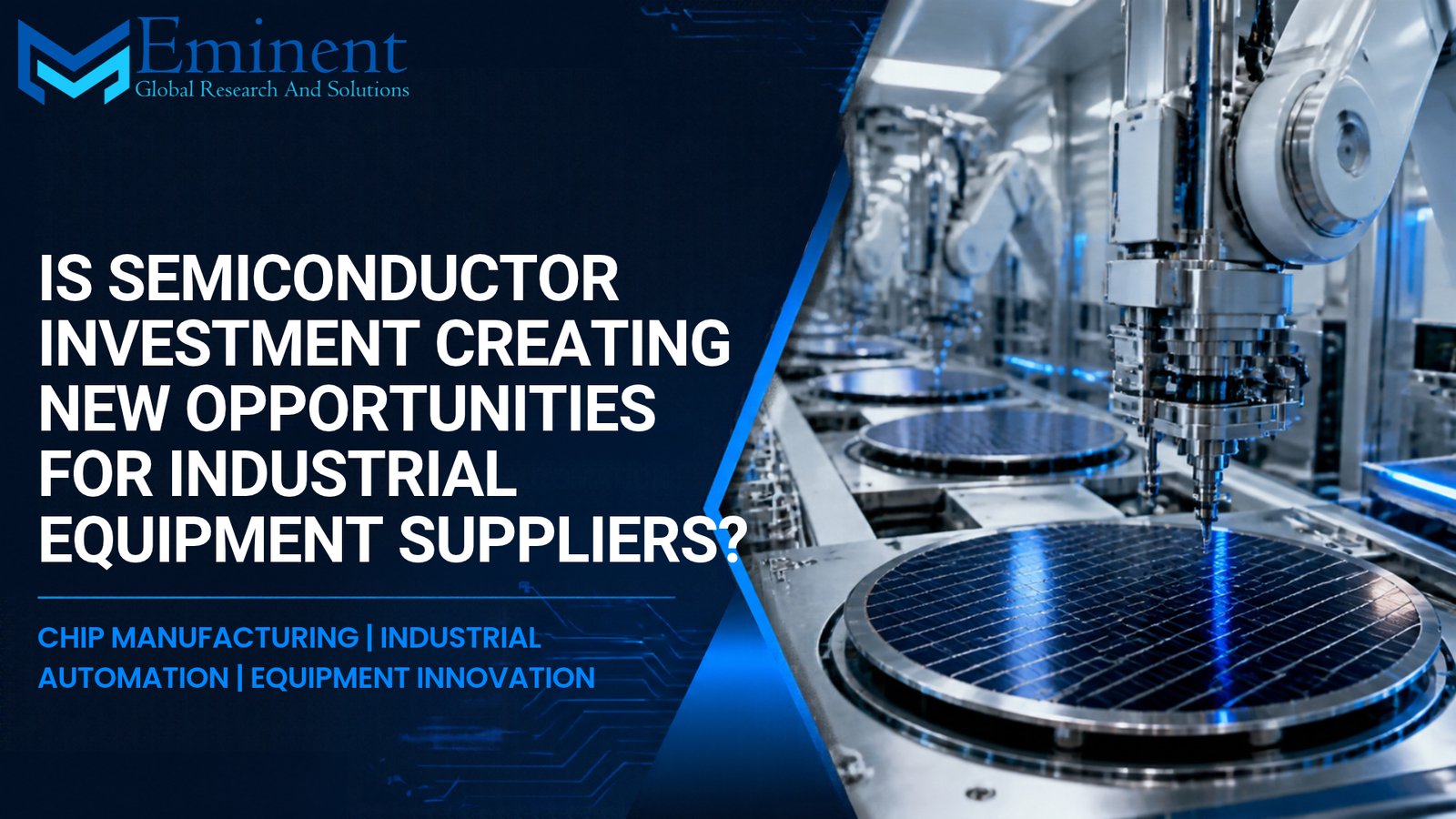
Is Semiconductor Investment Creating New Opportunities for Industrial Equipment Suppliers?
Published Date: 16 November 2026
Category: Electronics & IT | Manufacturing & Industrial
Introduction
The global semiconductor industry is entering another major investment phase as demand for advanced chips, artificial intelligence infrastructure, high-performance computing and memory technologies continues to influence manufacturing strategies.
This investment is creating opportunities beyond semiconductor manufacturers themselves. Industrial equipment suppliers, automation companies, precision engineering businesses and advanced materials producers are becoming increasingly important to the expansion of chip manufacturing capacity.
From wafer-processing machinery and vacuum systems to testing equipment and industrial robotics, semiconductor production depends on a wide range of specialised technologies.
Recent investment announcements from major chipmakers highlight how demand for advanced manufacturing capabilities is creating opportunities across the wider industrial supply chain.
Why Is Semiconductor Investment Increasing?
Semiconductors are essential components in modern electronics, automotive systems, telecommunications, data centres and industrial automation.
Several developments are encouraging manufacturers to expand production capacity.
1. Growing Demand for AI Chips
The expansion of AI data centres is increasing demand for advanced processors, graphics processing units and high-bandwidth memory.
Manufacturing these components requires sophisticated production equipment, advanced packaging technologies and specialised testing systems.
As chipmakers invest in additional capacity, suppliers of semiconductor manufacturing equipment may benefit from new orders and long-term service requirements.
2. Expansion of Advanced Memory Manufacturing
Memory manufacturers are investing in technologies such as high-bandwidth memory (HBM) and advanced DRAM.
These products require precise manufacturing processes, advanced inspection systems and specialised equipment.
The increasing complexity of memory production creates opportunities for suppliers providing deposition, etching, cleaning, inspection and testing technologies.
3. Development of Advanced Semiconductor Facilities
Countries across Asia, North America and Europe are supporting semiconductor manufacturing through industrial investment programmes and new fabrication facilities.
Every new semiconductor facility requires specialised machinery, cleanroom infrastructure, material-handling systems and supporting industrial equipment.
This creates business opportunities for both established equipment manufacturers and specialised component suppliers.
Latest Market Development: SK Hynix Supports Semiconductor Suppliers
On 16 November 2026, South Korean semiconductor manufacturer SK Hynix announced plans to invest approximately 1.4 trillion won, equivalent to around $1.05 billion, over five years to support domestic suppliers of semiconductor materials, components and equipment.
The initiative is intended to strengthen South Korea’s semiconductor supply chain as competition in the AI chip market intensifies.
The company also outlined plans for an 874.6 billion won testing facility at its semiconductor complex in Yongin. The facility will allow smaller suppliers to test and validate products under conditions resembling commercial semiconductor production lines.
This development is significant because it demonstrates how major chipmakers are supporting suppliers beyond conventional procurement relationships.
For industrial equipment companies, such initiatives could create opportunities to develop products, improve technical capabilities and qualify for advanced semiconductor manufacturing applications.
Which Industrial Equipment Segments Could Benefit?
1. Wafer Processing Equipment
Wafer processing is one of the most technologically demanding stages of semiconductor manufacturing.
Equipment used for deposition, etching, cleaning and surface preparation is essential for producing increasingly complex chips.
As manufacturers expand advanced-node production, suppliers capable of delivering precise and reliable wafer-processing systems may find additional opportunities.
2. Semiconductor Testing and Inspection Equipment
Chip complexity is increasing the importance of testing and quality control.
Manufacturers require advanced systems to identify defects, evaluate performance and verify reliability before semiconductor devices reach customers.
Testing equipment, automated inspection systems and measurement technologies could benefit from continued investment in advanced chip production.
3. Vacuum and Thin-Film Deposition Systems
Semiconductor manufacturing uses specialised vacuum environments and thin-film deposition processes.
Physical vapour deposition (PVD), chemical vapour deposition (CVD) and related technologies support the formation of thin material layers used in electronic devices.
Suppliers of vacuum pumps, deposition equipment, sputtering systems and specialised components play an important role in maintaining production quality.
4. Industrial Automation and Robotics
Semiconductor facilities require precise material handling, automated transport and controlled manufacturing environments.
Industrial robots, automated guided vehicles, production monitoring systems and specialised handling equipment can improve operational efficiency.
As fabrication facilities become more advanced, automation suppliers may benefit from demand for integrated manufacturing solutions.
5. Cleanroom and Facility Infrastructure
Semiconductor production requires highly controlled environments to minimise contamination.
Cleanroom ventilation, filtration, temperature control, humidity management and specialised utility systems are essential components of semiconductor facilities.
This creates opportunities for industrial infrastructure companies alongside traditional semiconductor equipment manufacturers.
How Is the Semiconductor Equipment Market Growing?
The wider market outlook indicates strong investment momentum.
According to SEMI’s July 2026 mid-year forecast, global semiconductor manufacturing equipment sales are projected to reach $165.9 billion in 2026, representing 23.2% year-on-year growth.
SEMI expects sales to increase further, reaching approximately $229.5 billion by 2028.
The forecast reflects investment in advanced logic, high-bandwidth memory, testing, packaging and manufacturing capacity required for AI-related applications.
These figures represent the broader semiconductor manufacturing equipment market, rather than the revenue opportunity for any single equipment category or supplier.
Regional Opportunities for Equipment Suppliers
Asia-Pacific
Asia-Pacific remains central to semiconductor manufacturing, with important production and investment activity across China, Taiwan, South Korea and Japan.
Equipment suppliers can explore opportunities in wafer fabrication, memory production, automation, testing and advanced materials.
North America
The United States is investing in semiconductor manufacturing capacity and advanced chip production.
This creates opportunities for equipment manufacturers, precision engineering businesses, cleanroom suppliers and semiconductor technology providers.
Europe
European semiconductor investment is supporting demand for specialised manufacturing equipment, automotive semiconductor technologies, power electronics and industrial applications.
Equipment suppliers with expertise in precision manufacturing and advanced materials may find opportunities through regional production projects.
What Challenges Do Industrial Equipment Suppliers Face?
Despite the growth outlook, entering the semiconductor equipment market is not straightforward.
High technology requirements: Semiconductor manufacturers demand exceptional precision, reliability and process consistency.
Qualification periods: Equipment and components often need extensive testing and validation before receiving approval for commercial production.
Capital investment: Research, engineering, manufacturing facilities and product development require substantial financial resources.
Established competition: The market includes specialised global equipment manufacturers with extensive technical experience and customer relationships.
Supply-chain risks: Suppliers may face challenges involving specialised materials, electronic components, export controls and international logistics.
For new market entrants, developing technical credibility and establishing long-term relationships with semiconductor manufacturers are particularly important.
What Opportunities Could Emerge for Indian Industrial Suppliers?
India’s semiconductor manufacturing ambitions could create opportunities for domestic industrial equipment and component suppliers.
Potential areas include:
- Precision engineering and specialised machine components.
- Industrial automation and robotics.
- Cleanroom and facility infrastructure.
- Semiconductor testing and inspection support.
- Vacuum systems and industrial equipment maintenance.
- Electronic components and specialised manufacturing services.
However, semiconductor equipment production requires stringent quality standards, technical expertise and customer qualification. Domestic suppliers will need sustained investment in research, manufacturing capabilities and workforce development.
What Is the Outlook for 2027 and Beyond?
Semiconductor investment is expected to remain an important driver of industrial equipment demand as manufacturers expand advanced logic, memory, packaging and testing capabilities.
The opportunity extends beyond companies producing complete semiconductor manufacturing systems. Suppliers of specialised components, automation solutions, precision machinery, vacuum technologies and industrial infrastructure can also participate in the expanding ecosystem.
However, future growth will depend on actual equipment orders, fabrication project execution, technology requirements and the ability of suppliers to meet demanding manufacturing standards.
Companies that invest in specialised engineering, product reliability and long-term customer relationships may be better positioned to participate in this market.
Eminent’s Perspective
At Eminent Global Research Solutions, we believe that semiconductor investment is creating important opportunities across the global industrial equipment and advanced manufacturing ecosystem.
The expansion of chip production is influencing demand for precision machinery, testing systems, automation technologies, vacuum equipment and specialised industrial components.
For equipment manufacturers and investors, understanding semiconductor capital expenditure, regional manufacturing expansion and supplier qualification requirements is essential for identifying commercially viable opportunities.
Through market research, industry analysis and competitive intelligence, businesses can evaluate emerging demand, assess competitors and develop strategies for entering or expanding within the semiconductor equipment market.
Conclusion
The growing investment in semiconductor manufacturing is creating opportunities for a wider range of industrial equipment suppliers.
Demand for advanced chips is encouraging manufacturers to expand production facilities and invest in specialised machinery, automation, testing and supporting infrastructure.
Recent investment initiatives by companies such as SK Hynix demonstrate the importance of strengthening supplier ecosystems alongside semiconductor manufacturing capacity.
For industrial equipment manufacturers, the semiconductor sector offers significant long-term opportunities, but success will depend on technical capabilities, product reliability, investment and the ability to meet demanding industry standards.
Post a Comment