

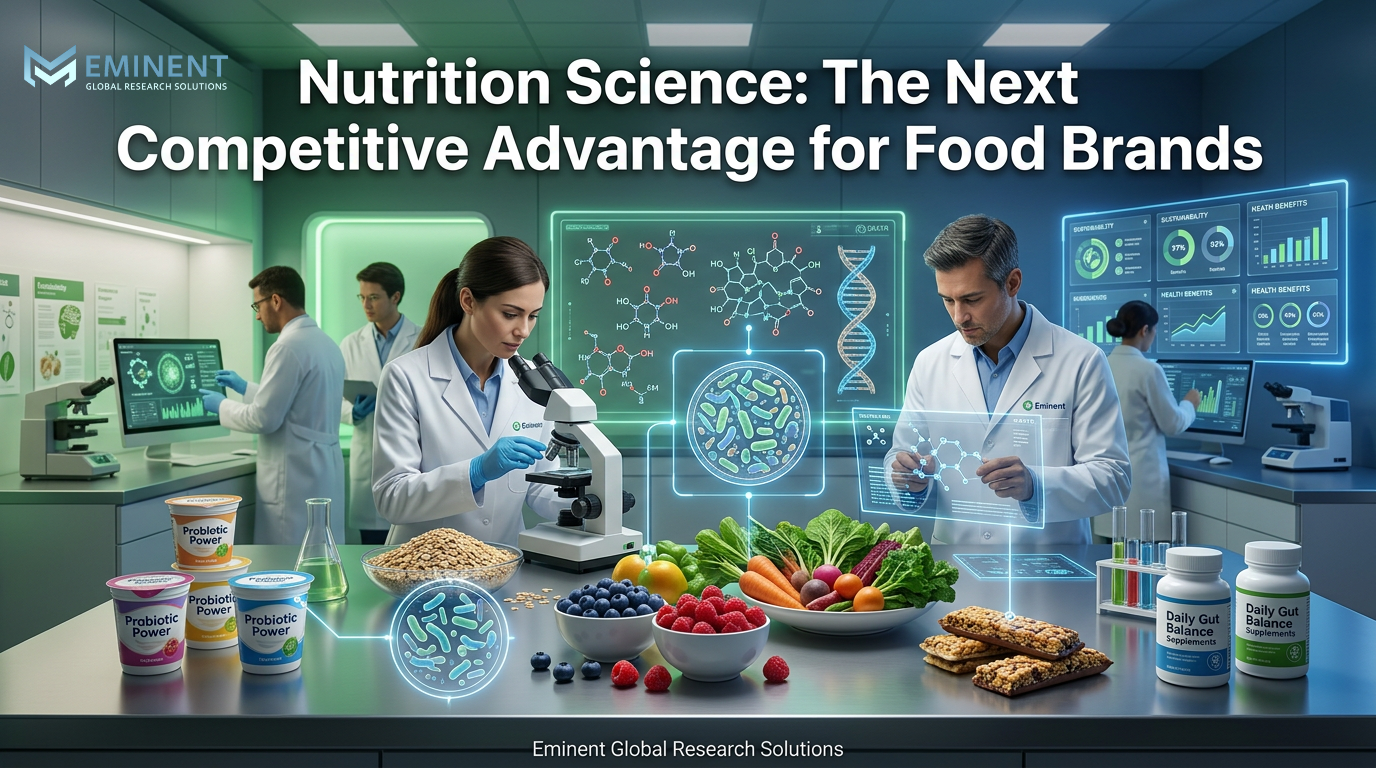
In today’s rapidly evolving food industry, success is no longer determined solely by taste, price, or convenience. Consumers are becoming increasingly health-conscious, informed, and selective about the products they purchase. They are looking beyond nutrition labels and marketing claims, seeking foods that deliver measurable health benefits, scientific credibility, and transparency.
This shift has elevated nutrition science from a supporting function to a strategic driver of innovation and competitive differentiation. Food companies are investing heavily in nutritional research, functional ingredients, clinical validation, and personalized nutrition to meet changing consumer expectations.
For food manufacturers, ingredient suppliers, and consumer packaged goods (CPG) companies, nutrition science is no longer just about product formulation—it is becoming a core business strategy that influences product development, brand positioning, regulatory compliance, and long-term market growth.
For organizations operating in the food and beverage sector, the question is no longer whether nutrition science matters. The real question is whether companies can effectively leverage it to build sustainable competitive advantage.
The Consumer Shift Toward Health-Conscious Purchasing
Consumer priorities have changed dramatically over the past decade. Rising awareness of lifestyle-related diseases, growing interest in preventive healthcare, and easier access to health information have transformed purchasing behavior.
Today’s consumers increasingly evaluate food products based on:
- Nutritional value
- Functional health benefits
- Ingredient transparency
- Scientific credibility
- Sustainability
- Clean-label formulations
Rather than choosing products based solely on flavor or brand recognition, consumers are seeking foods that support immunity, digestive health, cognitive function, heart health, metabolic wellness, and healthy aging.
This trend is driving demand across multiple product categories, including functional foods, fortified beverages, protein-rich snacks, plant-based alternatives, and personalized nutrition solutions.
As a result, nutrition science has become central to product innovation strategies across the global food industry.
From Product Claims to Scientific Evidence
The era of broad marketing claims is rapidly fading.
Consumers, retailers, and regulators increasingly expect food brands to substantiate health-related claims with credible scientific evidence.
Companies are responding by investing in:
- Clinical studies
- Nutritional research
- Ingredient validation
- Human health trials
- Academic partnerships
- Evidence-based product development
Science-backed innovation not only strengthens consumer trust but also reduces regulatory risk while supporting premium brand positioning.
Brands capable of demonstrating measurable nutritional benefits often gain stronger market differentiation than competitors relying solely on marketing narratives.
Scientific credibility is becoming an increasingly valuable brand asset.
Functional Foods Are Driving Market Growth
One of the clearest examples of nutrition science creating competitive advantage is the rapid expansion of functional foods.
Consumers increasingly seek products that provide benefits beyond basic nutrition.
Examples include:
- High-protein foods
- Gut health products with probiotics and prebiotics
- Fiber-enriched snacks
- Omega-3 fortified products
- Vitamin and mineral-enhanced beverages
- Cognitive health ingredients
- Immune-support formulations
These categories continue to outperform many traditional packaged food segments because they align with long-term wellness trends.
Companies investing in functional ingredient innovation can expand into premium categories while building stronger consumer loyalty.
Personalized Nutrition Is Creating New Business Models
Advances in artificial intelligence, digital health technologies, and nutritional science are enabling the rise of personalized nutrition.
Rather than offering identical products to every consumer, companies can increasingly tailor nutritional recommendations based on individual needs, lifestyle factors, age, health goals, and biological data.
Future nutrition ecosystems may include:
- AI-powered meal recommendations
- Personalized supplement programs
- DNA-informed nutrition plans
- Microbiome-based dietary advice
- Wearable health integration
- Digital wellness platforms
This shift creates opportunities for food brands to transition from product suppliers to long-term wellness partners.
Subscription services, digital nutrition coaching, and customized product offerings may become significant sources of recurring revenue.
Ingredient Innovation Is Becoming a Strategic Asset
Nutrition science is accelerating ingredient innovation across the food industry.
Manufacturers are increasingly adopting:
- Plant-based proteins
- Precision fermentation ingredients
- Bioactive compounds
- Natural sweeteners
- Functional fibers
- Sustainable nutritional ingredients
Consumers increasingly associate ingredient quality with brand quality.
Organizations capable of sourcing innovative, scientifically validated ingredients may strengthen both product performance and market perception.
This also creates opportunities for ingredient suppliers to position themselves as innovation partners rather than commodity providers.
Nutrition Science Supports Premiumization
Consumers are demonstrating a willingness to pay more for products perceived as healthier, scientifically validated, and nutritionally superior.
Premiumization is particularly evident in:
- Functional beverages
- Healthy snacking
- Sports nutrition
- Children’s nutrition
- Medical nutrition
- Healthy aging products
Science-backed positioning allows companies to justify premium pricing while strengthening long-term brand equity.
However, premium pricing must be supported by credible research, transparent communication, and measurable product benefits.
Brands that overstate health claims without sufficient evidence risk losing consumer trust.
Regulatory Compliance and Scientific Transparency
As nutrition-related claims become increasingly sophisticated, regulatory oversight is also evolving.
Food companies must navigate:
- Nutrition labeling requirements
- Health claim regulations
- Ingredient approvals
- Global compliance standards
- Consumer transparency expectations
Organizations integrating regulatory planning into product development can reduce commercialization risks while accelerating market entry.
Scientific documentation is becoming as important as product formulation itself.
The Future of Nutrition Science in the Food Industry
Nutrition science will continue shaping the future of food innovation over the next decade.
Emerging technologies including artificial intelligence, biotechnology, precision fermentation, metabolomics, and microbiome research will create new opportunities for highly personalized and functional food products.
Future industry leaders are likely to combine:
- Advanced nutritional research
- Consumer insights
- Scientific validation
- Sustainable ingredient innovation
- Digital health integration
- Regulatory excellence
The companies that successfully translate nutritional science into meaningful consumer value will be best positioned to capture growth in an increasingly competitive global food market.
Conclusion
Nutrition science is no longer a niche area reserved for research laboratories—it is becoming a cornerstone of competitive strategy in the food industry.
Brands that invest in scientific innovation, transparent communication, and evidence-based product development can differentiate themselves in a crowded marketplace while building deeper consumer trust.
For food manufacturers, ingredient suppliers, and investors, nutrition science represents more than an innovation opportunity. It is a pathway to sustainable growth, premium positioning, and long-term competitive advantage.
As consumers continue prioritizing health and wellness, organizations that place nutrition science at the center of their business strategy will be better equipped to shape the future of the global food industry.