

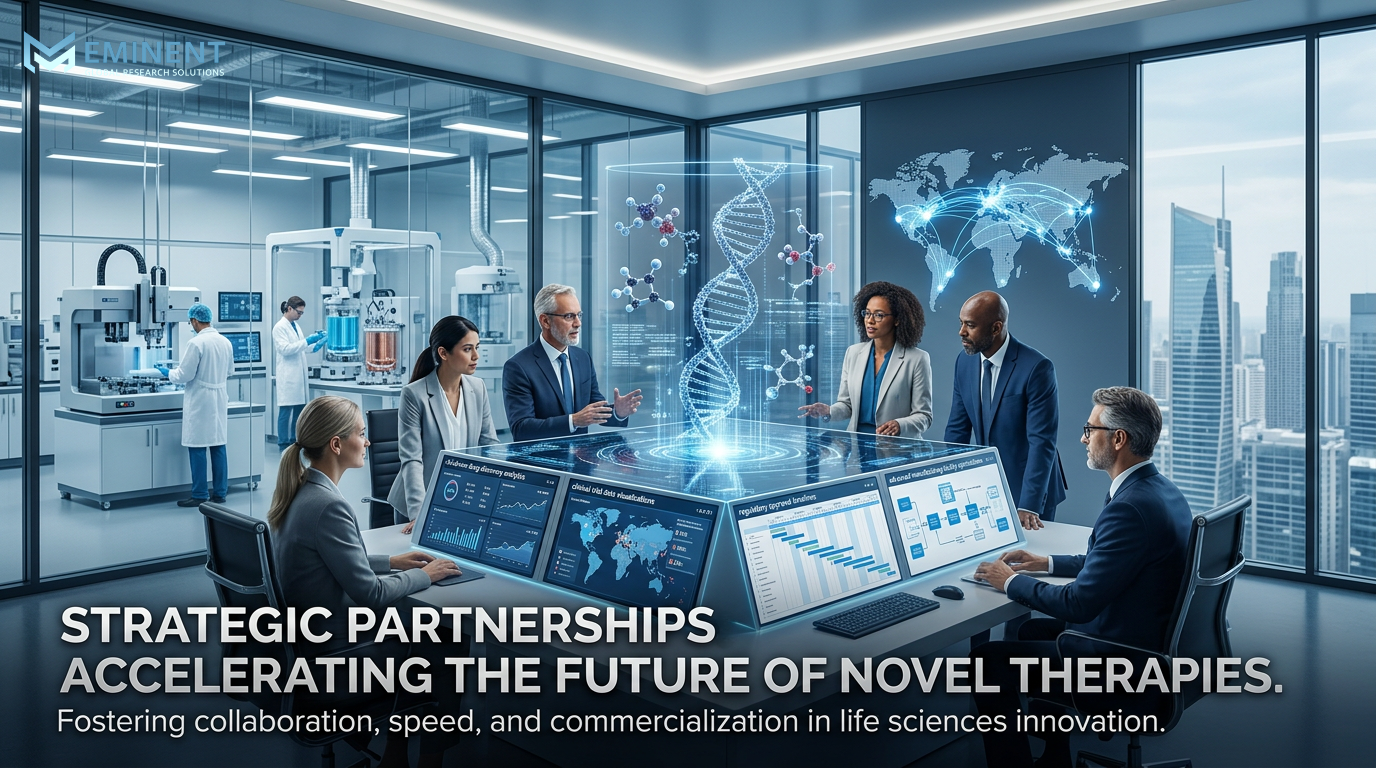
How Collaborative Innovation Is Reshaping the Future of Biopharmaceutical Commercialization
The global biopharmaceutical industry is entering a new era where scientific innovation alone is no longer sufficient to deliver commercial success. As the complexity of developing advanced therapies—including gene therapies, cell therapies, RNA-based medicines, and precision biologics—continues to increase, companies are recognizing that strategic partnerships are becoming essential for accelerating development timelines and reducing time-to-market.
Drug development has traditionally been a lengthy, expensive, and high-risk process. Bringing a novel therapy from laboratory discovery to regulatory approval can take more than a decade and require billions of dollars in investment. Along the way, organizations must navigate scientific uncertainty, regulatory complexity, manufacturing challenges, clinical trial execution, and commercialization planning.
In response, pharmaceutical companies, biotechnology firms, contract development and manufacturing organizations (CDMOs), academic institutions, technology providers, and healthcare organizations are increasingly embracing collaborative innovation models.
Rather than attempting to build every capability internally, industry leaders are leveraging strategic partnerships to combine complementary expertise, share risks, optimize resources, and accelerate innovation.
For life sciences organizations, partnerships are no longer simply operational agreements—they are becoming strategic growth enablers.
The Growing Complexity of Novel Therapy Development
Today’s therapeutic landscape is significantly more complex than traditional pharmaceutical development.
Emerging modalities such as:
- Gene therapies
- Cell therapies
- mRNA medicines
- Gene editing technologies
- Personalized oncology treatments
- Regenerative medicine
require highly specialized scientific expertise, sophisticated manufacturing infrastructure, regulatory knowledge, and advanced clinical capabilities.
Few organizations possess all of these competencies internally.
As therapies become increasingly personalized and technologically advanced, collaboration enables organizations to access specialized capabilities without delaying development through internal expansion.
Strategic partnerships allow companies to focus on their core strengths while leveraging external expertise across critical stages of development.
Why Speed Matters More Than Ever
In today’s competitive biotechnology landscape, speed has become a strategic advantage.
Reducing development timelines can provide significant benefits, including:
- Earlier regulatory submissions
- Faster patient access
- Extended market exclusivity
- Stronger competitive positioning
- Improved return on R&D investment
- Greater investor confidence
For breakthrough therapies addressing unmet medical needs, being first to market can establish long-term clinical leadership and strengthen relationships with physicians, healthcare providers, and patient advocacy organizations.
As competition intensifies across advanced therapies, reducing time-to-market is becoming a boardroom priority rather than simply an operational objective.
Strategic Partnerships Across the Value Chain
Successful commercialization increasingly depends on partnerships spanning the entire product lifecycle.
Research and Discovery
Collaborations between pharmaceutical companies, universities, biotechnology startups, and research institutes accelerate scientific discovery by combining academic expertise with commercial development capabilities.
These partnerships enable organizations to access cutting-edge research while reducing early-stage innovation risks.
Clinical Development
Clinical trials represent one of the most time-consuming phases of drug development.
Strategic alliances with:
- Contract Research Organizations (CROs)
- Digital health companies
- Healthcare systems
- Clinical research networks
can improve patient recruitment, trial management, data quality, and geographic expansion.
Advanced technologies such as AI-driven patient identification and decentralized clinical trials further enhance efficiency.
Manufacturing Partnerships
Manufacturing remains one of the largest bottlenecks for advanced therapies.
Many biotechnology companies collaborate with specialized CDMOs that provide:
- Viral vector production
- Cell processing capabilities
- GMP manufacturing
- Quality assurance systems
- Regulatory compliance expertise
These partnerships allow innovators to scale production more rapidly while avoiding substantial capital investments.
Commercialization and Market Access
Even scientifically successful therapies require strong commercialization strategies.
Partnerships with commercialization specialists, regional distributors, healthcare providers, and market access consultants can accelerate:
- Market entry
- Regulatory submissions
- Pricing strategy
- Reimbursement negotiations
- Physician education
- Patient support programs
This integrated approach reduces delays between regulatory approval and commercial adoption.
Risk Sharing Through Collaboration
Novel therapies often involve substantial financial and technical uncertainty.
Strategic partnerships distribute both investment requirements and development risks across multiple organizations.
Benefits include:
- Shared research funding
- Access to specialized infrastructure
- Diversified technical expertise
- Reduced operational risk
- Faster problem-solving
- Greater flexibility during development
This collaborative model is particularly valuable for smaller biotechnology companies seeking to commercialize innovative therapies without building every capability internally.
Digital Technologies Are Strengthening Partnerships
Artificial intelligence, cloud-based collaboration platforms, real-world evidence, and digital health technologies are transforming how partnerships operate.
Organizations can now share research data securely, monitor clinical progress in real time, optimize manufacturing processes, and generate predictive insights across global development programs.
Digital integration improves transparency, decision-making, and operational coordination among multiple stakeholders.
As biotechnology ecosystems become increasingly interconnected, digital collaboration will play a central role in accelerating innovation.
Challenges That Must Be Managed
While partnerships offer significant advantages, successful collaboration requires careful governance.
Organizations must address:
- Intellectual property protection
- Data security
- Regulatory alignment
- Cultural compatibility
- Clear decision-making structures
- Performance measurement
Poorly structured partnerships can create delays rather than eliminate them.
Therefore, selecting the right partners and establishing shared strategic objectives are essential for maximizing long-term value.
The Future of Collaborative Innovation
The future of drug development will increasingly depend on ecosystem thinking rather than isolated innovation.
Leading pharmaceutical and biotechnology companies are building global innovation networks that combine scientific excellence with regulatory expertise, manufacturing capabilities, digital technologies, and commercialization experience.
These collaborative ecosystems are expected to accelerate development across multiple therapeutic areas, including oncology, rare diseases, immunology, neuroscience, and regenerative medicine.
Organizations that embrace strategic partnerships as a core business strategy—not simply a transactional relationship—may gain meaningful competitive advantages in speed, scalability, and market success.
Consultant Perspective: A Strategic Imperative
For pharmaceutical companies, biotechnology innovators, and healthcare organizations, strategic partnerships have evolved into a critical component of commercialization strategy.
Companies that build strong collaboration ecosystems can:
- Reduce development timelines
- Improve operational efficiency
- Access specialized expertise
- Strengthen regulatory readiness
- Accelerate manufacturing scale-up
- Enhance global market access
At Eminent Global Research Solutions, we believe the next generation of life sciences leaders will be those that successfully combine innovation with strategic collaboration. As therapeutic technologies become increasingly sophisticated, partnership-driven commercialization will be instrumental in transforming scientific breakthroughs into accessible healthcare solutions for patients worldwide.
Rather than competing alone, tomorrow’s industry leaders will compete through the strength of their innovation ecosystems.