

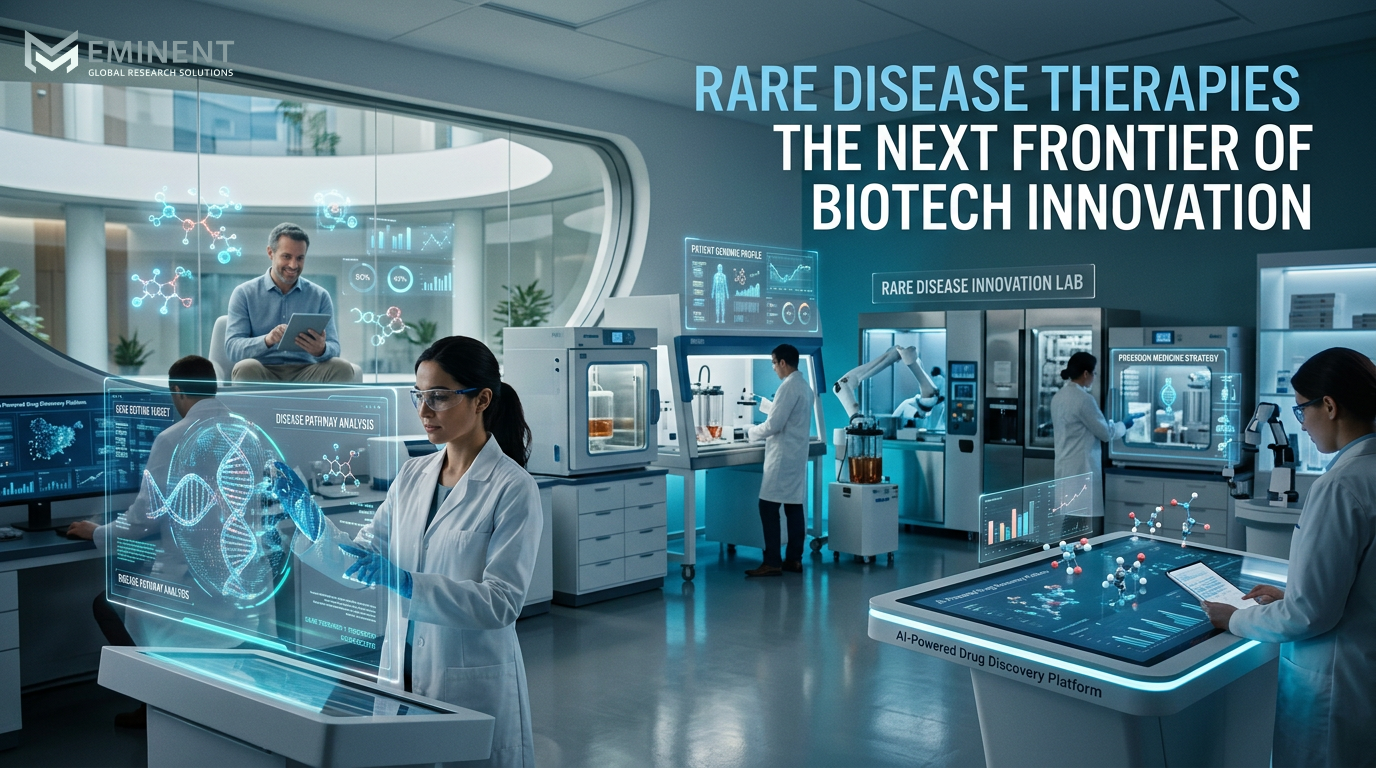
Rare diseases have historically represented one of the most underserved areas in global healthcare. While each individual rare disease affects a relatively small patient population, collectively, more than 300 million people worldwide are estimated to be living with one of over 7,000 identified rare diseases. For decades, limited commercial incentives, complex clinical development, and small patient populations discouraged significant investment in this therapeutic area.
Today, that landscape is changing rapidly.
Advancements in gene therapy, cell therapy, genomic sequencing, artificial intelligence, precision medicine, and regulatory incentives are transforming rare disease development into one of the biotechnology industry’s fastest-growing opportunities. What was once viewed as a niche market is now attracting significant investment from biotechnology companies, pharmaceutical giants, venture capital firms, and healthcare innovators.
For biotechnology companies, rare disease therapies represent more than a scientific challenge—they offer an opportunity to establish leadership in high-value therapeutic markets while addressing critical unmet medical needs.
However, success will depend on far more than scientific discovery. Companies must combine regulatory expertise, scalable manufacturing, strategic partnerships, and commercialization excellence to capture long-term value in this rapidly evolving market.
Why Rare Diseases Are Becoming a Strategic Priority
Historically, many rare diseases lacked effective treatment options due to limited patient populations and uncertain commercial returns. Drug development often focused on larger disease categories capable of generating broader market demand.
Several factors are reshaping this dynamic.
Governments and regulatory agencies worldwide have introduced incentives such as orphan drug designation, market exclusivity, tax credits, accelerated review pathways, and research grants to encourage innovation in rare diseases.
At the same time, advances in genomic medicine have dramatically improved the identification and understanding of genetic disorders.
Today, researchers can identify disease-causing mutations with far greater precision, enabling the development of highly targeted therapies designed to treat the underlying cause rather than simply managing symptoms.
For biotechnology companies, these developments reduce scientific uncertainty while improving the commercial attractiveness of rare disease programs.
Precision Medicine Is Driving Innovation
One of the strongest drivers behind rare disease growth is the expansion of precision medicine.
Unlike traditional treatments designed for broad patient populations, precision medicine enables therapies tailored to specific genetic mutations, biological pathways, or molecular characteristics.
Rare diseases are particularly well suited to this approach because many have clearly defined genetic origins.
Technologies accelerating this transformation include:
- Gene therapy
- Gene editing
- Cell therapy
- RNA-based therapeutics
- AI-driven drug discovery
- Advanced genomic sequencing
These innovations are enabling the development of treatments capable of delivering long-term or potentially curative outcomes.
As clinical success increases, investor confidence in rare disease platforms continues to grow.
Commercial Opportunity Beyond Patient Numbers
Although individual rare diseases affect relatively small populations, the commercial opportunity extends far beyond patient volume.
Rare disease therapies often command premium pricing because they address severe unmet medical needs, offer significant clinical value, and frequently have limited or no competing treatments.
In addition, orphan drug incentives often provide:
- Extended market exclusivity
- Reduced competitive pressure
- Faster regulatory pathways
- Stronger pricing flexibility
- Higher reimbursement potential
Collectively, these factors can create attractive long-term revenue opportunities despite relatively small patient populations.
This explains why many biotechnology companies are expanding rare disease pipelines even while pursuing larger therapeutic markets.
Manufacturing and Scalability Remain Critical Challenges
Scientific innovation alone does not guarantee commercial success.
Many advanced therapies for rare diseases involve highly specialized manufacturing processes requiring viral vectors, cell engineering, precision quality control, and complex cold-chain logistics.
Scaling production while maintaining product quality remains one of the industry’s biggest operational challenges.
Companies investing early in:
- Advanced biomanufacturing
- Automation
- Digital quality systems
- Contract manufacturing partnerships
- Supply chain resilience
may gain significant competitive advantages as more therapies approach commercialization.
Manufacturing readiness is becoming just as important as clinical success.
Regulatory Excellence Is Becoming a Competitive Advantage
Rare disease development benefits from supportive regulatory frameworks, but navigating these pathways requires specialized expertise.
Successful companies increasingly integrate regulatory strategy early in development by:
- Designing efficient clinical trials
- Engaging regulators proactively
- Leveraging accelerated approval pathways
- Building robust evidence packages
- Planning global regulatory expansion
Organizations capable of combining scientific innovation with regulatory agility may reduce development timelines while strengthening investor confidence.
Patient Access Will Shape Long-Term Success
One of the greatest challenges facing rare disease therapies is ensuring that patients can actually receive treatment.
Many innovative therapies carry high upfront costs, requiring healthcare systems and insurers to rethink reimbursement approaches.
Emerging models include:
- Outcomes-based reimbursement
- Risk-sharing agreements
- Installment payment models
- Value-based pricing
- Patient assistance programs
Companies that proactively address market access during development may accelerate adoption while improving long-term commercial performance.
Strategic Partnerships Are Accelerating Growth
The complexity of rare disease development has increased collaboration across the biotechnology ecosystem.
Companies are increasingly partnering with:
- Academic research institutions
- Contract Development and Manufacturing Organizations (CDMOs)
- Patient advocacy groups
- AI technology companies
- Diagnostic developers
- Global pharmaceutical organizations
These partnerships accelerate innovation, reduce development risk, and expand commercialization capabilities.
Organizations that build strong collaborative ecosystems are often better positioned to compete in highly specialized therapeutic markets.
What This Means for the Biotechnology Industry
Rare disease therapies are reshaping biotechnology strategy.
The companies likely to lead this market will not necessarily be those with the largest research budgets but those capable of integrating:
- Scientific innovation
- Precision medicine expertise
- Regulatory excellence
- Manufacturing scalability
- Commercialization strategy
- Market access planning
- Strategic partnerships
For investors, healthcare organizations, and biotechnology companies, rare diseases represent an opportunity to create meaningful patient impact while building sustainable commercial value.
Consultant Perspective
At Eminent Global Research Solutions, we believe the rare disease market is entering a period of accelerated transformation. Success will increasingly depend on the ability to combine market intelligence, competitive benchmarking, regulatory strategy, commercialization planning, manufacturing readiness, and global market access into a unified growth strategy.
Biotechnology companies that invest early in these strategic capabilities will be better positioned to lead the next generation of precision medicine and establish long-term leadership in one of healthcare’s most dynamic and innovation-driven sectors.