

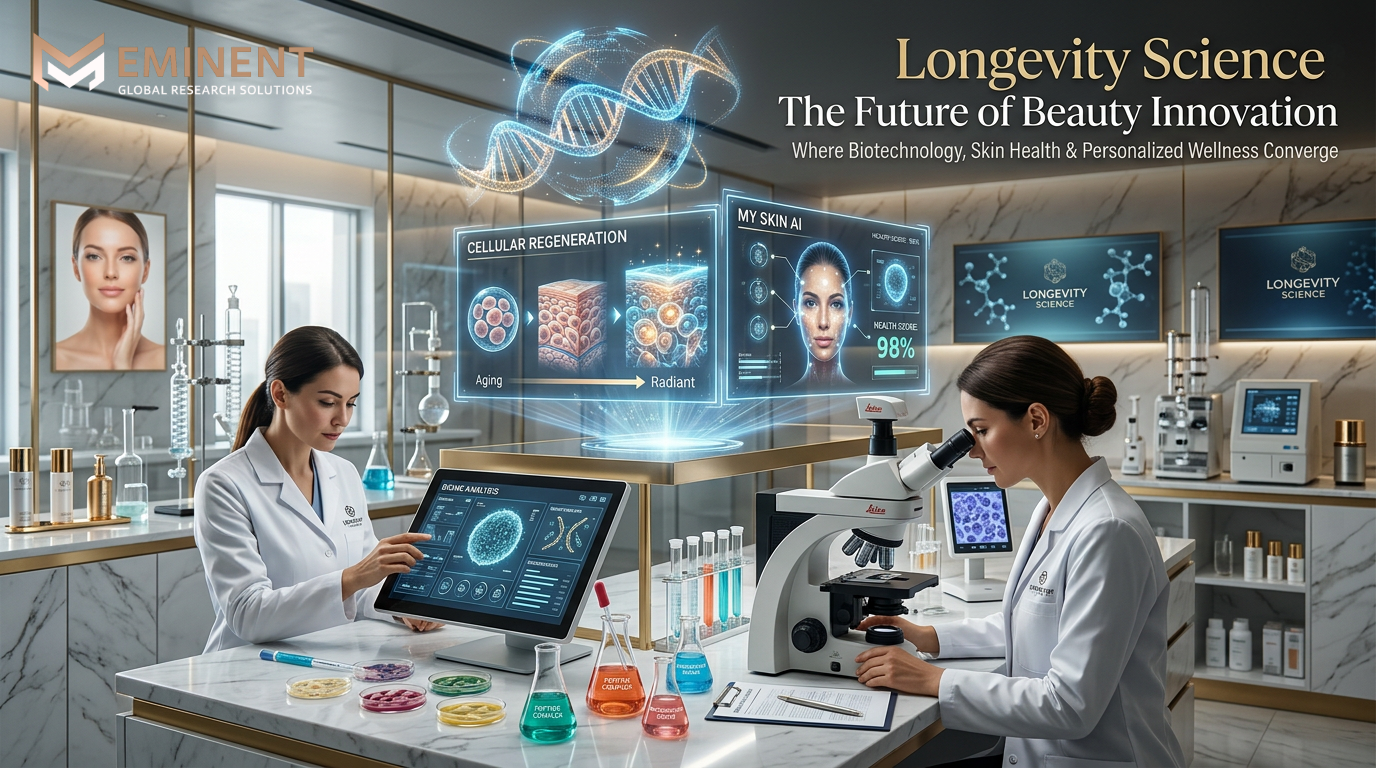
The global beauty industry is undergoing a profound transformation. For decades, innovation centered on improving appearance through cosmetics, anti-aging creams, and skincare routines. Today, however, the industry is moving beyond traditional beauty into a new era driven by longevity science—a multidisciplinary field focused on extending healthspan, slowing biological aging, and improving overall cellular function.
Rather than simply masking visible signs of aging, consumers increasingly seek products that promote healthier skin at the biological level. This shift is creating a new generation of beauty products supported by biotechnology, cellular research, artificial intelligence, genomics, and preventive healthcare.
The emergence of longevity science is not simply introducing another premium skincare category—it is redefining the future of beauty itself. Companies that successfully combine scientific research, personalized health insights, advanced biotechnology, and evidence-based product development may establish leadership in what could become one of the industry’s most valuable innovation segments.
Beauty Is Moving Beyond Anti-Aging
For many years, anti-aging was the dominant narrative in premium skincare.
Most products focused on reducing wrinkles, improving elasticity, or minimizing pigmentation after aging had already occurred.
Today’s consumers are adopting a different mindset.
Instead of correcting visible damage, they increasingly want to preserve skin health before significant aging appears. This preventive approach aligns closely with broader healthcare trends emphasizing wellness, disease prevention, and healthy longevity.
As a result, skincare is evolving from cosmetic enhancement toward long-term biological maintenance.
Consumers now expect products that support:
- Cellular repair
- Skin barrier function
- Collagen preservation
- Oxidative stress reduction
- Inflammation management
- Healthy skin aging
This represents a fundamental shift from treating symptoms of aging to addressing the biological processes that contribute to aging itself.
What Is Longevity Science?
Longevity science explores how biological aging occurs and how scientific interventions may slow, optimize, or modify these processes.
Originally associated with medical research and age-related diseases, longevity science is now expanding into consumer wellness and beauty.
Research areas influencing skincare include:
- Cellular senescence
- DNA repair mechanisms
- Epigenetics
- Mitochondrial health
- Stem cell biology
- Skin microbiome research
- Biomarker analysis
These scientific disciplines are helping researchers understand why skin ages and how targeted interventions may improve long-term skin health.
Rather than developing products solely around cosmetic ingredients, companies are increasingly designing formulations based on biological pathways involved in aging.
This creates opportunities for more effective, science-backed skincare innovations.
Biotechnology Is Accelerating Innovation
Biotechnology is becoming one of the strongest drivers behind longevity-focused beauty.
Advances in precision fermentation, bioengineered peptides, recombinant proteins, exosomes, and microbiome technologies are enabling companies to develop highly specialized skincare ingredients with measurable biological activity.
Emerging biotechnology applications include:
- Bioactive peptides that stimulate collagen production
- Fermentation-derived active ingredients
- Skin microbiome optimization
- Cellular regeneration technologies
- Growth factor research
- Biomimetic molecules
Compared with traditional cosmetic ingredients, biotechnology platforms often provide greater consistency, sustainability, and scientific validation.
As investment in biotechnology continues to increase, beauty companies are forming partnerships with research institutions, healthcare organizations, and biotech startups to accelerate innovation.
The convergence of beauty and biotechnology is creating entirely new opportunities for premium product development.
Personalized Longevity Skincare
Another major trend reshaping beauty is personalization.
Consumers increasingly recognize that aging is influenced by genetics, lifestyle, environmental exposure, nutrition, and individual biology.
Consequently, “one-size-fits-all” skincare solutions are becoming less attractive.
AI-powered diagnostics, digital skin analysis, genomic testing, and wearable technologies now enable companies to provide highly personalized skincare recommendations.
Future longevity-focused skincare ecosystems may include:
- AI skin health assessments
- Biological age analysis
- Personalized ingredient selection
- Digital skin monitoring
- Environmental exposure tracking
- Lifestyle optimization recommendations
This level of personalization enhances both treatment effectiveness and consumer engagement.
It also creates opportunities for recurring subscription services, digital wellness platforms, and long-term customer relationships.
Consumer Trust Is Increasingly Built on Science
Modern beauty consumers are becoming more informed and selective.
Social media, digital health platforms, and widespread access to scientific information have raised expectations regarding product efficacy.
Marketing claims alone are no longer sufficient.
Consumers increasingly seek:
- Clinical validation
- Dermatological research
- Peer-reviewed science
- Transparent ingredient disclosure
- Biotechnology-backed innovation
- Measurable results
Brands capable of demonstrating scientific credibility are likely to strengthen consumer confidence while differentiating themselves within highly competitive premium beauty markets.
This explains why research collaborations between beauty companies, biotechnology firms, universities, and medical institutions are becoming increasingly common.
Scientific partnerships are evolving into valuable commercial assets.
Premiumization Through Skin Health
Longevity science also supports one of the industry’s strongest commercial trends: premiumization.
Consumers are willing to invest significantly more in products perceived as delivering long-term health benefits rather than temporary cosmetic improvements.
Products positioned around:
- Healthy aging
- Preventive skincare
- Cellular wellness
- Scientific innovation
- Personalized treatment
- Clinical performance
can often command higher prices while strengthening brand loyalty.
Rather than selling individual cosmetic products, companies are beginning to build comprehensive skin health ecosystems that combine diagnostics, supplements, digital monitoring, skincare, and professional treatments.
This integrated approach creates multiple revenue opportunities while increasing customer lifetime value.
Strategic Implications for the Beauty Industry
The rise of longevity science extends far beyond product innovation.
It is reshaping how companies approach research and development, partnerships, commercialization, and consumer engagement.
Leading organizations are increasingly investing in:
- Biotechnology capabilities
- Academic research collaborations
- AI-driven personalization
- Clinical validation programs
- Consumer health data platforms
- Sustainable ingredient innovation
These investments help position brands not merely as cosmetic companies, but as trusted partners in long-term health and wellness.
As regulatory scrutiny around product claims continues to increase, scientific credibility may become one of the industry’s most valuable competitive advantages.
The Future of Beauty Is Biological
The beauty industry is entering an era where biology, biotechnology, and healthcare are becoming inseparable from cosmetic innovation.
Over the next decade, the distinction between beauty, wellness, and preventive healthcare is likely to continue fading.
Consumers will increasingly evaluate products based not only on visible results but also on their ability to support long-term skin health and healthy aging.
For beauty brands, biotechnology companies, healthcare organizations, and investors, longevity science represents one of the most significant growth opportunities of the coming decade.
The companies that successfully integrate cellular research, personalized diagnostics, biotechnology innovation, and science-backed product development may define the future of premium beauty.
Beauty is no longer simply about looking younger—it is increasingly about supporting healthier aging through scientific innovation.