

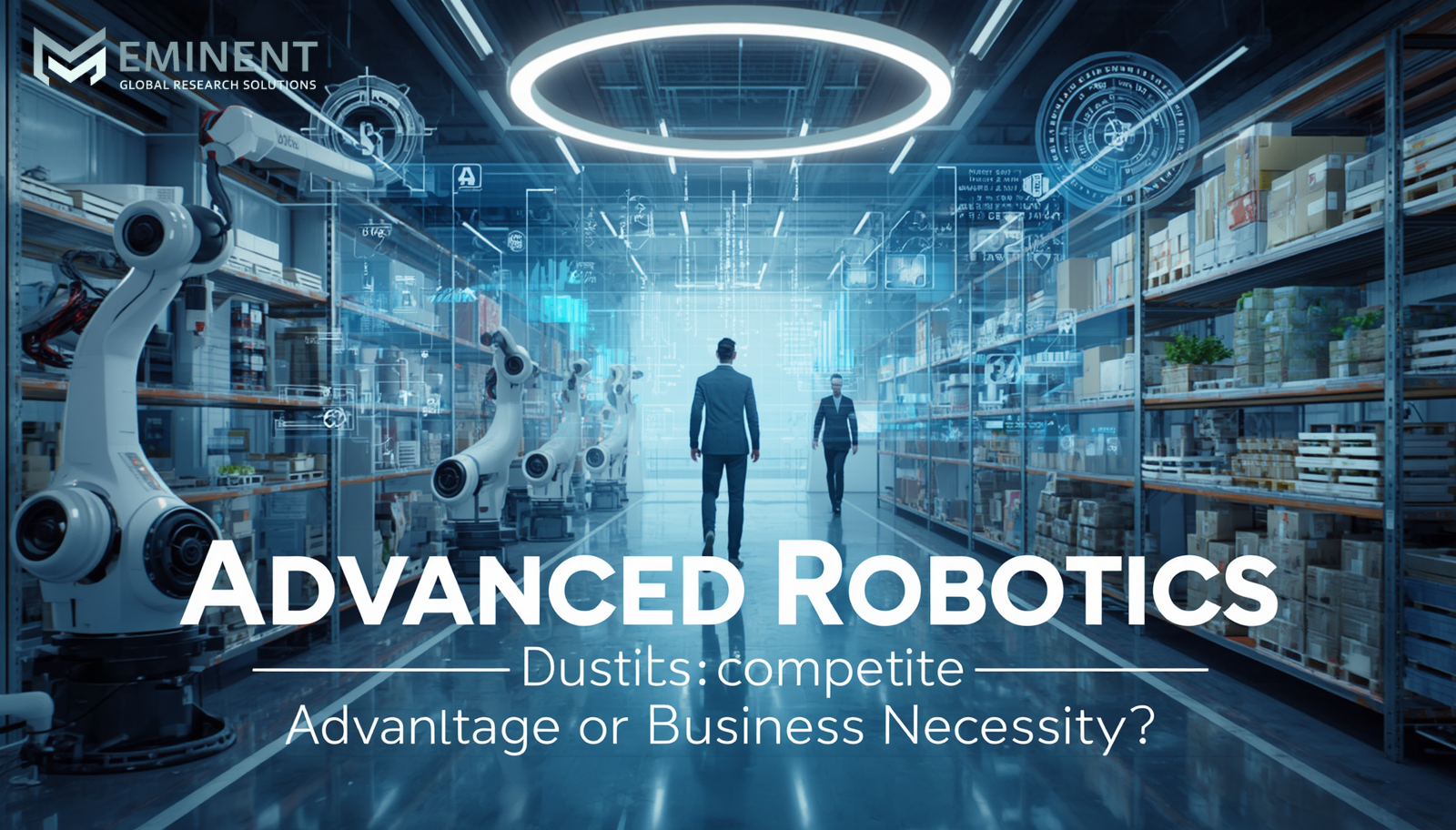
For decades, robotics was viewed primarily as a tool for manufacturing automation. Adoption was often driven by cost reduction objectives and was largely limited to high-volume industrial environments. Today, however, the role of robotics is evolving far beyond traditional automation.
Labor shortages, rising operational costs, increasing quality expectations, supply chain disruptions, and advancements in artificial intelligence are transforming robotics from a competitive advantage into a business necessity.
Across industries including manufacturing, logistics, healthcare, agriculture, food processing, and warehousing, organizations are increasingly deploying advanced robotics to improve productivity, operational resilience, and long-term profitability.
The question is no longer whether robotics will impact industries. The real question is whether businesses can remain competitive without them.
The Changing Economics of Automation
Historically, robotics adoption was often justified by labor cost savings. While this remains important, the business case has expanded significantly.
Companies today face multiple operational challenges:
Persistent labor shortages
Rising wage pressures
Increasing demand volatility
Quality control requirements
Supply chain uncertainties
Productivity improvement targets
Advanced robotics can help address these challenges simultaneously.
Unlike traditional automation systems, modern robotics platforms are increasingly intelligent, flexible, and capable of adapting to dynamic environments. AI-powered robots can perform complex tasks, analyze data in real time, collaborate with human workers, and continuously improve operational performance.
As a result, robotics is becoming a strategic investment rather than simply an efficiency initiative.
AI Is Accelerating Robotics Adoption
The convergence of robotics and artificial intelligence is creating a new generation of intelligent machines.
Traditional robots followed predefined instructions and operated within highly structured environments. Modern robotic systems can leverage computer vision, machine learning, sensor fusion, and predictive analytics to make autonomous decisions and respond to changing conditions.
Applications now include:
Automated warehouse operations
Quality inspection systems
Autonomous mobile robots
Precision agriculture solutions
Surgical robotics
Food production automation
Industrial maintenance systems
AI-driven robotics allows organizations to automate increasingly complex workflows that were previously dependent on human intervention.
This technological advancement is significantly expanding the addressable market for robotics across industries.
Manufacturing Is Leading the Transformation
Manufacturing remains one of the largest adopters of advanced robotics.
Global manufacturers are under pressure to increase efficiency while maintaining product quality and operational flexibility.
Advanced robotic systems help organizations:
Increase production throughput
Improve consistency and quality
Reduce workplace injuries
Minimize downtime
Enhance operational scalability
As global competition intensifies, robotics adoption is increasingly becoming a prerequisite for maintaining cost competitiveness.
Manufacturers that delay automation investments may find themselves at a disadvantage compared to competitors that successfully integrate robotics into their production strategies.
Beyond Manufacturing: Robotics Across Industries
One of the most important shifts in recent years is the expansion of robotics beyond factory environments.
Logistics and Warehousing
The growth of e-commerce has increased demand for automated fulfillment operations.
Robotics solutions are now being used for:
Inventory management
Order picking
Packaging
Material handling
Last-mile delivery support
Agriculture
Precision agriculture is increasingly leveraging robotics to address labor shortages and improve resource efficiency.
Applications include:
Autonomous tractors
Crop monitoring systems
Robotic harvesting
Precision spraying
Weed detection technologies
Healthcare
Healthcare organizations are adopting robotics to improve clinical outcomes and operational efficiency.
Emerging applications include:
Surgical assistance
Rehabilitation systems
Hospital logistics automation
Diagnostic support technologies
As robotic capabilities continue to improve, adoption is expected to expand across virtually every major industry sector.
Operational Resilience Is Driving Investment
The pandemic exposed vulnerabilities in global supply chains and labor-intensive operating models.
Many organizations discovered that excessive dependence on manual processes created operational risks during periods of disruption.
Advanced robotics offers an opportunity to build greater resilience by:
Reducing labor dependency
Supporting business continuity
Improving operational flexibility
Enhancing supply chain stability
For many organizations, resilience has become as important as productivity when evaluating automation investments.
Companies increasingly view robotics not only as a cost-saving tool but also as a risk mitigation strategy.
Challenges to Adoption
Despite the growing benefits, robotics implementation is not without challenges.
Organizations must consider:
Capital Investment
Advanced robotics solutions often require significant upfront investment in hardware, software, infrastructure, and integration.
Workforce Transformation
Automation changes workforce requirements. Companies must invest in employee training and reskilling initiatives to maximize adoption success.
Technology Integration
Robotics systems must integrate effectively with existing operational processes, enterprise systems, and digital infrastructure.
Cybersecurity and Data Management
As robotics becomes more connected and data-driven, organizations must address cybersecurity risks and ensure robust data governance frameworks.
Successful adoption requires a strategic approach that aligns technology investments with long-term business objectives.
The Future of Robotics
The future of robotics will be defined by greater intelligence, autonomy, and collaboration.
Emerging technologies such as generative AI, advanced computer vision, digital twins, and edge computing are expected to further enhance robotic capabilities.
Future robotic systems may become:
More adaptive
More autonomous
Easier to deploy
More cost-effective
More collaborative with human workers
As technology barriers continue to decrease, robotics adoption is likely to accelerate across businesses of all sizes.
Conclusion
Advanced robotics is rapidly evolving from an optional productivity tool into a strategic business necessity.
Organizations face increasing pressure to improve efficiency, address labor challenges, strengthen resilience, and maintain competitiveness in rapidly changing markets.
The companies that successfully integrate robotics into their operational strategies may unlock significant advantages in productivity, scalability, and long-term growth.
For business leaders, the discussion is shifting from whether to adopt robotics to how quickly they can implement and scale these technologies effectively.
In the coming decade, advanced robotics may become as fundamental to business operations as enterprise software and digital infrastructure are today.