

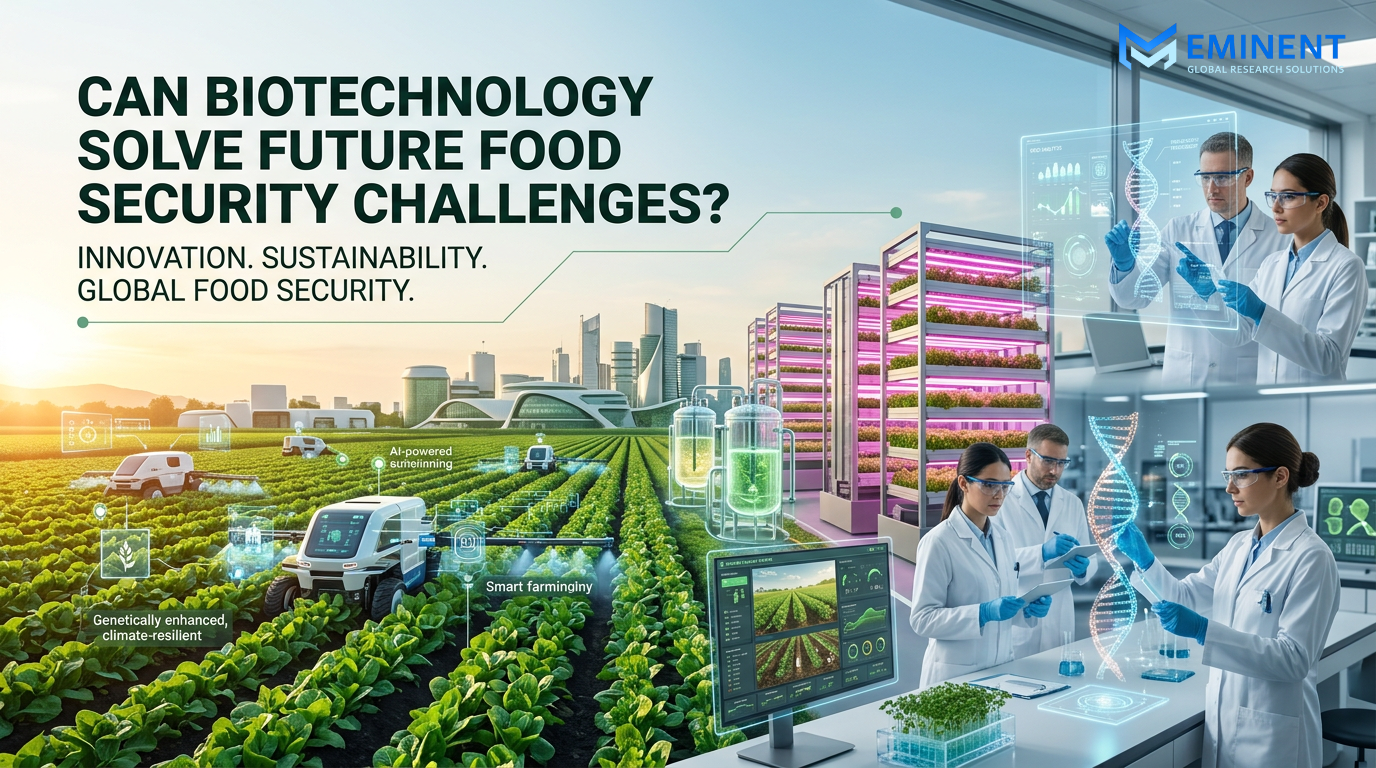
Food security has become one of the defining global challenges of the 21st century. With the world’s population projected to approach 10 billion by 2050, the demand for safe, nutritious, and sustainably produced food is expected to increase significantly. At the same time, climate change, resource scarcity, geopolitical instability, and supply chain disruptions are placing unprecedented pressure on global food systems.
Traditional agricultural practices alone may struggle to meet these growing demands. As a result, biotechnology is emerging as a transformative force capable of reshaping how food is produced, processed, and distributed. From precision fermentation and gene editing to climate-resilient crops and microbial innovations, biotechnology is enabling a new generation of solutions designed to improve productivity while supporting environmental sustainability.
For food manufacturers, agribusinesses, ingredient suppliers, and investors, biotechnology is no longer simply an area of scientific research it is becoming a strategic growth driver. Organizations that invest early in biotechnology-enabled innovation may be better positioned to address future food security challenges while capturing new commercial opportunities in an evolving global marketplace.
The Growing Pressure on Global Food Systems
Food production has always depended on a delicate balance of land, water, climate, and labor. Today, that balance is becoming increasingly difficult to maintain.
Several interconnected trends are accelerating the need for innovation:
- Population growth increasing food demand
- Climate change affecting crop yields
- Declining availability of arable land
- Water scarcity in major agricultural regions
- Rising production costs
- Supply chain volatility
- Increasing consumer demand for healthier and sustainable products
These challenges require solutions that extend beyond conventional farming methods. Biotechnology offers the potential to increase agricultural productivity while reducing environmental impact and improving food resilience.
Biotechnology Is Expanding Beyond Agriculture
While biotechnology has traditionally been associated with pharmaceuticals and healthcare, its role in food production has expanded rapidly over the past decade.
Modern biotechnology now supports innovation across the entire food value chain, including:
- Crop improvement
- Precision fermentation
- Alternative proteins
- Sustainable food ingredients
- Microbial solutions
- Food preservation technologies
- Nutritional enhancement
- Waste reduction
This broad application enables companies to address multiple challenges simultaneously—from improving yields and reducing emissions to creating healthier food products with lower environmental footprints.
Climate-Resilient Crops Are Becoming Essential
Climate variability is one of the biggest threats to future food security. Rising temperatures, unpredictable rainfall, droughts, floods, and emerging pests continue to reduce agricultural productivity worldwide.
Biotechnology enables the development of crops that are better adapted to these changing conditions.
Advanced breeding techniques and gene-editing technologies are helping researchers develop crops with:
- Improved drought tolerance
- Enhanced disease resistance
- Greater pest resistance
- Higher nutritional value
- Increased yield potential
- Better tolerance to extreme weather conditions
These innovations can help farmers maintain productivity despite increasingly unpredictable environmental conditions.
For governments and agribusinesses, investing in climate-resilient agriculture represents both a food security strategy and an economic resilience initiative.
Precision Fermentation Is Transforming Ingredient Production
One of the fastest-growing areas of food biotechnology is precision fermentation.
Instead of relying solely on traditional agriculture or animal production, precision fermentation uses microorganisms to produce high-value ingredients with exceptional efficiency.
Applications include:
- Dairy proteins
- Enzymes
- Functional ingredients
- Vitamins
- Natural flavors
- Specialty fats
- Bioactive compounds
Compared to conventional production methods, fermentation often requires fewer natural resources while offering greater consistency and scalability.
As consumer demand for sustainable products continues to grow, fermentation platforms are expected to play an increasingly important role in the future food economy.
Alternative Proteins Are Reshaping the Industry
Global protein demand is expected to increase significantly over the coming decades.
Biotechnology is helping diversify protein sources beyond conventional livestock through innovations such as:
- Plant-based proteins
- Fermentation-derived proteins
- Cultivated meat technologies
- Algae-based nutrition
- Microbial proteins
These emerging protein platforms have the potential to reduce greenhouse gas emissions, lower water consumption, and improve supply chain resilience.
While traditional agriculture will remain essential, biotechnology expands the industry’s ability to meet future nutritional needs more sustainably.
Reducing Food Waste Through Biotechnology
Approximately one-third of food produced globally is lost or wasted before reaching consumers.
Biotechnology offers several opportunities to improve food preservation and reduce waste through:
- Natural preservation technologies
- Shelf-life extension ingredients
- Smart packaging innovations
- Microbial food protection systems
- Improved post-harvest processing
Reducing food waste is one of the fastest ways to improve food security without requiring significant increases in agricultural production.
For food manufacturers, these technologies also create cost savings while supporting sustainability objectives.
Regulatory and Consumer Considerations
Despite its significant potential, biotechnology adoption depends on public trust and regulatory acceptance.
Consumers increasingly expect transparency regarding:
- Product safety
- Scientific validation
- Sustainability claims
- Ingredient sourcing
- Regulatory compliance
Companies introducing biotechnology-enabled products must invest in clear communication, rigorous scientific research, and responsible innovation.
Regulatory frameworks will also continue evolving as governments seek to balance innovation with food safety and consumer protection.
Organizations that proactively address these areas may accelerate commercialization while strengthening long-term brand credibility.
Strategic Opportunities for the Food Industry
The growing convergence of biotechnology, agriculture, food science, and digital technologies is creating entirely new business opportunities.
Food companies can leverage biotechnology to:
- Develop premium functional foods
- Improve supply chain resilience
- Strengthen sustainability performance
- Expand ingredient innovation
- Enhance nutritional value
- Reduce production costs
- Support circular economy initiatives
At the same time, partnerships between biotechnology firms, food manufacturers, research institutions, and agricultural organizations are becoming increasingly important for accelerating innovation.
Cross-industry collaboration will likely define the next generation of food technology leaders.
The Future of Food Security
Biotechnology alone will not solve every food security challenge. However, it is likely to become one of the most powerful tools available to governments, businesses, and researchers seeking to build more resilient global food systems.
Future success will depend on integrating biotechnology with:
- Precision agriculture
- Artificial intelligence
- Sustainable farming practices
- Digital supply chain management
- Climate adaptation strategies
- Responsible regulatory frameworks
Companies that combine scientific innovation with commercial execution and sustainability leadership will be best positioned to shape the future of food production.
For consulting firms, investors, food manufacturers, and policymakers, biotechnology represents not only a scientific opportunity but also a strategic imperative.
As global demand continues to grow, the organizations that invest in biotechnology-driven food innovation today may become tomorrow’s leaders in building a more secure, sustainable, and resilient global food ecosystem.