

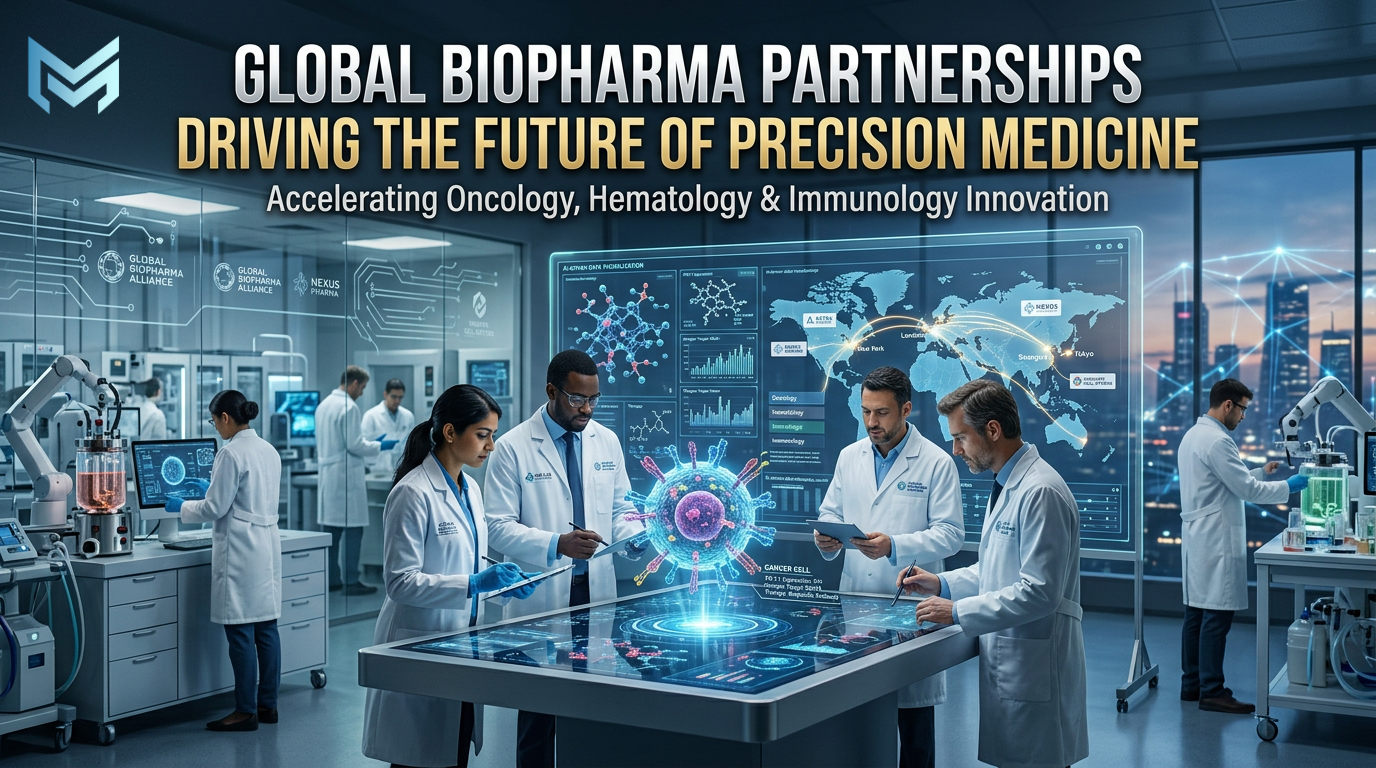
The collaboration between Hengrui Pharma and Bristol Myers Squibb highlights a growing transformation in the global pharmaceutical industry where innovation, commercialization, and drug development are becoming increasingly international and partnership-driven. As competition intensifies across oncology, hematology, and immunology markets, pharmaceutical companies are accelerating strategic alliances to strengthen R&D pipelines, expand global reach, and reduce development risk.
The agreement reflects how the biopharmaceutical industry is evolving beyond traditional regional boundaries toward highly interconnected innovation ecosystems where scientific discovery, clinical development, regulatory strategy, and commercialization capabilities are distributed across global markets.
For healthcare companies, biotechnology firms, investors, and consulting organizations, this partnership signals the increasing importance of cross-border collaboration in the next era of precision medicine and advanced therapeutics.
Companies capable of combining scientific innovation, international market access, scalable clinical development, and strategic partnership execution may emerge as leaders in the rapidly evolving global life sciences landscape.
The Pharmaceutical Industry Is Becoming More Partnership-Driven
Drug development has become significantly more complex, expensive, and competitive over the past decade.
Modern pharmaceutical innovation now requires expertise across:
- Molecular biology
- Precision medicine
- AI-driven drug discovery
- Clinical trial management
- Regulatory compliance
- Global commercialization
- Advanced manufacturing
At the same time, scientific opportunities in areas such as oncology, immunology, and hematology are expanding rapidly.
As a result, pharmaceutical companies are increasingly relying on strategic partnerships to accelerate innovation while managing development costs and operational risk.
Collaborations like the Hengrui Pharma and Bristol Myers Squibb agreement allow companies to:
- Expand therapeutic pipelines
- Access complementary scientific expertise
- Accelerate clinical development
- Share R&D investment burdens
- Strengthen global market positioning
The pharmaceutical sector is gradually shifting from isolated internal R&D models toward collaborative innovation ecosystems.
Oncology Remains One of the Most Competitive Markets
Oncology continues to be one of the largest and fastest-growing segments within the pharmaceutical industry.
Cancer treatment innovation is accelerating through advances in:
- Immunotherapy
- Targeted therapies
- Cell and gene therapies
- Precision diagnostics
- AI-driven treatment optimization
However, oncology competition has become increasingly intense as companies race to develop therapies capable of improving survival rates while addressing unmet medical needs.
Success in oncology now depends heavily on:
- Scientific differentiation
- Biomarker-driven approaches
- Clinical trial speed
- Combination therapy strategies
- Global regulatory execution
Strategic collaborations help companies strengthen their oncology capabilities by combining research expertise, pipeline assets, and commercialization infrastructure.
Partnerships also reduce time-to-market pressures in highly competitive therapeutic categories where first-mover advantage can significantly influence market share and long-term revenue potential.
Hematology and Immunology Are Expanding Rapidly
In addition to oncology, hematology and immunology are becoming major areas of pharmaceutical investment.
Advances in immune system research and molecular medicine are creating new opportunities for therapies targeting:
- Autoimmune diseases
- Blood disorders
- Inflammatory conditions
- Rare hematologic diseases
- Immune-mediated cancers
The growing understanding of immune system biology is enabling more personalized and targeted treatment approaches.
This is increasing demand for:
- Biologics
- Precision therapies
- Advanced biologic manufacturing
- Companion diagnostics
- Biomarker-driven medicine
Companies with strong immunology and hematology pipelines may benefit from rising global demand for next-generation therapies capable of improving long-term patient outcomes.
Strategic alliances allow pharmaceutical firms to expand therapeutic diversification while strengthening scientific specialization in high-growth categories.
China’s Role in Global Pharmaceutical Innovation Is Expanding
One of the most important aspects of this partnership is the growing role of Chinese pharmaceutical companies within the global innovation ecosystem.
Historically, many multinational pharmaceutical companies viewed China primarily as a manufacturing base or commercial market. Today, Chinese biotech and pharmaceutical firms are becoming increasingly influential sources of:
- Drug discovery innovation
- Clinical development expertise
- Biotech investment
- Advanced therapeutic platforms
- Global licensing opportunities
China’s pharmaceutical sector has expanded rapidly due to:
- Increased R&D investment
- Government healthcare initiatives
- Growing biotech ecosystems
- Improved regulatory frameworks
- Rising scientific talent pools
Global pharmaceutical companies are increasingly pursuing partnerships with Chinese innovators to gain access to emerging technologies and accelerate pipeline expansion.
This reflects a broader shift toward a more globally distributed innovation landscape where leadership is no longer concentrated solely in North America and Europe.
Precision Medicine Is Driving Strategic Alliances
Precision medicine continues reshaping pharmaceutical R&D strategy.
Modern therapies increasingly rely on:
- Biomarker identification
- Genetic profiling
- Personalized treatment selection
- AI-powered diagnostics
- Targeted therapeutic design
Developing these advanced therapies requires integration across multiple scientific and operational disciplines.
Strategic partnerships help organizations combine:
- Drug discovery capabilities
- Clinical trial infrastructure
- Genomic expertise
- Regulatory strategy
- Commercialization networks
As precision medicine becomes more sophisticated, collaboration may become essential for managing scientific complexity and accelerating therapeutic development timelines.
The ability to integrate multiple innovation capabilities efficiently could become a major competitive advantage in the future pharmaceutical market.
Global Commercialization Is Becoming More Complex
Launching innovative medicines globally now requires increasingly sophisticated commercialization strategies.
Pharmaceutical companies must navigate:
- Regional regulatory differences
- Market access requirements
- Pricing negotiations
- Reimbursement systems
- Healthcare policy variations
- Supply chain complexity
Strategic alliances can improve global commercialization readiness by leveraging complementary geographic strengths and regulatory expertise.
This is especially important in oncology and immunology where:
- Treatment costs are high
- Reimbursement pressures are increasing
- Clinical evidence expectations continue rising
- Patient access strategies are critical
Companies capable of integrating scientific innovation with scalable global commercialization infrastructure may strengthen long-term market leadership.
AI and Data-Driven Drug Development Are Accelerating
The pharmaceutical industry is also becoming increasingly data-driven.
AI and computational biology are transforming:
- Drug target identification
- Clinical trial optimization
- Biomarker discovery
- Patient stratification
- Predictive analytics
- Treatment personalization
Future pharmaceutical partnerships may increasingly involve not only therapeutic assets but also:
- AI platforms
- Real-world data ecosystems
- Genomic databases
- Digital health integration
- Predictive biology infrastructure
The convergence of biotechnology and artificial intelligence is accelerating innovation cycles and changing how pharmaceutical companies approach drug development.
The Future of Global Biopharma Collaboration
The Hengrui Pharma and Bristol Myers Squibb collaboration reflects a broader transformation in the global pharmaceutical industry.
Future success will likely depend on how effectively companies combine:
- Scientific innovation
- International collaboration
- Precision medicine expertise
- Regulatory execution
- Commercial scalability
- Data-driven healthcare capabilities
As competition intensifies across advanced therapeutic markets, strategic partnerships may become increasingly central to long-term pharmaceutical growth strategies.
For consulting firms, healthcare organizations, biotech companies, and investors, this evolving environment creates growing demand for expertise in:
- Cross-border pharmaceutical strategy
- Biotech partnership development
- Precision medicine commercialization
- Regulatory planning
- Global market access
- AI-driven healthcare innovation
The future pharmaceutical industry may be defined less by isolated corporate competition and more by interconnected global innovation networks capable of accelerating the next generation of medical breakthroughs.