

Introduction
Global fertilizer markets are entering a prolonged period of price elevation, with forecasts suggesting sustained high costs through 2027. The primary drivers—energy market volatility and geopolitical disruptions such as those impacting the Strait of Hormuz—are tightening supply chains and increasing production costs, particularly for nitrogen-based fertilizers.
For industries dependent on agricultural inputs, this is not just a pricing issue—it is a structural shift. Businesses must now rethink input efficiency, sourcing strategies, and technology adoption to remain competitive.
Why Fertilizer Prices Are Rising—and Staying High
Fertilizer production, especially nitrogen fertilizers like ammonia and urea, is heavily dependent on natural gas. Volatility in energy markets directly translates into cost fluctuations. Recent disruptions in shipping routes and supply bottlenecks—particularly around the Strait of Hormuz, a critical artery for global energy transport—have exacerbated this situation.
Key contributing factors include:
- Energy Cost Inflation: Natural gas price volatility continues to drive up production costs.
- Supply Chain Disruptions: Maritime risks and rerouting increase logistics costs and delays.
- Export Restrictions: Key producing countries occasionally impose export limits to protect domestic supply.
- Geopolitical Instability: Ongoing conflicts and tensions impact production hubs and trade routes.
The result is a structurally tight market where supply struggles to keep pace with global agricultural demand.
The Techno-Commercial Challenge for Agribusiness
For agribusinesses and large-scale farmers, rising fertilizer costs directly impact margins. However, simply absorbing or passing on costs is no longer viable. The need of the hour is a techno-commercial strategy—where technology adoption aligns with economic efficiency.
This shift is creating a dual pressure:
- Cost Optimization: Reduce input waste without compromising yields.
- Sustainability Compliance: Meet regulatory and ESG requirements while managing profitability.
Precision Agriculture: The New Cost-Control Lever


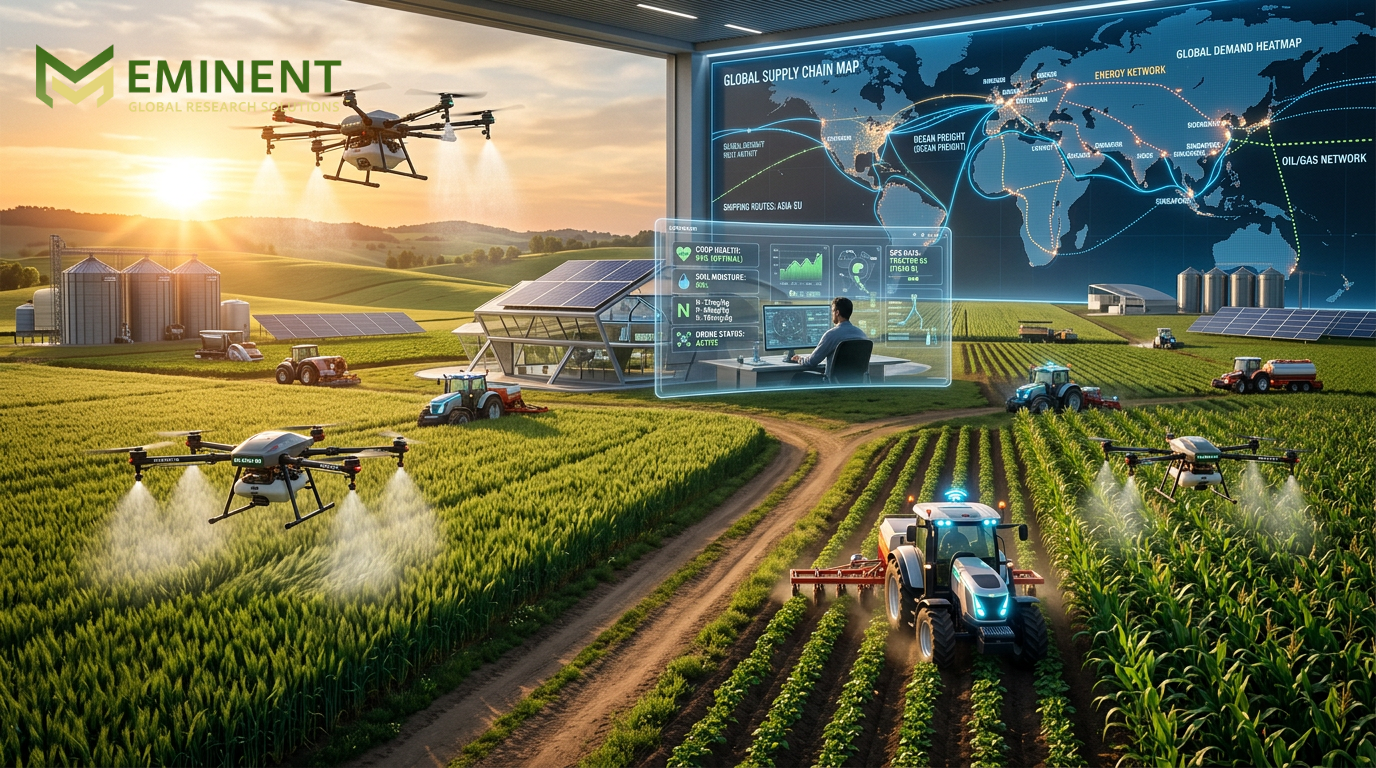
Precision agriculture is emerging as the most effective response to rising fertilizer prices. By leveraging data and automation, farmers can apply fertilizers more efficiently—targeting the right quantity, at the right place, and at the right time.
Key technologies include:
- AI-Driven Crop Analytics: Machine learning models analyze soil health, crop conditions, and weather patterns to optimize fertilizer usage.
- Variable Rate Technology (VRT): Enables differential fertilizer application across fields, reducing overuse.
- IoT & Soil Sensors: Real-time data on nutrient levels helps prevent unnecessary application.
- Drone & Satellite Monitoring: Enables precise mapping and targeted intervention.
These tools can reduce fertilizer usage by 10–30% while maintaining or even improving yields—directly offsetting rising input costs.
Alternative Nutrient Strategies: Reducing Dependency
Beyond precision application, companies are exploring alternative nutrient strategies to mitigate reliance on traditional fertilizers:
- Biofertilizers & Microbial Solutions: Enhance nutrient uptake naturally.
- Organic Amendments: Compost and manure integration for soil health improvement.
- Green Ammonia: Produced using renewable energy, reducing exposure to fossil fuel volatility.
- Nutrient Recycling: Circular agriculture models to recover nutrients from waste streams.
While adoption varies by region and crop type, these approaches are gaining traction as long-term resilience strategies.
Strategic Recommendations for Industry Stakeholders
For decision-makers across agriculture, chemicals, and food supply chains, the path forward requires a balanced approach:
1. Invest in Digital Agriculture Platforms
Adopting AI and data analytics tools is no longer optional—it is a competitive necessity.
2. Build Supply Chain Resilience
Diversify sourcing, explore regional suppliers, and hedge against geopolitical risks.
3. Integrate Sustainability with Profitability
Align ESG goals with cost optimization through efficient input usage.
4. Partner for Innovation
Collaborate with agri-tech firms, research institutions, and consulting partners to accelerate adoption.
Conclusion
The fertilizer market’s structural shift signals a new era for global agriculture—one where efficiency, technology, and sustainability must converge. Rising prices are not just a challenge; they are a catalyst for transformation.
Organizations that adopt a techno-commercial lens, leveraging precision agriculture and alternative nutrient strategies, will be best positioned to navigate this volatility and build long-term resilience.