

Introduction: A Market Under Pressure
The global oil market has once again entered a phase of heightened uncertainty. The latest upward revision in Brent crude oil price forecasts for 2026 reflects not just a temporary supply disruption, but a deeper structural vulnerability in global energy logistics. With Brent averaging above expectations and projected to peak sharply in the second quarter, the industry is facing a defining moment—one that blends geopolitical risk with economic recalibration.
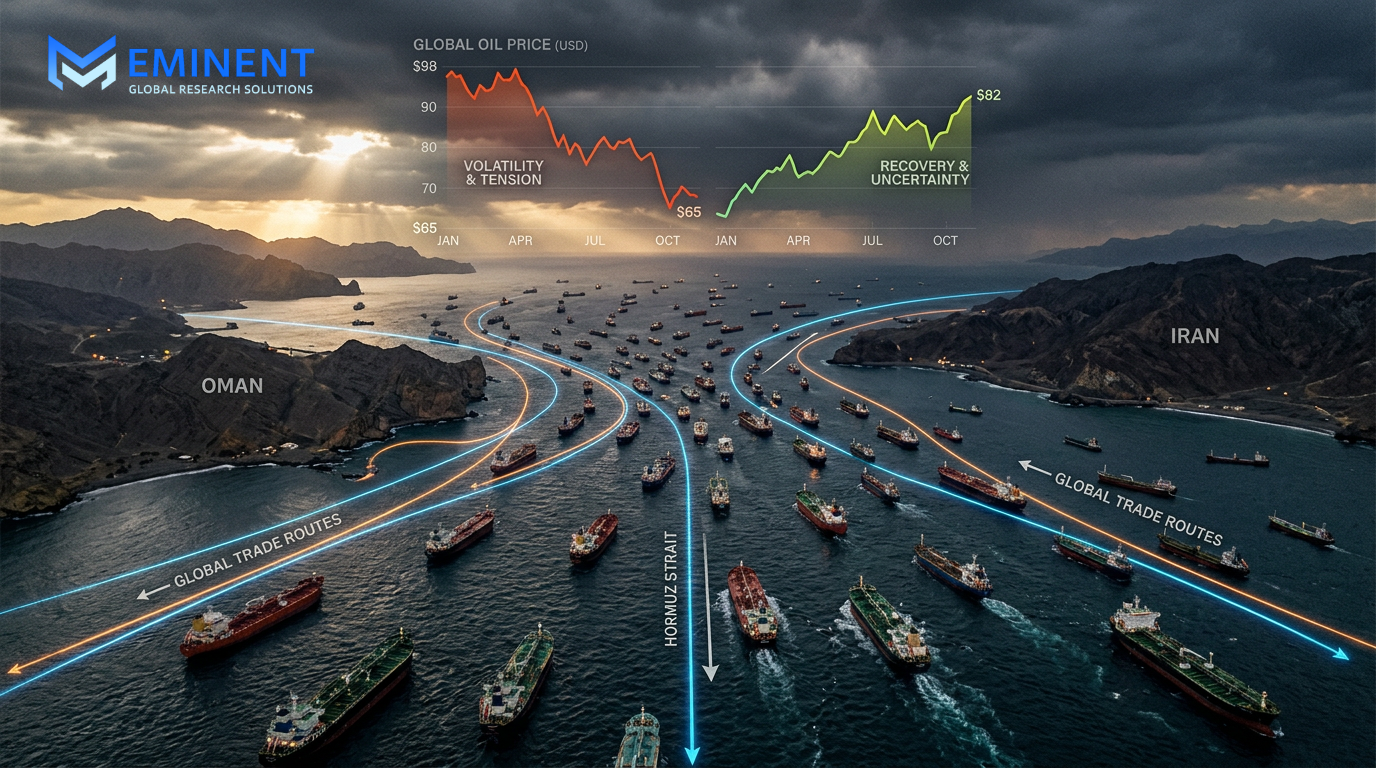
At the center of this turbulence lies the strategic chokepoint of the Strait of Hormuz, a critical artery through which a significant portion of the world’s oil supply flows. Disruptions here ripple across global markets, impacting prices, trade flows, and investment decisions.
The Supply Shock: Why Prices Are Climbing
The rise in Brent crude prices is closely tied to supply-side constraints triggered by disruptions in key shipping routes. The Strait of Hormuz accounts for nearly a fifth of global oil transit, making it one of the most sensitive nodes in the energy supply chain.
When flows are interrupted—even partially—the immediate impact is a tightening of supply. This creates upward pressure on prices, particularly when spare capacity is limited or slow to mobilize. In March 2026, Brent crude prices surged well beyond expectations, signaling how quickly markets react to geopolitical instability.
However, this is not purely a supply issue. Market psychology plays an equally important role. Traders price in risk premiums during uncertain times, amplifying volatility. The expectation of a peak around mid-2026 reflects both real constraints and speculative positioning.
Short-Term Peak, Long-Term Stabilization
While Brent is expected to reach elevated levels in the near term, forecasts suggest a gradual easing later in the year. This anticipated correction hinges on the resumption of oil flows and stabilization of geopolitical tensions.
Yet, such normalization is rarely linear. Even if physical supply improves, lingering uncertainty can sustain price fluctuations. Energy markets are increasingly influenced by non-linear dynamics—where small disruptions trigger outsized reactions.
This underscores a critical insight: volatility is no longer an exception; it is becoming the norm.
The Consulting Perspective: Navigating Volatility with Discipline
For energy companies and stakeholders, the implications go far beyond price movements. Elevated volatility introduces complexity in capital allocation, operational planning, and risk management.
A key priority in this environment is capital discipline. Companies must avoid overextending during price peaks while ensuring they remain agile enough to capture opportunities. Historically, boom cycles have led to overinvestment, often followed by painful corrections. The current scenario demands a more measured approach.
Equally important is scenario planning. Traditional forecasting models that rely on stable assumptions are no longer sufficient. Organizations must develop multiple scenarios—ranging from rapid recovery to prolonged disruption—and align their strategies accordingly.
The Role of a Techno-Commercial Approach
In an increasingly complex market, a techno-commercial strategy offers a powerful advantage. By integrating technological capabilities with commercial insights, companies can make more informed and resilient decisions.
1. Advanced Forecasting and Predictive Analytics
Digital tools powered by AI and machine learning enable real-time analysis of market signals, geopolitical developments, and supply-demand dynamics. These tools enhance forecasting accuracy and allow companies to respond proactively rather than reactively.
2. Cost Optimization Through Digitalization
With input costs fluctuating, operational efficiency becomes critical. Digital twins, automation, and data-driven optimization can help operators reduce waste, streamline processes, and maintain profitability even in volatile markets.
3. Risk-Adjusted Investment Decisions
Rather than relying on static assumptions, companies can use dynamic models to evaluate investment opportunities under different price scenarios. This ensures that capital is deployed where it delivers the highest risk-adjusted returns.
4. Supply Chain Resilience
Digital visibility across the supply chain allows organizations to identify vulnerabilities and reroute logistics in response to disruptions. This capability is particularly crucial in scenarios involving chokepoints like the Strait of Hormuz.
Strategic Imperatives for Industry Leaders
The current oil market environment calls for a shift in mindset. Instead of viewing volatility as a short-term challenge, companies must treat it as a structural feature of the energy landscape.
Key strategic imperatives include:
- Building flexible operating models that can adapt to rapid market changes
- Strengthening partnerships across the value chain to enhance resilience
- Investing in digital infrastructure to support data-driven decision-making
- Embedding risk management into every layer of strategic planning
Conclusion: Turning Uncertainty into Opportunity
The projected rise and subsequent stabilization of Brent crude prices in 2026 highlight the fragile balance between supply security and market dynamics. While disruptions in critical regions will continue to pose challenges, they also present an opportunity for forward-thinking organizations to differentiate themselves.
Those that embrace a techno-commercial approach—combining analytical rigor with strategic foresight—will be better positioned to navigate uncertainty and capture value in a volatile market.