

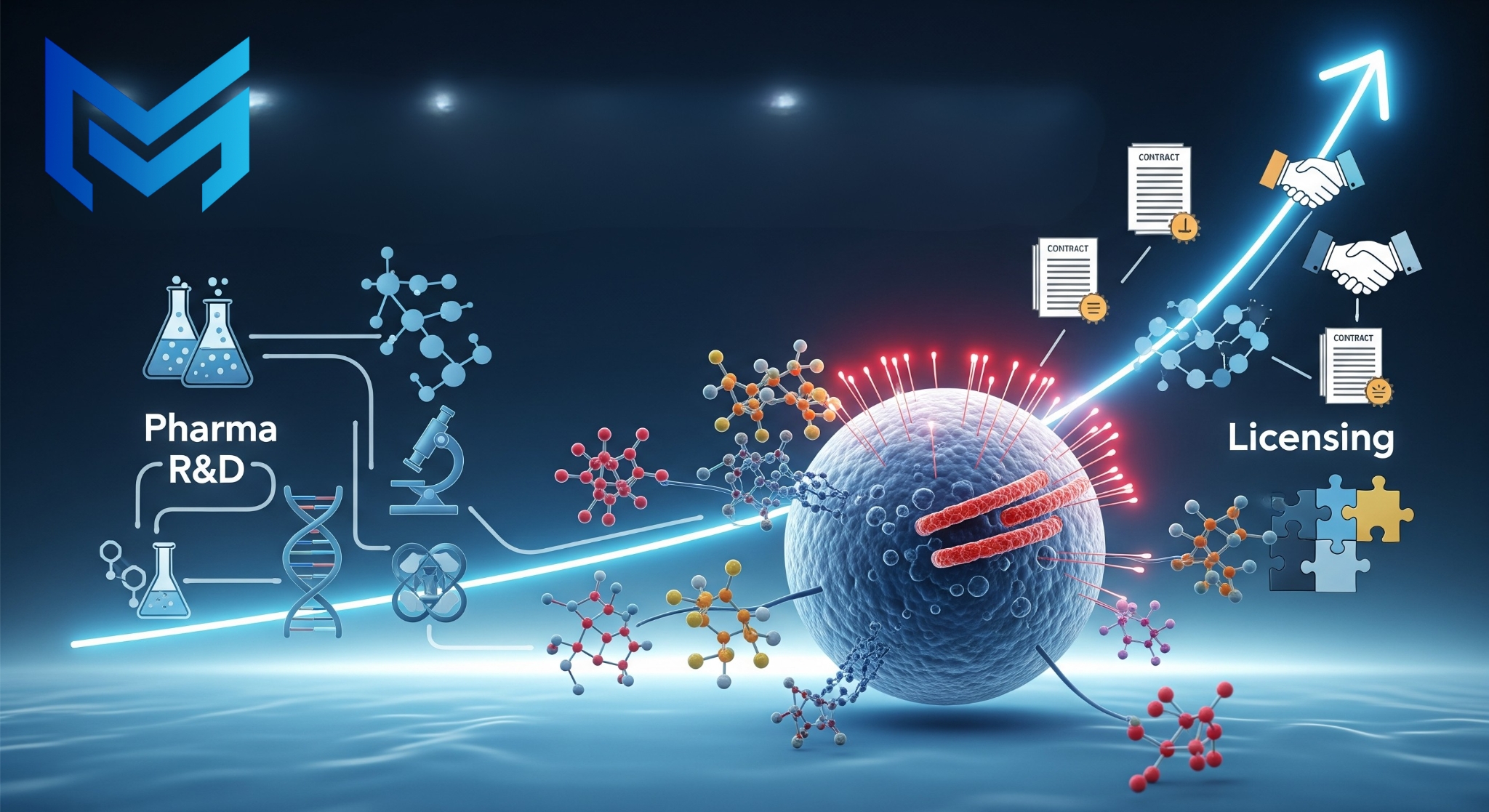
The landscape of oncology is undergoing a profound transformation driven by immunotherapy innovation. Over the past decade, immune checkpoint inhibitors, CAR-T therapies, and antibody-drug conjugates have reshaped cancer treatment paradigms. Yet, among these breakthroughs, T cell engagers and related immune engager platforms are emerging as one of the most strategically important innovations in oncology drug development.
Unlike traditional therapies that directly target tumor cells or broadly activate the immune system, immune engagers precisely redirect immune cells—especially T cells—to recognize and eliminate cancer. This targeted approach represents a convergence of precision biology, protein engineering, and clinical strategy, fundamentally reshaping pharmaceutical R&D pipelines, licensing strategies, and competitive positioning within the industry.
As the industry moves toward precision immuno-oncology, T cell engagers are not simply another therapeutic class—they represent a platform-level innovation with far-reaching implications for science, business strategy, and patient outcomes.
Understanding Immune Engagers and Their Mechanism
T cell engagers are engineered molecules—often bispecific or multispecific antibodies—that simultaneously bind to a tumor-associated antigen and a T cell receptor (typically CD3). By physically bridging immune cells and cancer cells, they facilitate targeted cytotoxicity without requiring traditional antigen presentation pathways.
This mechanism enables several advantages:
Direct recruitment of T cells to tumor sites
High specificity with reduced systemic toxicity compared to chemotherapy
Potential efficacy in tumors resistant to other immunotherapies
Off-the-shelf availability compared to autologous cell therapies
The first major commercial success, blinatumomab, demonstrated the clinical viability of the approach, paving the way for next-generation molecules with enhanced stability, improved safety profiles, and expanded tumor targeting capabilities.
Why Pharma R&D Is Pivoting Toward Immune Engagers
1. Platform Versatility
Immune engager technology allows rapid development across multiple targets. Once a platform is validated, new therapeutic candidates can be designed by modifying antigen-binding domains.
2. Addressing Unmet Needs
Many solid tumors remain difficult to treat with CAR-T therapy due to manufacturing complexity and tumor microenvironment barriers. T cell engagers offer scalable solutions that could overcome these limitations.
3. Combination Therapy Potential
Pharmaceutical companies increasingly view T cell engagers as combination therapy anchors:
With checkpoint inhibitors
With targeted therapies
With cytokine modulation strategies
This expands clinical development opportunities and increases lifecycle management potential.
4. Strategic Differentiation
As oncology pipelines become crowded, companies seek differentiated mechanisms. Immune engagers provide a strong scientific narrative combined with commercial scalability.
Cutting-Edge T Cell Precision to Seek and Destroy Tumors
One of the defining features of T cell engagers is their ability to harness precision targeting at the molecular level. Advances in protein engineering now enable fine-tuned immune activation, balancing potency with safety.
Below is a summary table highlighting key technological aspects driving innovation:
| Technology Element | Mechanism | Strategic Advantage | Impact on Oncology Development |
|---|---|---|---|
| Bispecific Antibody Engineering | Simultaneous binding to tumor antigen and CD3 | Targeted immune activation | Enhanced specificity reduces off-target effects |
| Affinity Optimization | Controlled binding strength | Improved safety profile | Lower cytokine release syndrome risk |
| Multispecific Designs | Target multiple tumor antigens | Reduced tumor escape mechanisms | Increased durability of response |
| Half-Life Extension Technologies | Fc engineering or albumin-binding | Less frequent dosing | Improved patient compliance |
| Tumor Microenvironment Targeting | Conditional activation mechanisms | Precision within tumor tissue | Expands solid tumor applicability |
| Modular Platform Engineering | Swappable targeting domains | Faster pipeline expansion | Accelerated R&D timelines |
These innovations illustrate how immune engager technology merges engineering and biology to achieve unprecedented precision.
Clinical Breakthroughs in T Cell Engager Therapies
The clinical pipeline for T cell engagers has expanded dramatically, with multiple companies investing heavily across hematologic malignancies and solid tumors.
Key Examples:
Blinatumomab (Amgen) – A CD19/CD3 bispecific antibody approved for acute lymphoblastic leukemia; demonstrated the clinical feasibility of redirecting T cells.
Teclistamab (J&J) – Targets BCMA in multiple myeloma, showing strong efficacy in heavily pretreated patients.
Mosunetuzumab (Roche) – A CD20/CD3 bispecific for lymphoma, representing a step forward in outpatient immunotherapy administration.
Emerging solid tumor programs targeting HER2, EGFR, PSMA, and other antigens are advancing through clinical trials.
These therapies demonstrate several important clinical trends:
Increasing movement from hematologic cancers to solid tumors.
Engineering improvements addressing cytokine release syndrome and neurotoxicity.
Potential use in earlier lines of therapy.
How T Cell Engagers Are Charting New Oncology Paradigms
T cell engagers are not simply incremental improvements—they reshape clinical strategy and development models.
T cell engagers don’t just add a tool—they redefine whole approaches to cancer care:
| Traditional Oncology Paradigm | Emerging Paradigm with T Cell Engagers | Strategic Implication |
|---|---|---|
| Broad cytotoxic therapies | Precision immune redirection | Reduced systemic toxicity |
| Sequential treatment lines | Combination-first strategy | Integrated development programs |
| Biomarker-light approaches | Target-specific patient selection | Precision medicine expansion |
| One-target therapies | Multi-target engagement | Resistance mitigation |
| Long manufacturing timelines (cell therapy) | Off-the-shelf biologics | Faster commercialization |
| Drug-centric development | Platform-centric pipelines | Portfolio scalability |
This shift encourages pharma companies to think beyond individual drugs and toward ecosystem-level innovation.
Strategic Implications for Pharma Licensing and Partnerships
The rise of immune engagers has triggered a surge in licensing deals, collaborations, and strategic alliances.
1. Platform-Based Licensing
Companies are increasingly licensing entire technology platforms rather than single molecules. This allows partners to co-develop multiple targets rapidly.
2. Early-Stage Asset Acquisition
Pharma companies are acquiring early-stage programs to secure competitive positioning before clinical proof-of-concept.
3. Academic-Industry Collaborations
Universities play a major role in discovering novel tumor antigens and engineering approaches, creating opportunities for IP commercialization.
4. Geographic Expansion
Emerging biotech hubs are contributing innovative engineering technologies, driving cross-border licensing activity.
Challenges and Risks in T Cell Engager Development
Despite promise, several challenges remain:
Safety Management
Cytokine release syndrome
Neurotoxicity risks
Need for careful dosing strategies
Tumor Microenvironment Barriers
Solid tumors present immune suppression challenges that require innovative engineering solutions.
Manufacturing Complexity
While simpler than CAR-T, advanced biologics still require sophisticated manufacturing capabilities.
Intellectual Property Complexity
With rapid innovation, overlapping patents and platform claims create competitive legal landscapes.
The Role of Intellectual Property in Immune Engager Innovation
Intellectual property strategy is becoming central to success in this field. Companies must protect:
Novel binding domains
Platform architectures
Engineering techniques
Combination therapy methods
Strong IP portfolios influence:
Licensing value
Investment attractiveness
Competitive barriers
As a result, strategic patent landscaping and freedom-to-operate analysis are critical components of R&D planning.
Future Outlook: Immunotherapy 2.0
The next wave of immune engager innovation includes:
Conditional T cell engagers activated only within tumor environments
Trispecific and multispecific constructs
Integration with AI-driven protein design
Personalized targeting strategies based on tumor genomics
These advancements could transform immune engagers into foundational therapy platforms across oncology.
How Eminent Can Help
As immune engager technologies evolve, organizations require integrated scientific, strategic, and intellectual property expertise. Eminent can support stakeholders across the innovation lifecycle:
1. Strategic IP Landscape Analysis
Identify competitive whitespace
Map emerging technology trends
Reduce risk through early patent assessment
2. Portfolio Development and Optimization
Build strong, defensible patent portfolios
Align IP strategy with commercial goals
Support platform-based innovation strategies
3. Technology Evaluation and Due Diligence
Assess licensing opportunities
Evaluate competitive positioning
Support investment and partnership decisions
4. R&D Strategy Support
Identify high-value targets
Analyze pipeline differentiation opportunities
Provide insight into emerging immune engager modalities
5. Commercialization and Licensing Support
Develop monetization strategies
Strengthen negotiation positioning
Enable cross-border collaboration frameworks
Conclusion
The rise of immune engagers marks a pivotal shift in oncology, merging precision engineering with immune biology to redefine therapeutic strategies. By enabling targeted immune activation, scalable development, and platform-based innovation, T cell engagers are reshaping how pharmaceutical companies approach R&D, partnerships, and commercialization.
As competition intensifies and technological complexity grows, success will depend on integrating scientific innovation with strategic planning and robust intellectual property frameworks. Organizations that embrace this paradigm shift—leveraging advanced engineering, collaborative partnerships, and strategic IP management—will be best positioned to lead the next era of precision oncology.
Immune engagers are not merely another class of drugs; they represent the blueprint for the future of cancer therapy—where precision, adaptability, and strategic foresight converge to deliver transformative patient outcomes.