

How Health-Conscious Consumers Are Redefining the Global Food Industry
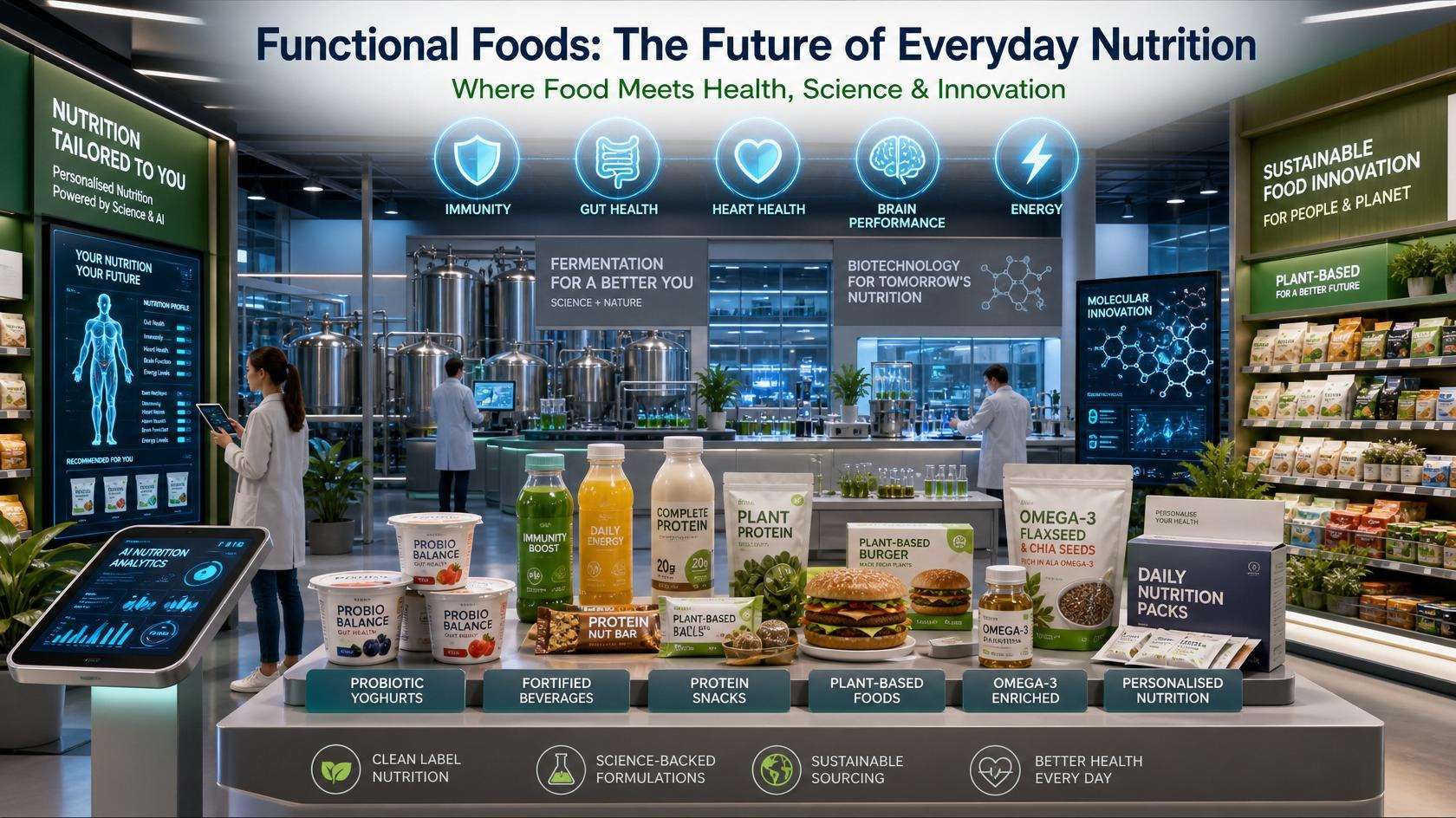
The global food industry is undergoing one of its most significant transformations in decades. Consumers are no longer choosing food based solely on taste, convenience, or price—they are increasingly looking for products that actively support their health and well-being. This shift has accelerated the growth of functional foods, products formulated to deliver health benefits beyond basic nutrition.
From protein-enriched snacks and probiotic beverages to immunity-boosting ingredients and cognitive wellness formulations, functional foods are moving from niche health stores to mainstream supermarket shelves. What was once considered a premium wellness category is rapidly becoming part of everyday consumer purchasing habits.
For food manufacturers, ingredient suppliers, retailers, and investors, this evolution presents a strategic opportunity. The question is no longer whether functional foods will grow, but whether they will become the new standard for everyday nutrition.
Companies that successfully combine scientific research, consumer insights, product innovation, and regulatory compliance can position themselves at the forefront of one of the fastest-growing segments in the global food and beverage market.
The Shift from Nutrition to Health Optimization
Traditional packaged foods were primarily designed to satisfy hunger and provide essential nutrients. Today’s consumers expect far more from the products they purchase.
Increasing awareness of chronic diseases, preventive healthcare, and wellness has changed purchasing behaviour across all age groups. Consumers now seek foods that support specific health goals such as:
- Improved gut health
- Stronger immunity
- Better heart health
- Healthy ageing
- Weight management
- Cognitive performance
- Energy and recovery
- Stress reduction
This trend is transforming food from a source of nutrition into a tool for proactive health management.
Rather than waiting to address health issues through medical treatment, consumers are increasingly adopting preventive lifestyles where everyday food choices contribute to long-term wellness.
This behavioural change is creating sustained demand for functional food products across multiple categories.
What Defines a Functional Food?
Functional foods contain ingredients that provide physiological benefits beyond traditional nutritional value. These ingredients may include probiotics, prebiotics, omega-3 fatty acids, dietary fibres, vitamins, minerals, plant extracts, bioactive compounds, or scientifically validated botanical ingredients.
Examples include:
- Probiotic yoghurts supporting digestive health
- High-protein breakfast cereals
- Vitamin-fortified beverages
- Fibre-rich snack bars
- Omega-3 enriched dairy products
- Plant-based functional drinks
- Adaptogenic herbal beverages
- Collagen-enhanced nutrition products
As food science advances, manufacturers are developing increasingly targeted formulations designed to address specific consumer health concerns.
The result is a growing overlap between food, nutrition, biotechnology, and preventive healthcare.
Consumer Demand Is Driving Market Growth
Several long-term trends are accelerating functional food adoption.
Health awareness has increased significantly following the COVID-19 pandemic, with consumers placing greater emphasis on immunity, nutrition, and resilience.
At the same time, ageing populations are seeking products that promote healthy ageing, mobility, and cognitive function, while younger consumers increasingly prioritise fitness, mental wellness, and personalised nutrition.
Digital health platforms, wearable devices, and nutrition-tracking applications are also encouraging consumers to make more informed dietary decisions.
These combined factors have created favourable conditions for functional foods to move beyond specialist health retailers into mainstream grocery channels.
For manufacturers, this represents an opportunity to diversify product portfolios while meeting rapidly evolving consumer expectations.
Biotechnology Is Accelerating Functional Food Innovation
Scientific advancements are reshaping how functional ingredients are discovered, produced, and commercialised.
Modern food innovation increasingly incorporates:
- Precision fermentation
- Biotechnology-derived ingredients
- AI-assisted formulation development
- Plant protein engineering
- Microbiome research
- Nutritional genomics
These technologies enable companies to develop ingredients with improved bioavailability, consistency, sustainability, and health benefits.
For example, fermentation platforms are producing bioactive compounds that were previously difficult or expensive to obtain from natural sources.
This convergence between biotechnology and food manufacturing is opening new possibilities for highly differentiated products supported by scientific evidence.
Companies investing in biotechnology capabilities today may establish significant competitive advantages in future functional food markets.
Science-Backed Claims Will Build Consumer Trust
As the functional food market expands, consumers are becoming more discerning.
Marketing claims alone are no longer sufficient. Buyers increasingly expect clinical validation, transparent labelling, and evidence supporting health benefits.
This shift places greater importance on:
- Clinical research
- Regulatory compliance
- Ingredient traceability
- Scientific partnerships
- Product testing
- Transparent communication
Brands capable of substantiating health claims with credible scientific data are likely to strengthen customer trust and command premium pricing.
Conversely, companies relying on unsupported wellness messaging may face increasing regulatory scrutiny and reputational risks.
Challenges to Mainstream Adoption
Despite strong growth potential, several challenges remain.
Functional ingredients often increase production costs, requiring manufacturers to balance affordability with innovation.
Regulatory requirements surrounding health claims vary significantly across global markets, creating complexity for international expansion.
Consumer education also remains essential. While awareness is increasing, many consumers still struggle to understand ingredient functionality or distinguish evidence-based products from marketing-driven alternatives.
Supply chain resilience presents another challenge, particularly for specialised ingredients requiring advanced biotechnology or fermentation processes.
Companies that successfully overcome these obstacles will be better positioned to scale functional food offerings globally.
Strategic Opportunities for the Food Industry
The rise of functional foods creates opportunities across the entire value chain.
Food manufacturers can expand premium product portfolios while improving brand differentiation.
Ingredient suppliers can develop proprietary bioactive compounds supported by scientific validation.
Retailers can introduce wellness-focused merchandising strategies and personalised nutrition recommendations.
Healthcare companies may increasingly collaborate with food manufacturers to develop preventive nutrition solutions.
Technology companies can integrate AI, nutrition analytics, and digital health platforms into personalised food ecosystems.
This convergence creates an entirely new innovation landscape where food, healthcare, biotechnology, and consumer wellness increasingly intersect.
The Future of Everyday Nutrition
Functional foods are steadily evolving from specialist wellness products into everyday consumer staples.
Future growth will likely be driven by:
- Personalised nutrition
- AI-driven dietary recommendations
- Biotechnology-enabled ingredients
- Precision fermentation
- Preventive healthcare integration
- Sustainable food innovation
The companies that succeed will move beyond simply selling food products. They will deliver scientifically validated nutritional solutions that improve long-term health while meeting evolving consumer expectations.
For consulting firms, food manufacturers, investors, and ingredient innovators, the opportunity lies in helping businesses navigate changing consumer demands, regulatory frameworks, commercialisation strategies, and technology adoption.
As health and nutrition become increasingly interconnected, functional foods may become one of the defining growth categories of the global food industry over the next decade.
Consulting Angle
The growing demand for functional foods reflects a broader shift from traditional nutrition to preventive health and personalised wellness. Companies that invest in science-backed ingredients, biotechnology-enabled innovation, regulatory expertise, and consumer education can differentiate their brands, command premium pricing, and establish leadership in the next generation of food and beverage markets.