

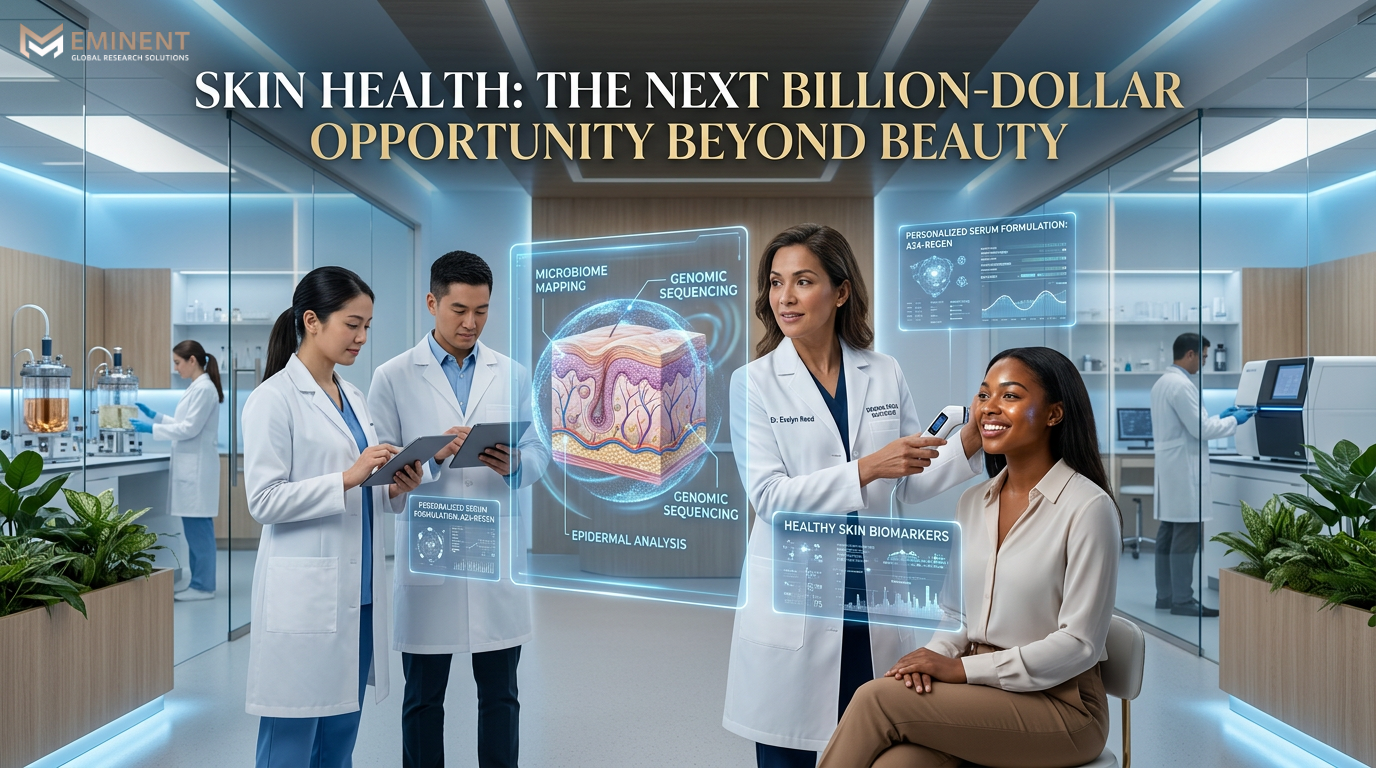
For decades, the beauty industry has been built around a simple promise: helping consumers look better. From anti-aging creams and moisturizers to cosmetics and personal care products, brands have competed on efficacy, luxury, and emotional appeal.
Today, however, the industry is undergoing a profound transformation. Consumers are no longer looking only for beauty products they are increasingly seeking solutions that support long-term skin wellness, prevention, and overall health. This shift is giving rise to what many industry experts are calling the “skin health” economy.
The distinction may seem subtle, but its implications are enormous.
Rather than focusing solely on appearance, skin health emphasizes the biological function of the skin, prevention of future issues, personalized care, and scientifically validated outcomes. As healthcare, biotechnology, diagnostics, and beauty continue to converge, a new category is emerging—one that could represent one of the most significant growth opportunities in the global consumer health market.
The question for industry leaders is no longer whether skin health will become a major market. The real question is who will lead it.
Consumers Are Redefining Beauty
Modern consumers are more informed than ever before.
Access to health information, scientific content, dermatological advice, and ingredient transparency has fundamentally changed purchasing behavior. Consumers increasingly want to understand not only what a product does but also why it works.
This shift is especially visible among younger demographics who prioritize wellness, prevention, and personalization over traditional beauty standards.
Consumers today are asking:
Is this product backed by science?
Will it improve my skin health long-term?
Is it personalized to my needs?
Does it support overall wellness?
Can it help prevent future skin issues?
These questions are transforming skincare from a cosmetic purchase into a health-oriented investment.
As a result, brands are facing increasing pressure to provide evidence-based solutions rather than relying solely on marketing claims.
The Convergence of Beauty, Healthcare, and Biotechnology
One of the biggest drivers behind the skin health movement is the growing intersection between beauty and healthcare.
Historically, beauty companies focused on product formulation while healthcare organizations focused on disease treatment. Today, those boundaries are beginning to disappear.
Advances in biotechnology, microbiome research, genomics, artificial intelligence, and diagnostic technologies are creating entirely new possibilities for skin health management.
Researchers now understand that the skin is far more than a cosmetic surface. It is a complex biological organ that interacts with the immune system, environmental factors, hormones, genetics, and lifestyle behaviors.
This deeper scientific understanding is enabling companies to develop highly targeted solutions that address skin concerns at their source.
As a result, partnerships between beauty companies, research institutions, biotechnology firms, and healthcare organizations are becoming increasingly common.
The goal is clear: move beyond treating visible symptoms and focus on optimizing skin health from a biological perspective.
Personalization Is Becoming the New Standard
Perhaps the most exciting opportunity within the skin health market is personalization.
Traditional skincare products are often designed for broad categories such as dry skin, oily skin, or aging skin. While useful, these classifications fail to capture the complexity of individual skin biology.
Emerging technologies are changing that.
Artificial intelligence, skin imaging, microbiome analysis, and genetic testing are making it possible to develop highly personalized skincare recommendations tailored to each individual’s unique profile.
In the future, consumers may receive skincare recommendations based on:
Genetic predispositions
Environmental exposure
Lifestyle habits
Skin microbiome composition
Hormonal factors
Aging biomarkers
This level of customization creates a more effective consumer experience while strengthening long-term brand loyalty.
For companies, personalized skincare opens the door to premium pricing models, subscription services, and recurring consumer engagement.
The Rise of Preventive Skin Health
The healthcare industry has increasingly embraced prevention over treatment. The beauty industry is now following a similar path.
Consumers are becoming proactive rather than reactive.
Instead of waiting for wrinkles, pigmentation, inflammation, or sensitivity to appear, many consumers want solutions that help prevent these issues before they become visible.
This shift toward preventive skin health aligns with broader wellness trends, including longevity, healthy aging, and lifestyle optimization.
Future skin health platforms may combine:
UV exposure monitoring
Environmental pollution tracking
Nutritional insights
Stress management data
Sleep analysis
Personalized prevention strategies
As technology advances, skincare may become part of a much larger health and wellness ecosystem.
This evolution creates opportunities not only for beauty brands but also for digital health companies, wearable technology providers, diagnostic platforms, and healthcare organizations.
Why Premiumization Opportunities Are Growing
The skin health movement is also creating significant premiumization opportunities.
Consumers are often willing to pay more for products and services that deliver measurable benefits, scientific credibility, and personalized experiences.
Unlike traditional cosmetics, skin health solutions can justify higher pricing through:
Clinical validation
Advanced biotechnology
Personalized recommendations
Professional oversight
Long-term health benefits
This allows brands to move beyond competing solely on product features and instead compete on outcomes.
The result is a higher-value market where trust, science, and innovation become key drivers of consumer decision-making.
Companies that successfully position themselves within the skin health category may enjoy stronger margins, greater customer retention, and increased lifetime customer value.
Challenges That Companies Must Address
Despite the enormous opportunity, entering the skin health space is not without challenges.
Scientific credibility must be supported by rigorous research. Consumers are increasingly skeptical of exaggerated claims and expect transparency.
Companies must also navigate complex regulatory environments as the line between cosmetics, wellness products, and healthcare solutions becomes increasingly blurred.
Key challenges include:
Regulatory compliance
Data privacy concerns
Clinical validation requirements
Consumer education
Technology integration
Trust and transparency
Organizations that can successfully balance innovation with responsibility will likely emerge as category leaders.
The Future of the Skin Health Market
The future of beauty is becoming increasingly scientific, personalized, and preventive.
Over the next decade, the distinction between beauty and healthcare may continue to fade as consumers seek solutions that improve both appearance and overall well-being.
The companies that thrive in this new environment will likely be those that combine:
Advanced scientific research
Biotechnology capabilities
Personalized consumer experiences
Digital health integration
Regulatory expertise
Strong consumer trust
For business leaders, investors, and innovators, the emergence of skin health represents more than a product trend. It represents a structural shift in how consumers think about beauty, wellness, and personal care.
As healthcare and beauty continue to converge, skin health may very well become the next billion-dollar opportunity beyond traditional beauty.
The organizations that recognize this shift early and invest in science-backed innovation today may define the future of the global beauty industry tomorrow.