

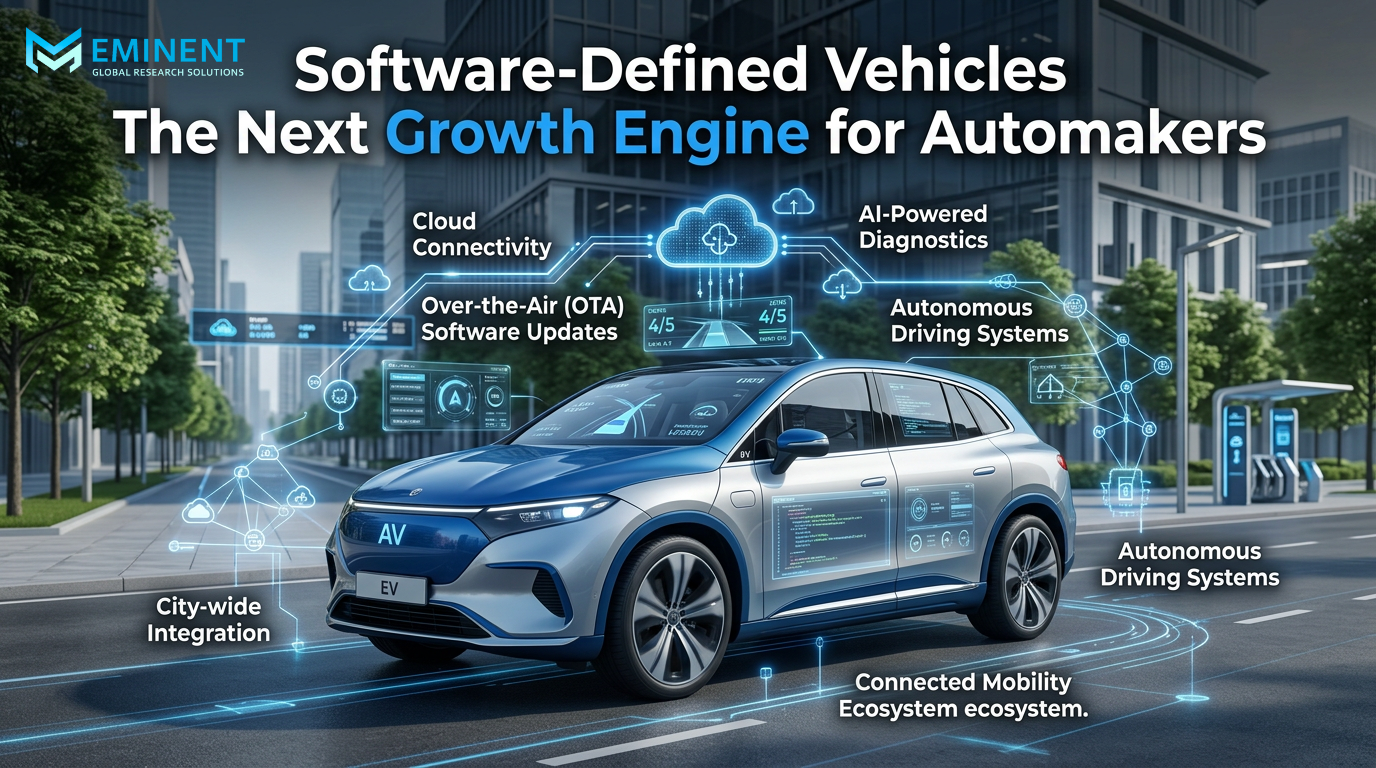
The automotive industry is undergoing one of the most significant transformations in its history. While electrification has dominated industry discussions over the past decade, a new trend is emerging that may ultimately have an even greater impact on the future of mobility: Software-Defined Vehicles (SDVs).
Traditionally, vehicle value was primarily determined by mechanical engineering, manufacturing quality, fuel efficiency, and hardware innovation. Today, however, software is becoming the central component that defines vehicle performance, user experience, safety features, and revenue generation opportunities.
As consumers increasingly expect seamless digital experiences, automakers are shifting from hardware-centric business models toward software-driven ecosystems. This transition is creating new opportunities for recurring revenue, customer engagement, and long-term competitive differentiation.
For automotive manufacturers, suppliers, and mobility technology providers, the critical question is no longer whether software will influence the future of vehicles—it is whether Software-Defined Vehicles will become the primary growth engine for the automotive industry.
Understanding the Software-Defined Vehicle Revolution
A Software-Defined Vehicle is a vehicle whose functionality, features, and performance can be continuously upgraded and enhanced through software rather than physical hardware modifications.
Instead of relying solely on fixed capabilities installed during manufacturing, SDVs allow automakers to update vehicle functions remotely throughout the vehicle lifecycle.
Examples include:
- Over-the-air (OTA) software updates
- Advanced driver assistance systems (ADAS)
- Connected infotainment services
- Autonomous driving capabilities
- Battery performance optimization
- Personalized user experiences
- Subscription-based vehicle features
This approach transforms vehicles from static products into continuously evolving digital platforms.
As a result, software becomes a strategic asset capable of generating value long after the initial vehicle sale.
Why Automakers Are Prioritizing Software
The traditional automotive business model relies heavily on one-time vehicle purchases.
While service, maintenance, and financing contribute additional revenue, the majority of profitability has historically depended on vehicle production and sales volumes.
Software changes this equation.
With SDVs, automakers gain the ability to generate recurring revenue through:
- Subscription services
- Premium software upgrades
- Connected vehicle services
- Autonomous driving packages
- Predictive maintenance solutions
- Digital commerce ecosystems
This creates an opportunity to extend customer relationships throughout the vehicle ownership lifecycle.
Instead of a single transaction, manufacturers can establish ongoing engagement and monetization opportunities.
In many ways, automakers are beginning to adopt business models similar to technology companies.
The Rise of Recurring Revenue Models
One of the strongest arguments supporting SDVs as a future growth engine is the emergence of recurring revenue streams.
Consumers are already familiar with subscription-based digital services across entertainment, productivity, and cloud platforms.
The automotive sector is increasingly applying similar models.
Potential subscription offerings include:
- Advanced navigation services
- Enhanced safety features
- Autonomous driving functions
- Premium infotainment packages
- Vehicle performance upgrades
- Connectivity services
These recurring revenue streams can provide more predictable cash flow while reducing dependence on cyclical vehicle sales.
As vehicle ownership becomes increasingly connected and digitalized, software-based revenue may represent a growing percentage of total automotive profitability.
Enhancing Customer Experience Through Personalization
Modern consumers expect personalization across nearly every aspect of their digital lives.
Software-defined vehicles enable manufacturers to deliver highly customized experiences based on user preferences and driving behavior.
Potential capabilities include:
- Personalized driver profiles
- Adaptive infotainment interfaces
- AI-powered voice assistants
- Customized driving modes
- Smart navigation recommendations
- Predictive maintenance alerts
These features not only improve user satisfaction but also strengthen brand loyalty.
Automakers capable of creating seamless digital ecosystems may achieve stronger customer retention and differentiation in highly competitive markets.
The Competitive Shift Toward Technology Leadership
The rise of SDVs is reshaping competitive dynamics within the automotive industry.
Historically, competitive advantage was largely determined by manufacturing efficiency, engine performance, and vehicle reliability.
Today, software capabilities are becoming equally important.
Leading manufacturers are investing heavily in:
- Artificial intelligence
- Autonomous driving platforms
- Cloud infrastructure
- Cybersecurity systems
- Vehicle operating systems
- Data analytics capabilities
As software becomes a core differentiator, automakers increasingly compete not only with traditional manufacturers but also with technology companies entering the mobility ecosystem.
This convergence is accelerating innovation while raising the importance of digital capabilities across the automotive value chain.
Challenges on the Road to SDV Adoption
Despite its potential, the transition to software-defined vehicles presents several challenges.
Key obstacles include:
- High software development costs
- Cybersecurity risks
- Complex system integration
- Regulatory compliance requirements
- Data privacy concerns
- Legacy vehicle architecture limitations
Automakers must also develop new organizational capabilities that differ significantly from traditional manufacturing expertise.
Successful SDV strategies require collaboration between software engineers, data scientists, cybersecurity specialists, and automotive experts.
Companies that effectively manage this transition may gain substantial advantages as the market evolves.
The Future of Automotive Growth
Software-defined vehicles represent more than a technological upgrade—they signal a fundamental transformation of the automotive business model.
Over the next decade, software is expected to influence nearly every aspect of vehicle development, ownership, and monetization.
The manufacturers most likely to succeed will be those capable of combining:
- Advanced software platforms
- Strong digital ecosystems
- Recurring revenue strategies
- Connected vehicle services
- Customer-centric innovation
As the industry moves toward increasingly intelligent, connected, and autonomous mobility solutions, software may become one of the most valuable assets within the automotive sector.
For automakers seeking sustainable growth in an increasingly competitive market, Software-Defined Vehicles could become the foundation of the next era of automotive innovation and profitability.