

Technology Foresight on Solid-State Batteries
As the global transition toward electrification accelerates, energy storage technologies are under unprecedented scrutiny. Solid-state batteries (SSBs) are emerging as a transformational alternative to conventional lithium-ion batteries, promising higher energy density, improved safety, and longer lifecycle performance.
This case study outlines Eminent Global’s technology foresight approach to solid-state batteries—analyzing innovation trajectories, market readiness, investment signals, and strategic implications for industries such as electric mobility, consumer electronics, and grid-scale energy storage.
Background and Industry Context
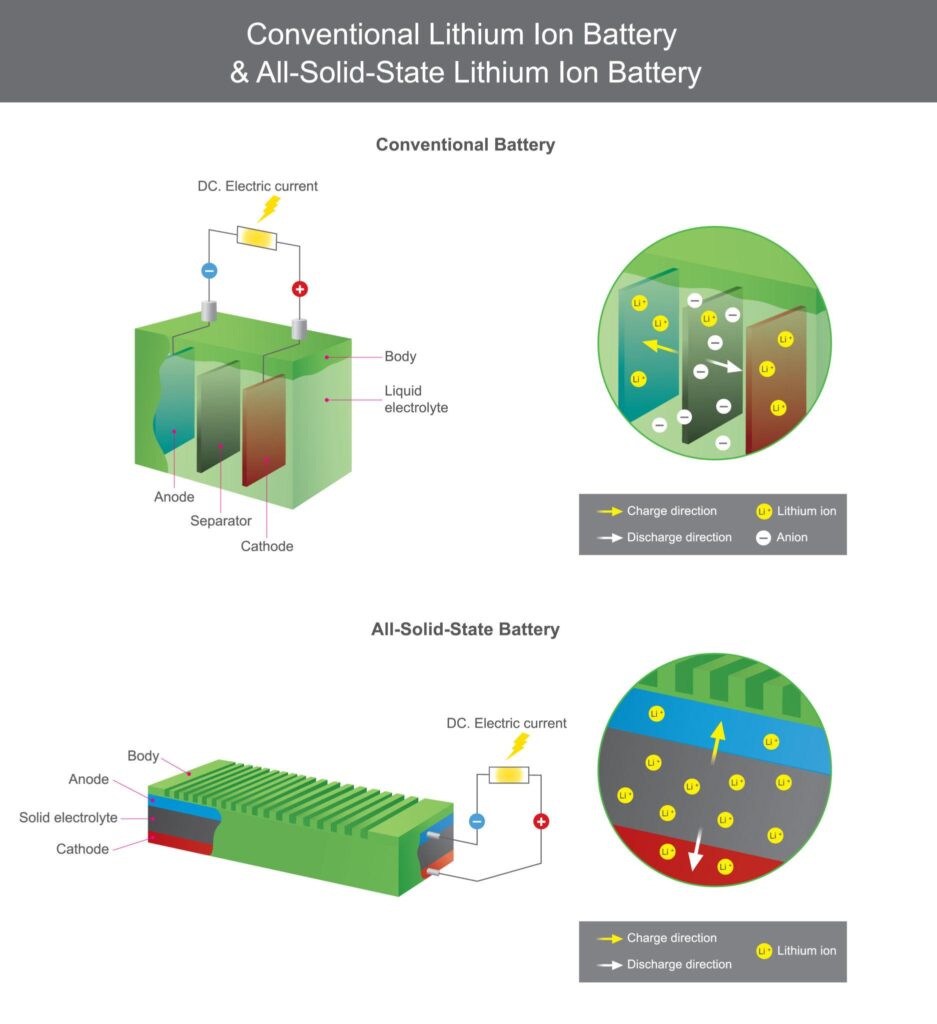
Traditional lithium-ion batteries rely on liquid electrolytes, which impose limitations related to safety, thermal stability, and energy density. As demand grows for safer and more efficient energy storage, these limitations have become increasingly critical.
Solid-state batteries replace liquid electrolytes with solid materials, enabling:
Greater thermal stability
Reduced risk of leakage or combustion
Compact cell architecture
Recognizing this shift, Eminent Global initiated a structured foresight exercise to evaluate how solid-state batteries may reshape the competitive landscape over the next decade.
Methodology Adopted by Eminent Global
Eminent Global applied a multi-layered foresight framework combining qualitative and quantitative intelligence:
1. Technology Landscape Mapping
Assessment of electrolyte types (ceramic, polymer, sulfide-based)
Evaluation of anode and cathode material innovation
Analysis of manufacturing compatibility with existing lithium-ion infrastructure
2. Patent and R&D Signal Analysis
Identification of innovation clusters
Tracking filing velocity and research intensity
Detection of white-space opportunities
3. Market & Investment Readiness
Venture capital and corporate investment trends
Pilot-scale vs. mass-production indicators
OEM adoption timelines in automotive and electronics sectors
4. Scenario Planning
Conservative, moderate, and accelerated adoption scenarios
Regulatory and supply-chain sensitivity modeling
Key Insights and Findings
1. Performance Advantage Is Real—but Conditional
Solid-state batteries demonstrate clear advantages in laboratory and pilot environments. However, scalability depends heavily on electrolyte material selection and defect-free manufacturing processes.
2. Manufacturing Is the Primary Bottleneck
While performance metrics are promising, large-scale production requires:
New sintering and layering techniques
High-precision material interfaces
Cost reduction in solid electrolyte synthesis
3. Automotive Sector Will Be the First Major Adopter
Electric vehicles represent the strongest early market due to:
Demand for extended range
Safety regulations
Willingness to absorb higher initial costs
4. Hybrid Architectures Will Dominate Short-Term
Semi-solid and hybrid battery designs are likely to bridge the gap between lithium-ion and fully solid-state systems during early commercialization.
Strategic Implications for Businesses
Based on Eminent Global’s foresight analysis, organizations should:
Invest early in material science partnerships
Monitor patent activity for acquisition or licensing opportunities
Prepare manufacturing roadmaps for incremental integration
Avoid “wait-and-watch” strategies that risk late-market entry
Solid-state batteries are not a distant innovation—they are a strategic inevitability.
Future Outlook
Eminent Global forecasts that:
Pilot-scale solid-state batteries will gain traction within the next few years
Cost parity with lithium-ion will follow once manufacturing stabilizes
Entire value chains—from raw materials to recycling—will undergo redesign
Organizations that act today will shape tomorrow’s energy economy.
Conclusion
Technology foresight is no longer optional—it is essential. Through this solid-state battery foresight initiative, Eminent Global demonstrates how structured intelligence, strategic anticipation, and innovation awareness can empower organizations to navigate disruptive technologies with confidence.
Solid-state batteries represent more than a technological upgrade—they signal a paradigm shift in energy storage.