

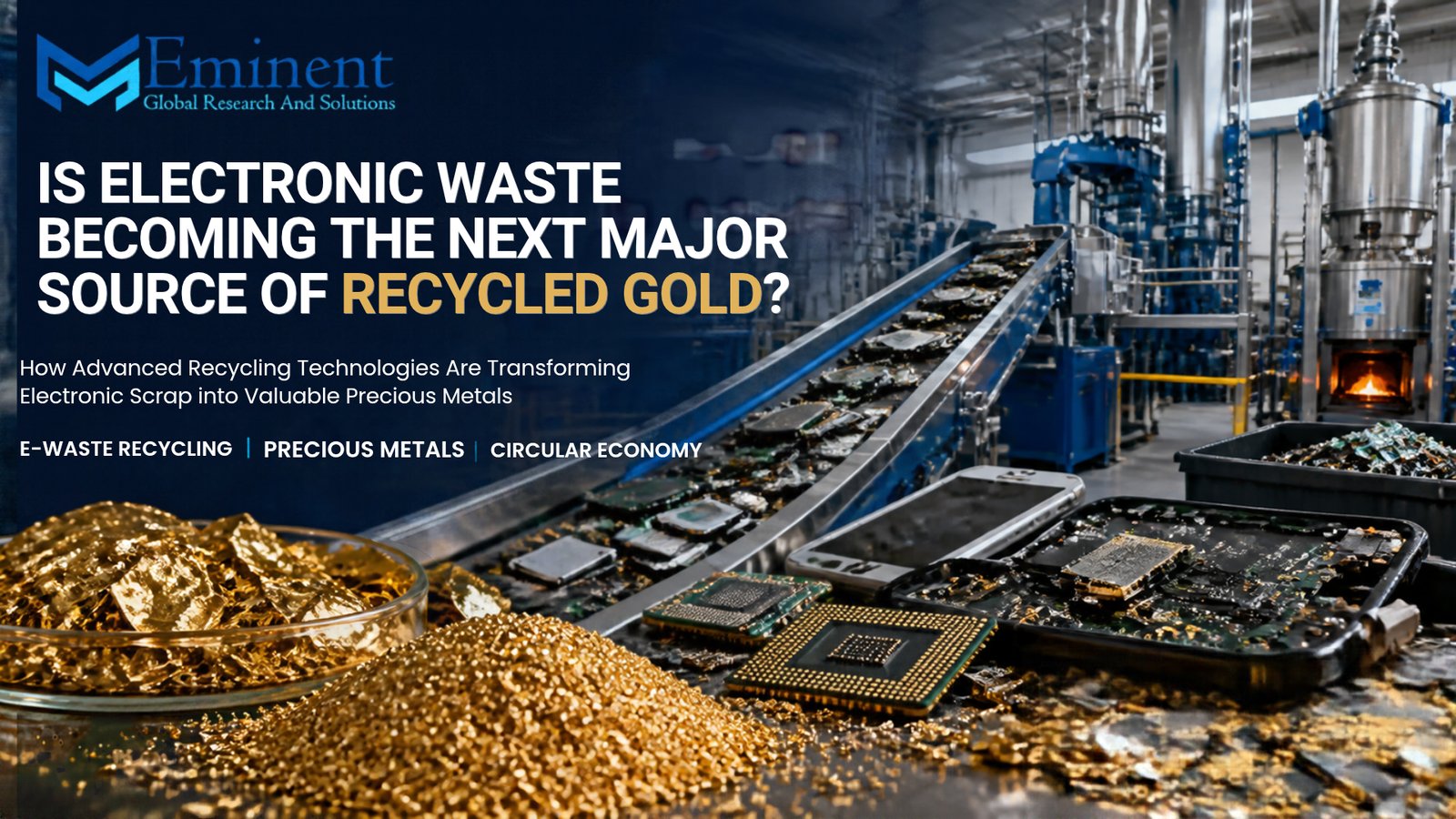
Is Electronic Waste Becoming the Next Major Source of Recycled Gold?
Published Date: 26 November 2026
Category: Chemicals & Materials | Recycling & Waste Management | Precious Metals | Sustainability
Introduction
Every year, millions of smartphones, computers, servers, and other electronic devices reach the end of their useful lives. While many of these products are simply discarded, they contain materials that still have considerable value. Among them is gold, a metal widely used in electronic components because of its excellent conductivity and resistance to corrosion.
As the world becomes increasingly dependent on digital technology, electronic waste is growing into a major environmental and industrial challenge. At the same time, it is opening up an opportunity for businesses to recover valuable materials that would otherwise go to waste.
Traditionally, gold has been sourced primarily through mining. However, advances in recycling and metal recovery technologies are creating another supply opportunity: extracting gold from discarded electronic products.
According to the Global E-waste Monitor 2024, the world generated approximately 62 million tonnes of electronic waste in 2022, but only 22.3% was documented as formally collected and recycled. The report also estimated that the gold contained in global e-waste had a gross material value of around US$15 billion in that year.
These numbers reveal an important gap between the amount of valuable material being discarded and the amount being recovered. As recycling infrastructure improves and governments strengthen waste-management regulations, electronic scrap could become an increasingly important source of recycled gold.
At Eminent Global Research Solutions, we examine how these developments are reshaping the recycling, precious metals, and sustainable manufacturing industries.
1. Why Is Electronic Waste Becoming a Valuable Resource?
Electronic waste was once viewed mainly as a disposal problem. Today, businesses and recycling companies are increasingly looking at it as a potential source of valuable raw materials.
Products such as smartphones, computers, printed circuit boards, processors, and telecommunications equipment contain small quantities of precious metals. Individually, these quantities may seem insignificant. However, when electronic components are collected and processed in large volumes, the potential for material recovery becomes much more attractive.
Gold is particularly useful in electronics because it offers several important properties:
- Excellent electrical conductivity.
- Strong resistance to corrosion and oxidation.
- Reliable performance in electrical contacts.
- Long-term stability in sensitive electronic components.
- Suitability for applications where dependable connections are essential.
The commercial value of electronic scrap depends on several factors, including its gold content, material quality, recovery efficiency, processing costs, and prevailing precious metal prices.
For recycling companies, the real opportunity is not simply collecting discarded devices. It is building an efficient system that can source suitable electronic waste, recover valuable materials, and process them at a commercially sustainable cost.
2. Rising E-Waste Generation Is Creating a Larger Recycling Opportunity
The growing use of digital devices has brought convenience to consumers and businesses, but it has also created a mounting waste-management challenge.
Smartphones are replaced more frequently, businesses regularly upgrade their IT infrastructure, and manufacturers continue to introduce new generations of electronic products. As a result, the volume of discarded electronics is increasing faster than many existing recycling systems can manage.
According to the Global E-waste Monitor 2024, global e-waste generation reached approximately 62 million tonnes in 2022, compared with 34 million tonnes in 2010. The report projects that this figure could rise to 82 million tonnes by 2030 if current trends continue.
Some of its key findings highlight the scale of the opportunity:
- Around 62 million tonnes of electronic waste were generated globally in 2022.
- Only 22.3% was documented as formally collected and recycled.
- Gold contained in global e-waste had an estimated gross material value of approximately US$15 billion in 2022.
- The total estimated gross value of metals contained in e-waste was around US$91 billion.
- Electronic waste generation is increasing faster than documented formal recycling.
The gap between waste generation and formal recycling represents a significant opportunity for companies involved in collection, sorting, processing, and precious metal recovery.
However, these estimated material values should not be mistaken for actual recycling revenue. Recovering gold from electronic waste involves collection expenses, processing costs, material losses, and investments in specialized equipment. The amount that can ultimately be recovered depends on the quality of the scrap and the efficiency of the recycling process.
3. How Is Gold Recovered from Scrap Electronics?
Recovering gold from electronic waste is a multi-stage industrial process. The method used depends on the type of electronic material, its composition, and the capabilities of the recycling facility.
Collection and Sorting
The process starts with collecting discarded electronics from households, offices, manufacturers, businesses, and authorized recycling networks.
Once collected, the devices are sorted according to their type and potential material value. Smartphones, computers, server components, circuit boards, connectors, and telecommunications equipment may be separated for further processing.
Proper sorting is important because different electronic components contain different combinations and concentrations of valuable metals.
Mechanical Processing
After sorting, electronic products are dismantled to separate reusable parts from materials intended for recycling.
Specialized equipment can then reduce the size of selected components, such as printed circuit boards, and separate different material fractions. This prepares the electronic scrap for the next stages of recovery.
Metal Concentration
The processed material undergoes further separation to concentrate valuable metals and remove unwanted material.
The aim is to create a more suitable feedstock for specialized refining facilities. Better material concentration can help improve processing efficiency and the economics of recovery.
Precious Metal Recovery
This is where the actual extraction of valuable metals takes place. Industrial recycling facilities use different technologies depending on the material being processed.
Common approaches include:
Hydrometallurgy: This method uses controlled chemical processes to dissolve and recover selected metals from electronic materials.
Pyrometallurgy: High-temperature industrial processes are used to separate and concentrate metals from suitable electronic scrap.
Electrochemical Recovery: Electrochemical methods can help separate and refine metals from suitable solutions.
Advanced Separation Technologies: New research is exploring selective extraction materials and improved separation systems that could make the recovery of valuable metals more efficient.
Refining and Quality Testing
The recovered material is not necessarily ready for industrial use immediately. It may require further purification and quality testing to meet the specifications of buyers and manufacturers.
Depending on the facility, the final output may include refined gold, metal concentrates, and other recovered materials.
It is also important to recognize that this work requires specialized equipment, trained personnel, environmental controls, and regulatory compliance. Informal chemical processing can expose workers and surrounding communities to serious health and environmental risks.
4. Which Electronic Products Offer Gold Recovery Opportunities?
Not all electronic waste contains the same amount or combination of valuable metals. Some components are more attractive for precious metal recovery because of their material composition.
| Electronic waste category | Potential recovery materials |
|---|---|
| Printed circuit boards | Gold, silver, copper, palladium |
| Smartphones | Gold, silver, copper and other metals |
| Computer processors | Gold, copper and other valuable materials |
| Telecommunications equipment | Gold, silver, copper and palladium |
| Server components | Gold, copper and other precious metals |
| Electronic connectors | Gold and copper |
| Industrial control equipment | Gold, silver, copper and other metals |
Printed circuit boards are particularly interesting because they contain several valuable metals within a relatively compact component. They are therefore an important feedstock for specialized electronic waste recycling operations.
However, the recovery potential varies from one product to another. Before processing, recycling companies need to assess the material composition and determine whether the expected recovery value justifies the cost of treatment.
5. How Are New Technologies Changing Precious Metal Recovery?
Technology is becoming one of the most important factors shaping the future of electronic waste recycling.
Traditional recovery processes can require considerable energy, chemical inputs, and environmental management. Researchers and technology companies are therefore exploring alternatives that can improve metal recovery, reduce waste, and make processing more efficient.
Several developments are attracting attention.
Advanced Hydrometallurgy: New approaches to chemical recovery are being investigated to improve the selective extraction of valuable metals while reducing unwanted waste.
Biohydrometallurgy: Researchers are exploring how microorganisms and biological processes could help recover selected metals from electronic waste. This area may offer alternative approaches to conventional processing, although commercial performance needs to be assessed carefully.
Electrochemical Processing: Electrochemical technologies offer opportunities for more controlled metal separation and recovery from suitable materials and solutions.
Automated Sorting: Artificial intelligence, machine vision, and sensor-based systems can help identify different electronic components. Better sorting can improve material quality and reduce the amount of unsuitable material entering recovery processes.
Closed-Loop Recycling: Electronics manufacturers and recycling companies are increasingly exploring ways to return recovered metals to manufacturing. This could help create supply chains in which valuable materials are recovered and reused rather than discarded.
The success of these technologies will ultimately depend on their ability to deliver reliable recovery results at a competitive cost while meeting environmental and safety requirements.
6. Global Developments Are Increasing Commercial Interest
The growing volume of electronic waste is encouraging governments and businesses to pay closer attention to recycling infrastructure and domestic material recovery. Several major industrial economies are developing opportunities in this area.
United States
The United States is seeing growing interest in recovering valuable materials from electronic waste and strengthening domestic recycling capabilities.
In November 2026, Modern Mining Technology Corp. announced plans to develop its first commercial-scale electronic-waste gold recovery facility in North Carolina. The company outlined a planned annual production capacity of approximately 40,000 gold-equivalent ounces.
Its proposed model includes regional pre-concentration facilities that would supply a centralized purification plant. The company also reported that its demonstration facility had processed and settled 41 product lots between December 2023 and June 2026.
The announcement reflects increasing commercial interest in organized electronic waste recovery. However, the proposed annual capacity is a planned facility target, not evidence of achieved commercial production.
China
China’s large electronics manufacturing industry creates considerable opportunities for electronic waste collection and material recovery.
The country’s extensive production of electronic components, consumer devices, and industrial equipment provides a potential supply base for recycling businesses.
Investment in automated sorting, metal recovery, and resource recycling technologies could further support the development of advanced recycling infrastructure.
Europe
Across Europe, circular economy policies and environmental regulations are encouraging businesses to improve how electronic products are collected, treated, and recycled.
The European Union’s Waste Electrical and Electronic Equipment framework establishes requirements for the collection and treatment of electronic waste. Its wider circular economy strategy also places importance on resource efficiency and recovering materials throughout the product lifecycle.
These priorities create opportunities for certified recycling facilities, precious metal refiners, technology providers, and electronics manufacturers looking to strengthen their material recovery systems.
Japan
Japan has established structured systems for collecting and recycling used electronic products.
Its experience in electronics manufacturing and resource-efficient industrial processes provides a strong foundation for developing advanced material recovery solutions.
As manufacturers continue to focus on resource efficiency, recovering valuable metals from discarded electronics remains an important area of industrial interest.
India
India is becoming an increasingly important market for electronic waste management. Rising electronics consumption, expanding digital infrastructure, and growing manufacturing activity are all contributing to the need for more organized recycling systems.
According to NITI Aayog’s 2026 assessment, India’s annual e-waste recycling capacity was approximately 4.2 million metric tonnes in 2024. The assessment also highlighted the continued importance of the informal recycling sector.
India’s E-Waste Management Rules, 2022, introduced an Extended Producer Responsibility framework that places recycling obligations on producers. Under the prescribed schedule, recycling targets increased to 70% for financial years 2025–26 and 2026–27, with a target of 80% scheduled from 2028–29 onwards.
These developments could encourage investment in organized collection networks, authorized recycling facilities, precious metal recovery, and technologies that improve the efficiency of electronic waste processing.
7. Where Are the Business Opportunities in Electronic Gold Recycling?
As the electronic waste recycling industry develops, opportunities are emerging across more than just the recovery of gold itself. Businesses can participate at different stages of the value chain.
Electronic Waste Collection: Companies can build collection networks connecting households, offices, electronics retailers, manufacturers, and institutional customers with authorized recycling facilities.
Precious Metal Refining: Specialized businesses can invest in facilities that recover and refine gold, silver, copper, and other valuable materials from electronic scrap.
Recycling Technology Development: Technology providers can develop automated dismantling equipment, advanced sorting systems, metal separation solutions, and process monitoring technologies.
IT Asset Disposition Services: Businesses can offer secure collection, data destruction, refurbishment, resale, and material recovery services for used corporate electronics.
Industrial Partnerships: Recycling companies can work with electronics manufacturers, component suppliers, mining companies, and metal refiners to improve material sourcing and recovery operations.
Circular Manufacturing: Electronics manufacturers can explore using responsibly recovered metals in their production processes, helping reduce dependence on newly extracted raw materials.
Importantly, participation in this industry is not limited to companies operating large refining plants. Smaller businesses may also find opportunities in collection, logistics, dismantling, sorting, and material aggregation, provided they meet the relevant regulatory requirements.
8. What Challenges Could Slow Down the Industry?
Despite its potential, electronic gold recovery is not without challenges. Turning discarded electronics into commercially valuable materials requires reliable supply chains, technical expertise, and significant investment.
Collection and Supply Chain Limitations
Recycling facilities need a consistent supply of suitable electronic scrap. However, collection networks are often fragmented, and some discarded electronics continue to move through informal channels. This can make it difficult for organized recyclers to secure enough suitable material.
High Capital Investment
Industrial recovery operations require specialized machinery, processing facilities, pollution-control systems, and trained personnel. The initial investment can be substantial, particularly for companies planning large-scale refining operations.
Recovery Efficiency
The amount of gold that can be recovered depends on the quality and composition of the electronic scrap, as well as the performance of the selected technology. Poor-quality feedstock or inefficient processing can reduce commercial returns.
Environmental and Worker Safety
Improper electronic waste processing can expose workers and nearby communities to hazardous substances, including lead and other toxic materials.
Responsible recycling requires appropriate ventilation, wastewater treatment, emission controls, protective equipment, and safe handling of hazardous residues. These requirements are essential for building a sustainable industry.
Market Price Volatility
The prices of gold and other precious metals influence the value of recovered materials. Changes in market prices can affect profit margins, investment decisions, and the financial viability of recycling operations.
Regulatory Compliance
Companies must follow applicable requirements relating to waste management, environmental protection, transportation, occupational safety, and precious metal handling.
Addressing these challenges will be essential if electronic gold recovery is to become a commercially sustainable and environmentally responsible industry.
9. Future Outlook: Can Electronic Waste Become a Strategic Gold Resource?
The future of electronic gold recovery will depend on how effectively the industry addresses its biggest challenges: collection, processing efficiency, investment, and environmental compliance.
As electronic waste generation continues to increase, the volume of discarded products containing valuable materials is also growing. At the same time, manufacturers are looking for ways to improve resource efficiency and make their supply chains more resilient.
Several developments could shape the industry’s next phase:
- Greater investment in commercial-scale precious metal recovery facilities.
- Wider adoption of automated sorting and dismantling systems.
- Improved recovery of gold, silver, copper, and other valuable materials.
- Stronger producer responsibility and electronic waste recycling regulations.
- Closer cooperation between electronics manufacturers and recycling companies.
- More circular supply chains that return recovered metals to industrial production.
However, recycled gold is unlikely to replace traditional gold mining entirely. The two sources serve different supply requirements, and the economics of electronic waste recovery depend on the availability and quality of recyclable materials.
A more realistic possibility is that recycled gold will become an increasingly important complementary source of precious metals. It can help recover materials already in circulation, reduce waste, and support more resource-efficient manufacturing.
10. How Eminent Global Research Solutions Supports Business Decisions
The development of electronic waste recycling is creating new opportunities across the precious metals, chemicals, materials, environmental technology, and manufacturing industries.
For businesses considering this market, understanding the opportunity requires more than looking at the amount of electronic waste being generated. Companies also need to evaluate technology developments, regulatory requirements, market demand, competitors, and investment conditions.
At Eminent Global Research Solutions, we help organizations make informed business decisions through:
Market Research: Understanding the global electronic waste recycling market, regional demand, and emerging opportunities in precious metal recovery.
Industry Analysis: Examining recycling technologies, material recovery processes, refining infrastructure, and important industry developments.
Competitive Intelligence: Tracking recycling companies, technology providers, industry partnerships, and investment activities.
Technology Assessment: Evaluating developments in hydrometallurgy, electrochemical recovery, automated sorting, and other material recovery technologies.
Strategic Consulting: Supporting businesses with market entry, investment evaluation, expansion planning, and competitive positioning.
Our research-driven approach helps organizations understand changing market conditions, assess potential opportunities, and make more confident strategic decisions.
Conclusion
Electronic waste is no longer just a growing disposal challenge. It is also becoming an important secondary source of valuable industrial materials.
With millions of tonnes of electronic products discarded every year, recovering gold from circuit boards, processors, connectors, and other components presents an opportunity for both the recycling industry and the wider manufacturing sector.
Advances in hydrometallurgy, electrochemical recovery, automated sorting, and industrial refining are creating new possibilities for recovering precious metals more efficiently. At the same time, stronger recycling regulations and growing interest in circular manufacturing could encourage further investment in this sector.
The industry’s growth will still depend on reliable collection systems, commercially viable technologies, responsible processing, and consistent supplies of electronic scrap.
Electronic waste may not replace traditional gold mining, but it has the potential to become a more important part of the global precious metals supply chain.
For investors, manufacturers, technology providers, and recycling companies, the development of electronic gold recovery is an opportunity worth watching.
Post a Comment