

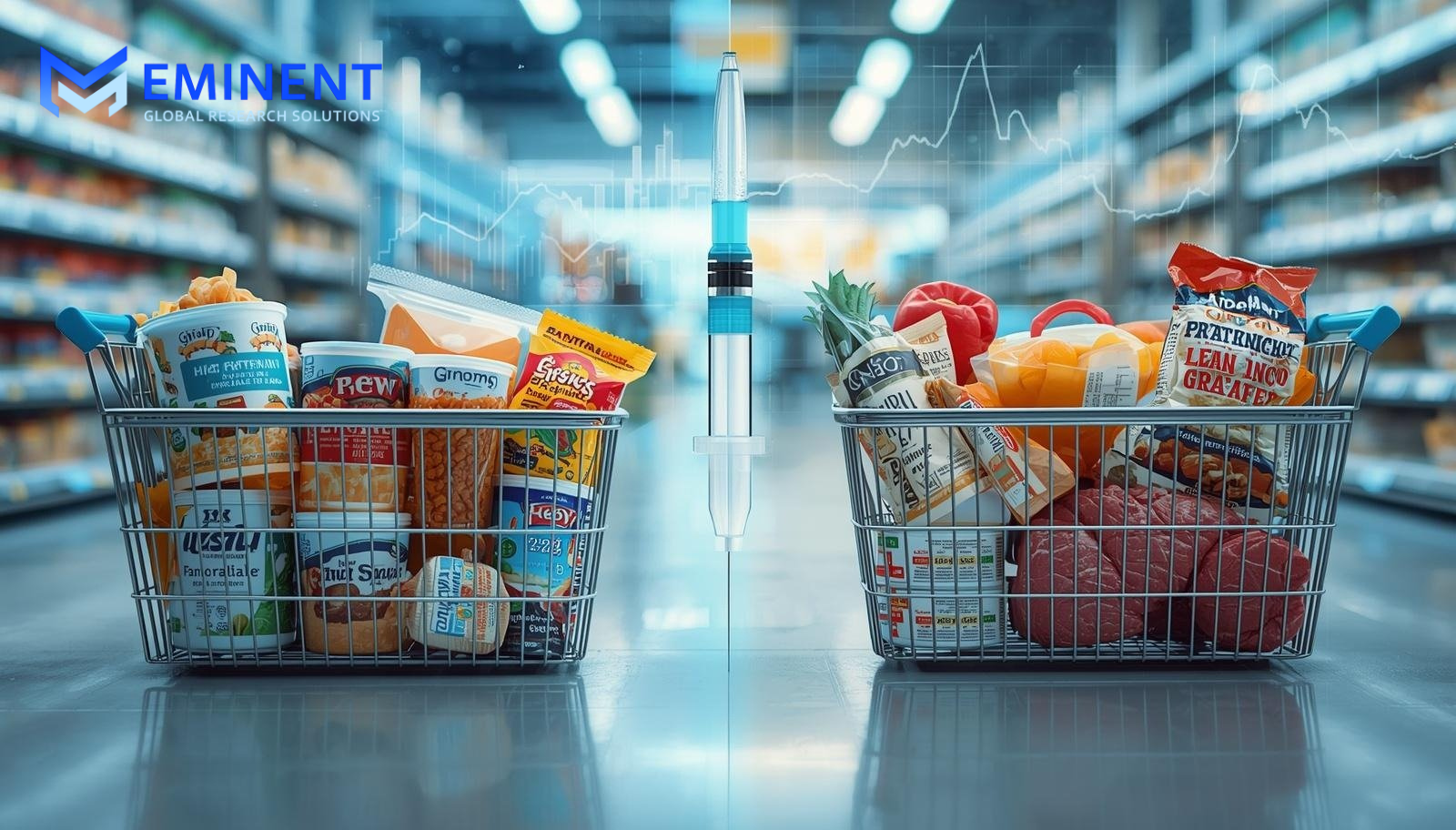
The rapid rise of GLP-1 medications—such as Ozempic and Wegovy—is no longer just a healthcare story. It is fundamentally transforming consumer behavior, with far-reaching implications for the global food and beverage (F&B) industry.
According to insights from Circana, GLP-1 medication users are projected to account for 35% of U.S. food and beverage sales by 2030, up from 23% of households today. This shift signals not just a trend—but a structural change in how consumers eat, shop, and prioritize nutrition.
A Behavioral Shift, Not Just a Medical One
GLP-1 medications work by suppressing appetite and increasing satiety. However, their real impact extends beyond reduced calorie intake:
- Consumers are eating less frequently
- Portion sizes are shrinking
- Demand is shifting toward nutrient-dense foods
- Emotional and impulse-driven purchases are declining
This is creating a new class of “intentional consumers”—individuals who prioritize functionality over indulgence.
What Are Consumers Buying Instead?
The shift in consumption patterns is already visible across retail shelves:
Rising Demand
- High-protein foods (Greek yogurt, lean meats, protein bars)
- Fiber-rich products (whole grains, gut-health foods)
- Functional foods supporting satiety and metabolic health
Declining Categories
- Sugary snacks and beverages
- Refined carbohydrates
- Large-portion packaged foods
This transition is not temporary—it aligns with broader health-conscious megatrends, amplified by pharmaceutical intervention.
Strategic Implications for F&B Companies
For food and beverage companies, this is not a minor portfolio adjustment—it is a category-level disruption.
1. Portfolio Reinvention
Brands must rethink their product mix:
- Shift from indulgence-led SKUs to function-driven offerings
- Introduce portion-controlled packaging
- Reformulate products to enhance protein, fiber, and satiety value
2. Innovation Pipeline Transformation
Traditional innovation cycles are too slow for this shift. Companies need:
- Faster R&D cycles
- Data-driven formulation strategies
- Consumer insight integration at early stages
3. Revenue & Margin Pressure
Lower consumption volumes could mean:
- Reduced basket sizes
- Increased price sensitivity
- Margin compression in legacy categories
This makes precision pricing and cost optimization critical.
The Techno-Commercial Consulting Opportunity
This is where a techno-commercial approach becomes essential.
At Eminent Global Research Solutions, we see three key areas where data-driven consulting can unlock value:
Demand Modeling & Forecasting
- Simulate how GLP-1 adoption impacts category-level demand
- Identify high-growth vs declining segments
- Enable proactive portfolio shifts
Formulation Optimization
- Use analytics to balance nutrition, taste, and cost
- Identify ingredient substitutions that improve satiety while protecting margins
Pricing & Margin Strategy
- Optimize pricing in a value-sensitive market
- Align product positioning with perceived health benefits
- Prevent margin erosion in declining categories
From Disruption to Competitive Advantage
The companies that succeed in this new landscape will not be those that react—but those that anticipate and adapt early.
GLP-1-driven behavioral change is:
- Persistent (not a short-term trend)
- Scalable (growing adoption rates)
- Cross-category (impacting snacks, beverages, packaged foods, and beyond)
This is a rare moment where healthcare innovation is directly reshaping consumer markets—and it demands a coordinated response across R&D, marketing, and strategy.
Final Thought
The intersection of pharmaceuticals and food consumption is redefining the rules of the industry. For F&B companies, the question is no longer if this will impact business—but how fast they can evolve.
Organizations that embrace data-led, techno-commercial strategies will not only mitigate risks—but also unlock new growth avenues in a health-driven consumption era.