

By Eminent Global Research Solutions
South Africa’s beauty and personal care market, now valued at approximately $4 billion, has emerged as one of the most dynamic and competitive retail sectors on the African continent. Driven by a young population, rising urbanization, increasing disposable incomes, and a powerful cultural emphasis on self-expression, the market is no longer just about cosmetics—it is about identity, innovation, and accessibility.
For retailers, both local and global, this is not simply a growth market. It is a battleground where brand positioning, pricing strategy, and cultural relevance determine success.
A Market Fueled by Demographics and Identity
At the heart of South Africa’s beauty boom lies its demographic advantage. A significant proportion of the population is under 35, digitally connected, and highly engaged with global beauty trends. Social media platforms have accelerated the adoption of international standards while simultaneously amplifying local voices.
Consumers today are not just buying products—they are investing in brands that reflect their identity. This is especially evident in categories such as skincare for melanin-rich skin, natural hair care, and inclusive cosmetics. Retailers that fail to recognize the diversity of South African consumers risk losing relevance in a highly fragmented yet opportunity-rich market.
The Rise of Conscious and Localized Beauty
One of the defining shifts in South Africa’s beauty landscape is the move toward conscious consumption. Consumers are increasingly prioritizing products that are:
- Ethically sourced
- Cruelty-free
- Free from harmful chemicals
- Environmentally sustainable
Local brands have capitalized on this shift by offering products rooted in indigenous ingredients such as rooibos, marula oil, and baobab extracts. These brands are not only competing on quality but also on authenticity—something global players often struggle to replicate.
For retailers, this creates a dual challenge: balancing global brand portfolios with strong local offerings that resonate culturally and ethically.
Retail Transformation: From Shelves to Experiences
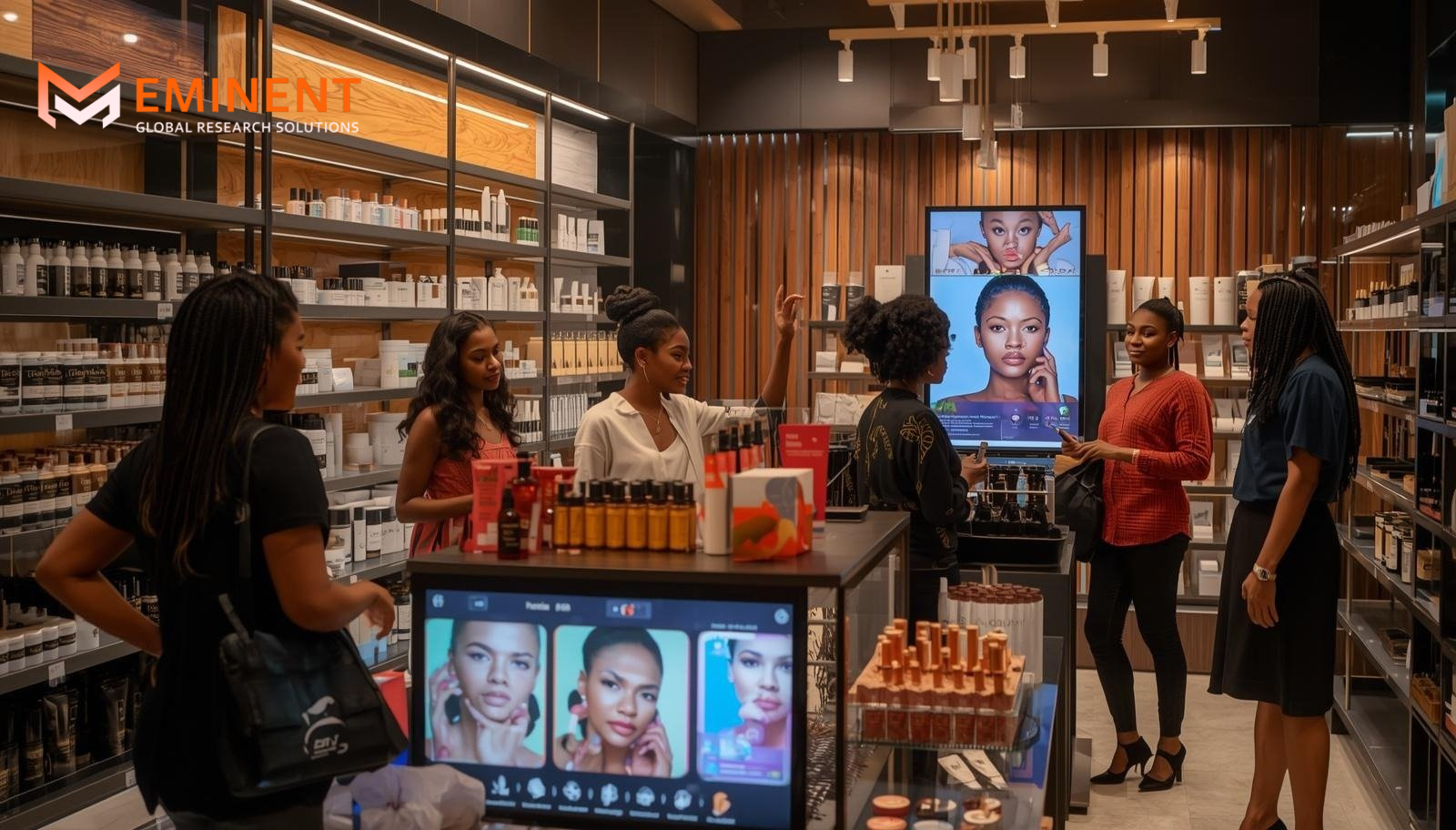
Traditional brick-and-mortar retail is undergoing a transformation. Beauty retail in South Africa is no longer just transactional—it is experiential.
Retailers are investing in:
- In-store beauty consultations
- Personalized product recommendations
- Digital integrations such as virtual try-ons
- Loyalty programs tailored to individual preferences
Omnichannel strategies are becoming essential. Consumers may discover products on social media, research them online, and purchase them in-store—or vice versa. Retailers that can seamlessly integrate these touchpoints are gaining a competitive edge.
E-commerce, while still developing compared to global benchmarks, is witnessing rapid growth. Mobile-first platforms and social commerce are particularly influential, especially among younger consumers.
Price Sensitivity vs Premium Aspirations
South Africa presents a unique pricing paradox. On one hand, a large segment of the population remains highly price-sensitive due to economic pressures. On the other hand, there is a growing middle class willing to spend on premium and luxury beauty products.
This creates a “barbell effect” in the market:
- Strong demand for affordable, mass-market products
- Simultaneous growth in premium and niche segments
Retailers must carefully curate their product mix to cater to both ends of the spectrum. Private label brands, smaller pack sizes, and promotional strategies are key tools in addressing affordability without compromising brand perception.
The Competitive Landscape: Global Giants vs Local Innovators
The South African beauty market is witnessing intense competition between multinational corporations and agile local brands.
Global players bring:
- Strong brand recognition
- Advanced R&D capabilities
- Established supply chains
Local brands offer:
- Cultural relevance
- Faster innovation cycles
- Strong community engagement
Retailers are increasingly acting as curators rather than just distributors—deciding which brands earn shelf space and consumer attention. Strategic partnerships, exclusive launches, and influencer collaborations are becoming critical in differentiating offerings.
The Power of Influencers and Digital Communities
Influencer marketing is playing a pivotal role in shaping consumer behavior. South African beauty influencers are not just trendsetters—they are trusted voices who bridge the gap between global trends and local realities.
Micro-influencers, in particular, are driving engagement by offering authenticity and relatability. Retailers that collaborate effectively with these digital communities can significantly enhance brand visibility and trust.
User-generated content, reviews, and tutorials are also influencing purchasing decisions more than traditional advertising.
Challenges Retailers Must Navigate
Despite its growth potential, the market is not without challenges:
- Economic volatility impacting consumer spending
- Supply chain disruptions and import dependencies
- Regulatory complexities
- Intense price competition
Retailers must adopt agile strategies, leveraging data analytics and market intelligence to respond quickly to changing consumer behavior.
The Road Ahead: Opportunities for Strategic Growth
Looking forward, South Africa’s beauty market offers substantial opportunities for retailers willing to invest in long-term strategies:
- Localization at Scale
Adapting global products to local needs while maintaining brand consistency. - Digital Acceleration
Investing in e-commerce infrastructure and social commerce capabilities. - Sustainability Leadership
Building transparent, eco-friendly supply chains. - Consumer-Centric Innovation
Using data to drive personalized experiences and product development. - Strategic Partnerships
Collaborating with local brands, influencers, and technology providers.
Conclusion
South Africa’s $4 billion beauty market is more than a growth story—it is a reflection of evolving consumer values, cultural pride, and digital transformation. For retailers, success will depend on their ability to balance global expertise with local insight, affordability with aspiration, and innovation with authenticity.
At Eminent Global Research Solutions, we see this market not just as a competitive arena, but as a strategic opportunity for retailers to redefine their approach to emerging markets. Those who invest in understanding the nuances of South African consumers today will be the ones leading the market tomorrow.