

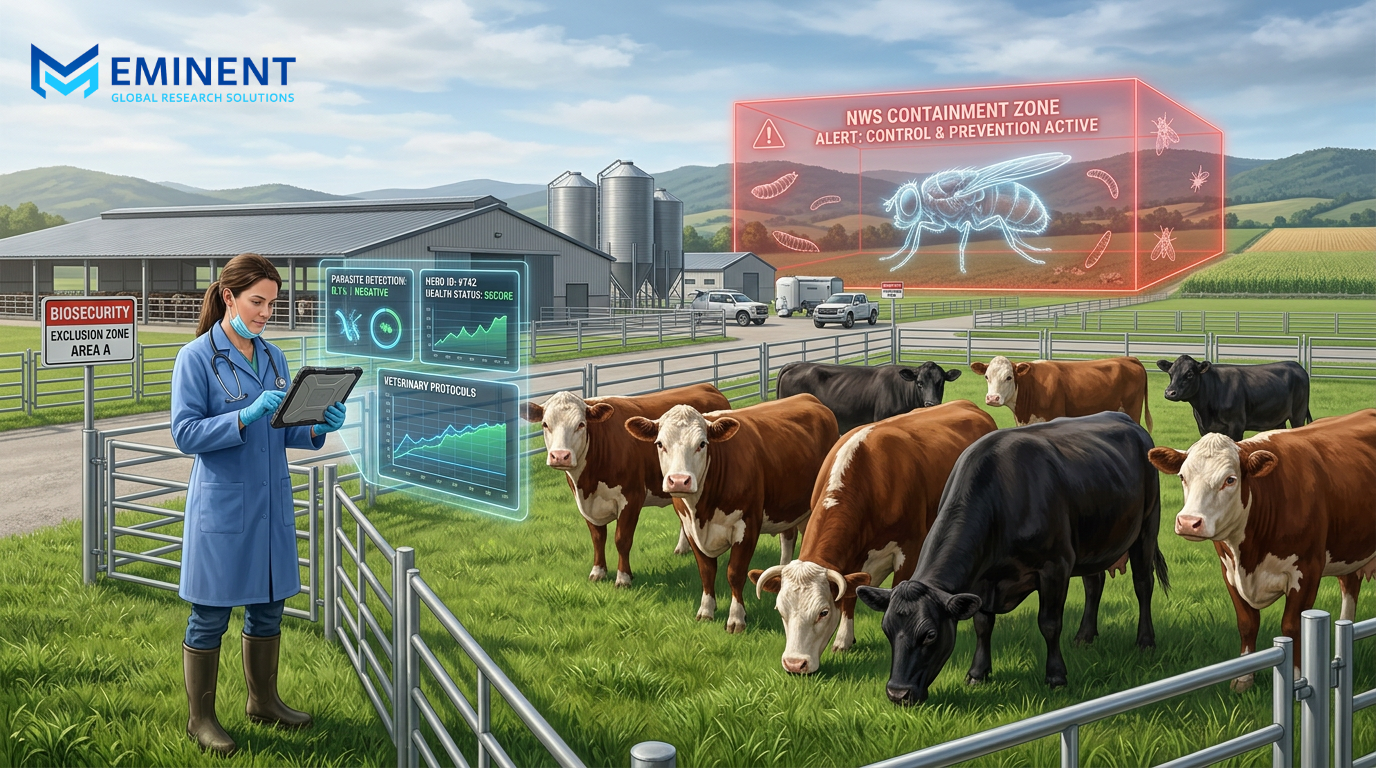
In a decisive move to protect agricultural stability and food security, the U.S. Department of Health and Human Services (HHS) has authorized the Food and Drug Administration (FDA) to permit the emergency use of animal drugs to combat the resurgence threat of the New World screwworm. This development highlights the increasing importance of rapid regulatory response mechanisms in safeguarding livestock industries and ensuring the resilience of global food systems.
Understanding the Threat: What is New World Screwworm?
The New World screwworm is a parasitic fly whose larvae infest warm-blooded animals, including cattle, wildlife, and occasionally humans. Unlike typical maggots that feed on dead tissue, screwworm larvae consume living flesh, leading to severe infections, tissue destruction, and, in many cases, death if untreated.
Historically, the United States successfully eradicated this pest through coordinated eradication programs involving sterile insect techniques. However, periodic outbreaks in neighboring regions and increased global movement of animals continue to pose a persistent risk of reintroduction.
Why Emergency Authorization Matters
The recent authorization by HHS allows the FDA to fast-track the use of specific animal drugs that may not yet have full regulatory approval for this exact application. In emergency scenarios, such regulatory flexibility becomes critical.
This decision reflects three key priorities:
- Rapid Containment: Immediate access to effective treatments helps prevent localized outbreaks from escalating into widespread infestations.
- Livestock Protection: The U.S. livestock industry, valued in billions, depends heavily on animal health. A screwworm outbreak could disrupt meat and dairy supply chains.
- Food Security Assurance: Protecting animal populations directly impacts food availability, pricing stability, and export capabilities.
Strategic Implications for the Agriculture Sector
The emergency use authorization signals a proactive stance toward biosecurity threats. It underscores a broader shift from reactive crisis management to anticipatory risk mitigation.
For stakeholders across the agriculture value chain, this move has several implications:
1. Enhanced Disease Preparedness
Livestock producers, veterinarians, and regulatory agencies are now better equipped to respond swiftly. Early intervention reduces economic losses and limits the spread of infestation.
2. Regulatory Agility
The FDA’s ability to approve emergency use of animal drugs demonstrates evolving regulatory frameworks that prioritize speed without compromising safety. This agility is essential in addressing emerging biological threats.
3. Supply Chain Stability
By containing potential outbreaks at an early stage, the U.S. can maintain stable meat and dairy production levels. This stability is crucial not only domestically but also for international trade partners relying on U.S. exports.
Economic Impact Considerations
An uncontrolled screwworm outbreak could have devastating economic consequences. Past infestations have resulted in:
- Significant livestock mortality rates
- Increased veterinary costs
- Trade restrictions and export bans
- Loss of farmer livelihoods
By contrast, early containment supported by emergency drug use minimizes these risks. It also reduces long-term recovery costs and preserves market confidence.
The Role of Innovation in Animal Health
This emergency authorization also highlights the growing importance of innovation in veterinary medicine. Advanced pharmaceuticals, combined with surveillance technologies and predictive analytics, are reshaping how agricultural threats are managed.
Key innovation trends include:
- Targeted antiparasitic treatments with faster action
- Digital livestock monitoring systems for early detection
- Cross-border surveillance networks to track pest movement
- AI-driven risk modeling for outbreak prediction
Such innovations enable a more integrated and data-driven approach to animal health management.
Global Context: A Shared Responsibility
While this action is specific to the United States, the implications are global. Livestock diseases and parasitic infestations do not respect borders. International collaboration remains essential in preventing cross-border spread.
Countries must align on:
- Surveillance standards
- Reporting protocols
- Rapid response strategies
- Veterinary treatment accessibility
The screwworm threat serves as a reminder that food security is a shared global responsibility requiring coordinated action.
What This Means for Industry Leaders
For agribusiness executives, policymakers, and consulting firms, this development reinforces several strategic priorities:
- Invest in resilience: Strengthen biosecurity infrastructure and response systems
- Adopt emerging technologies: Leverage data and innovation to mitigate risks
- Monitor regulatory changes: Stay informed on evolving emergency use policies
- Build partnerships: Collaborate with government and research institutions
Organizations that proactively adapt to such shifts will be better positioned to navigate uncertainty and capitalize on emerging opportunities.
Eminent Global Research Solutions Perspective
At Eminent Global Research Solutions, we view this development as a critical example of how regulatory agility, scientific innovation, and strategic foresight converge to protect essential industries.
Our analysis indicates that:
- Emergency regulatory pathways will become more common across sectors
- Animal health will play an increasingly central role in food system resilience
- Data-driven decision-making will define the next era of agricultural strategy
We believe that organizations must move beyond traditional risk management and embrace predictive, intelligence-led approaches to remain competitive.
Conclusion
The HHS authorization for emergency use of animal drugs to combat the New World screwworm represents a timely and strategic intervention. It underscores the importance of preparedness, innovation, and regulatory flexibility in addressing biological threats to agriculture.
As global food systems face increasing pressure from climate change, disease outbreaks, and supply chain disruptions, such measures will play a pivotal role in ensuring stability and sustainability.
For industry stakeholders, the message is clear: resilience is no longer optional—it is a strategic imperative.