
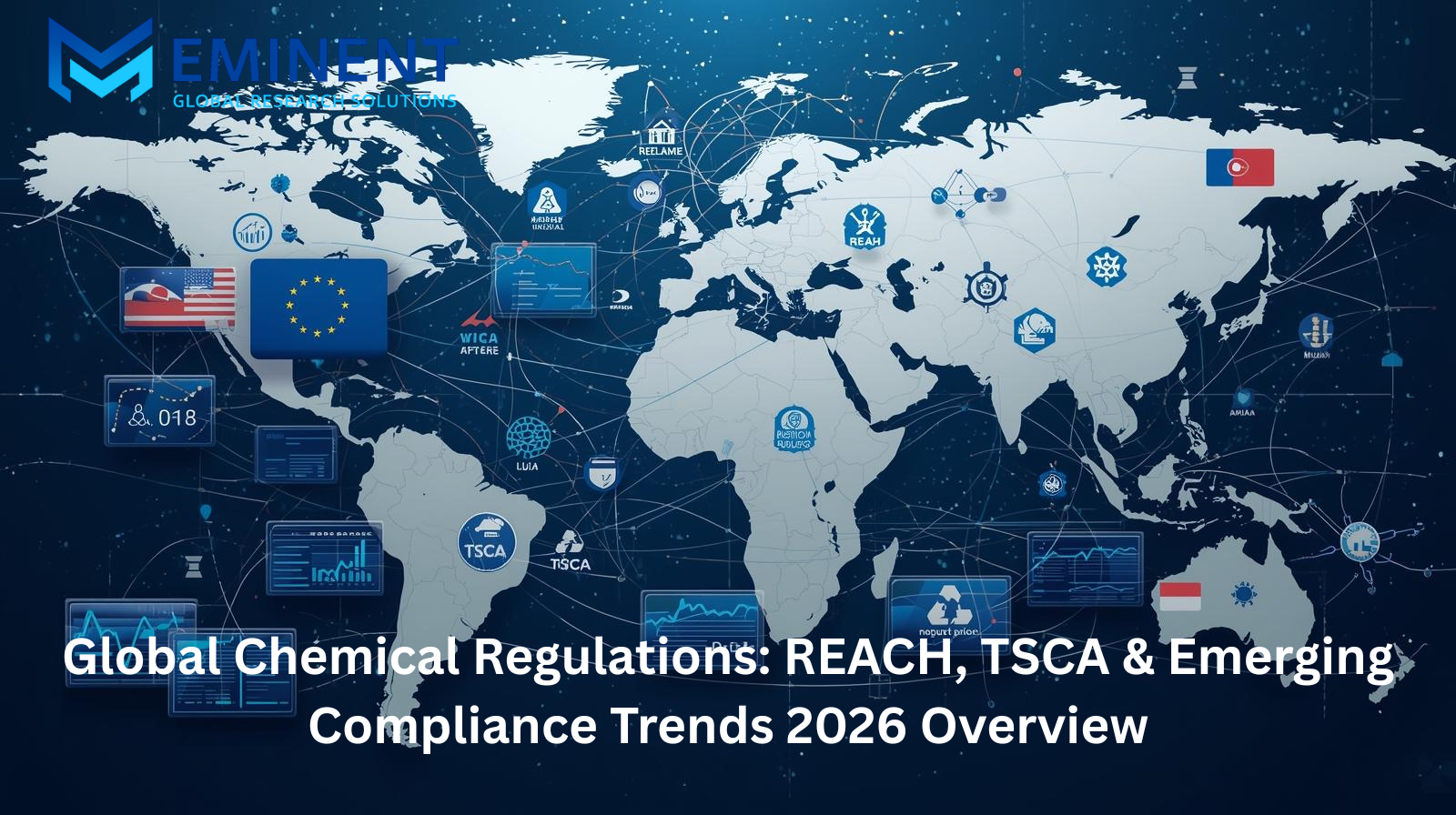
The global landscape for chemical regulation is rapidly evolving as governments, industry groups, and civil society respond to heightened concerns over health, environment, and sustainability. Two of the most influential regulatory frameworks — the EU’s REACH and the U.S. Toxic Substances Control Act (TSCA) — remain at the center of this evolution, while emerging trends in Asia-Pacific and beyond are reshaping how chemical compliance is managed worldwide.
📊 1. REACH: Major EU Regulatory Overhaul in Progress
The European Union’s REACH (Registration, Evaluation, Authorization and Restriction of Chemicals) regulation has long been the most comprehensive chemical law globally, requiring manufacturers and importers to demonstrate safe use of chemicals placed on the EU market. Recent developments show that REACH is undergoing a significant revision — described by regulators as the most substantial modernization in its history. The European Commission’s final proposal has sparked debate among industry stakeholders, with some warning it could intensify operational pressures on chemical firms.
Key aspects of the revision under discussion include:
Broadening the scope of substances subject to restriction or authorization, particularly persistent, bioaccumulative, or toxic chemicals.
Stricter hazard classification thresholds, aligning REACH with emerging scientific understandings and public health priorities.
Enhanced data requirements and digital reporting mechanisms to improve transparency and risk assessment across lifecycle stages.
Industry groups — including major federations representing chemicals, construction chemicals, and fragrance sectors — have voiced concerns that the proposals could intensify regulatory costs and constrain competitiveness, especially for SMEs with limited compliance bandwidth. Nonetheless, regulators argue that modernizing REACH is essential to uphold environmental and public health protections.
Across Europe, the revision process is now a focal point for compliance planning in 2026, with companies actively monitoring regulatory timelines, substance evaluations, and anticipated implementation guidance.
🇺🇸 2. TSCA: U.S. Regulatory Reform and Policy Shifts
On the other side of the Atlantic, the U.S. Chemical Regulatory Framework, centered on TSCA, remains under scrutiny as 2026 unfolds. Originally modernized by the Frank R. Lautenberg Chemical Safety for the 21st Century Act in 2016, TSCA grants the U.S. Environmental Protection Agency (EPA) authority to evaluate and regulate chemical risks. However, the statute now faces potential legislative updates and administrative shifts.
Key developments impacting TSCA compliance in 2026 include:
Discussion Draft for TSCA Reform: Lawmakers have proposed targeted amendments aimed at addressing procedural challenges faced by both industry and regulators. These include reducing backlogs in Section 5 new chemical reviews, refining Section 6 risk evaluations for existing chemicals, and clarifying the user fee authority necessary for EPA’s operational continuity. Industry participants view these changes as potentially boosting regulatory predictability and domestic competitiveness, although environmental advocates are cautious that changes could weaken chemical safety protections.
Backlog and Risk Evaluation Challenges: TSCA’s existing chemical risk assessments have been criticized for slow timelines and resource constraints, with EPA having to balance science-based evaluation with industry and public expectations.
Emerging PFAS Regulation: Per- and polyfluoroalkyl substances (PFAS), often called “forever chemicals” due to environmental persistence, continue to be a regulatory hotspot. Across jurisdictions, PFAS is shaping evaluation criteria and reporting requirements, and TSCA is no exception. Parties are increasingly focused on aligning PFAS strategies with broader risk governance frameworks.
Meanwhile, procedural pressures such as fee authority expiration and concurrent proposals to modify chemical safety programs are drawing attention from compliance leaders seeking to anticipate legislative outcomes and align internal regulatory strategies accordingly.
🌀 3. Emerging Global & Regional Chemical Compliance Trends
While REACH and TSCA remain influential cornerstones, a wider global regulatory ecosystem continues to take shape — with significant developments in Asia-Pacific, international frameworks, and compliance enforcement practices.
📍 Asia-Pacific Regulatory Momentum
Across countries like China, Australia, Vietnam, Japan, and South Korea:
National regulators are implementing new chemical control statutes and compliance mandates, harmonizing, in some cases, with EU-style approaches for registration and risk assessment.
Australia’s chemical body (AICIS) is actively evaluating the presence of hundreds of PFAS substances on its inventory, requiring formal disclosures from manufacturers and importers — a sign of robust enforcement emphasis.
Vietnam has enacted a new chemicals law effective from 2026, expanding local regulatory oversight and compliance requirements for producers and traders.
These regional changes underscore the need for multinational companies to align chemical compliance systems across jurisdictions rather than adopt country-specific approaches in silos.
🌐 International Frameworks and Strategic Objectives
Beyond individual laws, global initiatives such as the Global Framework on Chemicals (adopted by multiple stakeholders) are shaping longer-term objectives for chemicals management, waste reduction, and lifecycle oversight.
This signals an increased trend toward:
Harmonised hazard communication systems
Group-based regulatory approaches
Lifecycle risk assessment
Enforcement readiness with shorter transition periods
Collectively, these developments demand that businesses not only track compliance obligations but also invest in internal governance mechanisms, digital tools, and cross-functional regulatory intelligence.
📈 4. Compliance Strategy & Industry Preparedness
With chemical regulations growing more complex globally, successful compliance is no longer reactive — it’s strategic.
Key strategic areas for chemical manufacturers and stakeholders in 2026 include:
✔ Integrated Regulatory Monitoring: Continuous tracking of REACH revisions, TSCA reform progress, and PFAS regulatory actions across jurisdictions.
✔ Digital Compliance Tools: Leveraging AI-enabled platforms to manage reporting deadlines, safety data, and multiple lists of restricted or high-concern substances (such as those governed under REACH Annex XVII or TSCA Section 6(h)).
✔ Cross-Border Harmonization: Aligning chemical inventories with global criteria to avoid trade disruptions.
✔ Stakeholder Engagement: Participating in workshops, conferences, and industry forums — such as major events planned around GlobalChem 2026 — to stay abreast of emerging regulatory perspectives and enforcement expectations.
✔ Organizational Readiness: Building internal subject matter expertise and regulatory affairs teams capable of scenario planning and proactive compliance.
📌 Summary
The global chemical regulatory landscape in 2026 is characterized by:
A transformative revision of EU REACH, challenging industry norms while tightening risk governance.
Potential structural updates to U.S. TSCA, balancing regulatory efficiency and safety priorities.
Emerging regional regulations in Asia-Pacific and beyond that echo global trends.
A strategic emphasis on digitalized, lifecycle-oriented compliance frameworks.
Increasing regulatory scrutiny of PFAS and other persistent chemicals.
In this dynamic environment, compliance is no longer a checkbox. It demands strategic foresight, harmonized systems, and proactive regulatory tracking to navigate risk, innovation, and market access challenges worldwide.