
Can AI Models Improve Efficiency in Chemical Manufacturing?
Published: 10 November 2026
Introduction
The chemical manufacturing industry is entering a new phase of digital transformation as companies explore artificial intelligence (AI) to improve production efficiency, reduce operating costs and strengthen sustainability. Chemical manufacturing involves complex processes where temperature, pressure, raw material composition and reaction conditions must be carefully controlled. Even small operational changes can influence product quality, energy consumption and production costs.
Traditional process simulations and manual monitoring have helped manufacturers manage these challenges for decades. However, AI-powered models are creating new opportunities by analysing large volumes of operational data, predicting process behaviour and recommending more efficient production conditions.
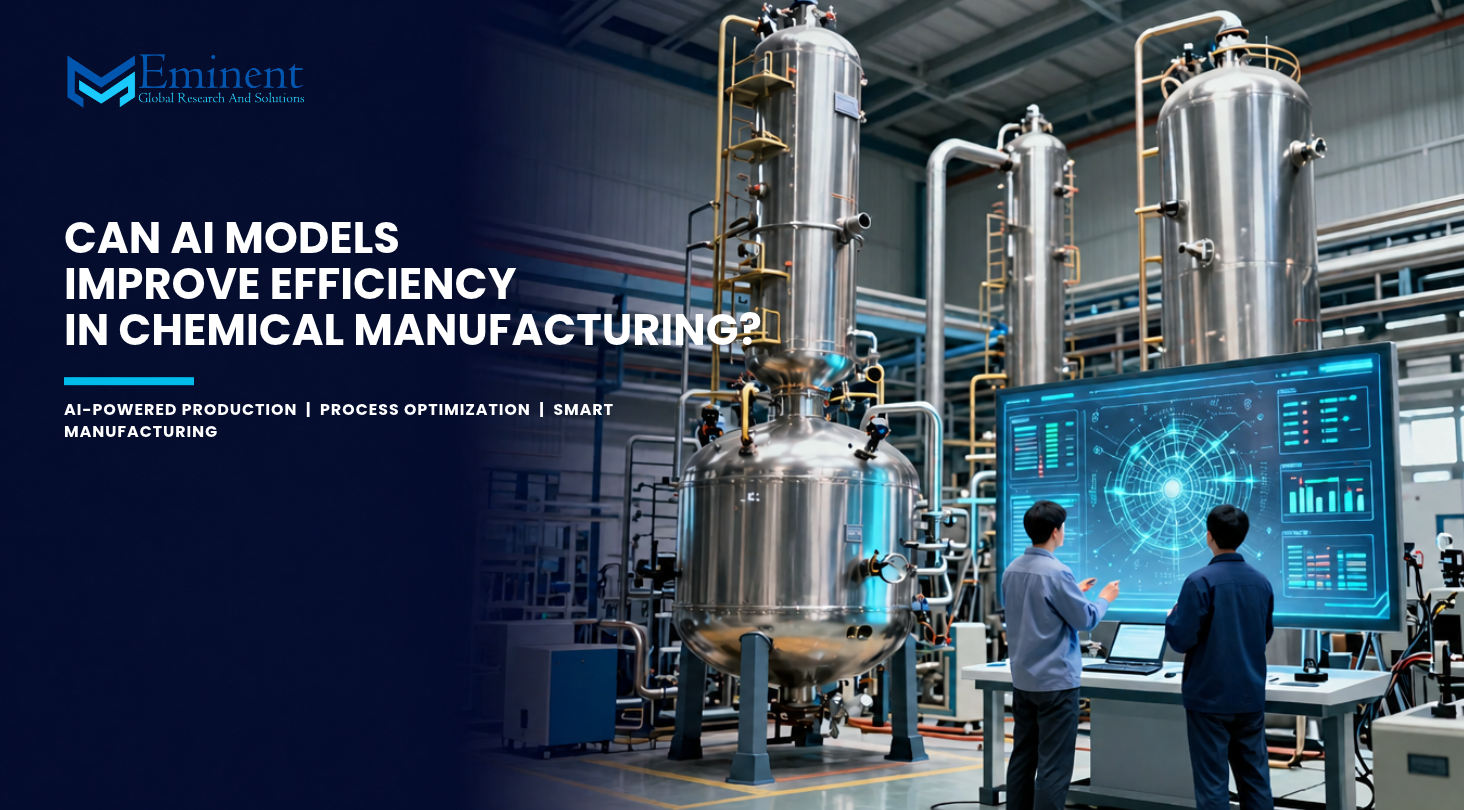
Recent developments at Evonik Oxeno demonstrate how AI models are moving beyond experimental applications into real chemical plant operations. This raises an important question: Can artificial intelligence become a key driver of efficiency and competitiveness in chemical manufacturing?
How Are AI Models Transforming Chemical Manufacturing?
AI models use historical production data, process simulations and real-time operational information to identify patterns and support manufacturing decisions.
In chemical plants, these models can help operators understand how different operating conditions influence production performance. They can also generate recommendations for adjusting processes while maintaining required product specifications.
Some important applications include:
1. Process Optimization
Chemical production requires precise control over operating conditions such as temperature, pressure, reaction time and feedstock composition.
AI models can analyse these variables and recommend operating conditions that improve production efficiency. This helps manufacturers reduce unnecessary resource consumption while maintaining consistent output and quality.
2. Predictive Maintenance
Unexpected equipment failures can interrupt production and increase maintenance expenses.
Machine learning models can analyse equipment performance, vibration, temperature and pressure data to identify unusual patterns. These insights can help maintenance teams detect potential problems earlier and plan repairs before major breakdowns occur.
3. Energy Consumption Management
Energy is a major operational requirement in chemical manufacturing, particularly in processes involving heating, cooling, distillation and separation.
AI-powered optimization can identify operating conditions that require less energy while maintaining production targets. This can reduce utility expenses and support lower industrial carbon emissions.
4. Quality Control and Product Consistency
Maintaining consistent chemical product quality is essential for industrial customers and regulatory requirements.
AI models can analyse production parameters and identify conditions that may affect product specifications. This enables operators to respond more quickly to process variations and improve quality management.
5. Feedstock and Raw Material Optimization
Changes in raw material composition can affect chemical reactions, production efficiency and final product quality.
AI-based models can evaluate different feedstock conditions and recommend suitable operating adjustments. This is particularly valuable for manufacturers dealing with changing raw material availability and prices.
What Does the Latest Industry Development Show?
A significant example emerged on 9 November 2026, when Evonik Oxeno announced the introduction of AI-based process models into live plant operations at its facilities in Marl, Germany, and Antwerp, Belgium.
The initiative, developed under the COMPAS project (Control and Optimization using AI Models for Process Advancement and Cost Saving), combines artificial intelligence with chemical engineering knowledge.
The system uses more than one million pre-calculated simulations of plant operating conditions to build AI-based models known as gray-box models. These models combine AI capabilities with descriptions of chemical process thermodynamics and kinetics.
They can generate practical recommendations for plant operations within seconds, helping operators respond more quickly to changing feedstock conditions and optimize energy consumption.
A research paper published in Chemical Engineering & Technology also reported an average reduction of approximately 6% in daily steam consumption in the studied 1-butene distillation application after the introduction of a model-based operator dashboard, while maintaining product specifications within defined limits.
This development demonstrates how combining industrial expertise with AI can deliver measurable operational improvements in real manufacturing environments.
What Benefits Can AI Bring to Chemical Manufacturers?
The adoption of AI models can create several business and operational advantages.
Lower Production Costs: More efficient process conditions can reduce energy consumption, raw material waste and unnecessary operational expenses.
Improved Productivity: Faster process analysis and recommendations can help operators make informed decisions and reduce avoidable production interruptions.
Greater Sustainability: Optimized energy consumption can contribute to lower CO₂ emissions and support corporate sustainability objectives.
Better Decision-Making: AI models can process complex operational information and provide insights that may be difficult to identify through conventional monitoring.
Increased Competitiveness: Manufacturers that successfully integrate AI into production operations may improve efficiency, product consistency and long-term cost management.
What Challenges Could Limit AI Adoption?
Despite its potential, implementing AI in chemical manufacturing involves important challenges.
Data Quality and Availability: AI models require reliable operational data. Incomplete, inconsistent or inaccurate information can affect model performance.
Integration with Existing Systems: Many chemical plants operate with established control systems and industrial equipment. Integrating AI technologies without disrupting operations requires careful planning.
Safety and Regulatory Requirements: Chemical manufacturing involves hazardous materials, high temperatures and complex industrial processes. AI recommendations must be validated and monitored to ensure safe operations.
Implementation Costs: Digital infrastructure, software, skilled professionals and system integration can require significant investment.
Workforce Skills: Engineers and plant operators need appropriate training to understand AI-generated insights and use them effectively.
Successful implementation therefore requires collaboration between chemical engineers, data scientists, automation specialists and plant management teams.
What Is the Future of AI in Chemical Manufacturing?
AI adoption in the chemical industry is expected to expand across process optimization, predictive maintenance, product development and industrial automation.
As manufacturers gain access to better operational data and more advanced computing technologies, AI models could support increasingly integrated production systems.
Future developments may include AI-assisted process control, digital twins, intelligent quality monitoring and self-optimizing production networks.
However, fully autonomous chemical manufacturing will require extensive testing, safety validation and reliable integration with existing industrial control systems. Human expertise will remain important in supervising critical production decisions.
Eminent’s Perspective
Artificial intelligence is creating new opportunities for chemical manufacturers to improve operational performance while responding to increasing cost, efficiency and sustainability pressures.
The adoption of AI-based process models demonstrates how traditional chemical engineering knowledge can be combined with advanced digital technologies to deliver practical industrial value.
For chemical companies, the opportunity extends beyond automation. It includes improving resource utilization, strengthening production reliability, reducing energy consumption and building more competitive manufacturing operations.
Eminent Global Research Solutions believes that understanding these developments is essential for businesses evaluating digital transformation opportunities in the global chemical industry. Market research, technology assessment and competitive intelligence can help organizations identify emerging opportunities, evaluate adoption challenges and develop informed investment strategies.
Conclusion
AI models have the potential to improve chemical manufacturing by optimizing production processes, reducing energy consumption, supporting predictive maintenance and improving product consistency.
Recent developments at Evonik Oxeno show that AI-powered process optimization is already being applied in live industrial environments, rather than remaining limited to research and experimentation.
Although challenges related to data quality, system integration, safety and investment remain, the combination of artificial intelligence and chemical engineering could become an important factor in the industry’s future competitiveness.
For chemical manufacturers, the next step is to move from exploring AI possibilities to implementing reliable, measurable and scalable solutions.
Post a Comment