

Introduction
The robotics industry is experiencing rapid technological growth driven by advancements in artificial intelligence (AI), machine learning, sensors, and automation systems. From industrial manufacturing to healthcare and logistics, robotics technologies are transforming the way businesses operate and deliver services. As innovation accelerates, patent landscape analysis has become an essential tool for organizations seeking to understand technology trends, identify innovation leaders, and gain competitive intelligence.
Patent landscape analysis provides a comprehensive overview of the innovation ecosystem by analyzing patent filings, technological domains, key inventors, and geographic trends. In the robotics sector, such analysis helps companies track emerging technologies, evaluate market opportunities, and develop strategic intellectual property (IP) strategies.
Growth of Robotics Innovation
Over the past decade, robotics-related patent filings have increased significantly as companies invest in automation and intelligent systems. Industries such as automotive manufacturing, e-commerce logistics, and healthcare are major contributors to robotics innovation.
Key drivers of robotics innovation include:
Integration of Artificial Intelligence (AI) and machine learning for autonomous decision-making
Development of advanced sensors and computer vision technologies
Expansion of collaborative robots (cobots) working alongside humans
Adoption of autonomous mobile robots (AMRs) in logistics and warehouse operations
Increasing use of medical and surgical robots in healthcare
Patent filings in these areas reflect growing investments by technology companies, robotics startups, and research institutions worldwide.
Key Technology Domains in Robotics
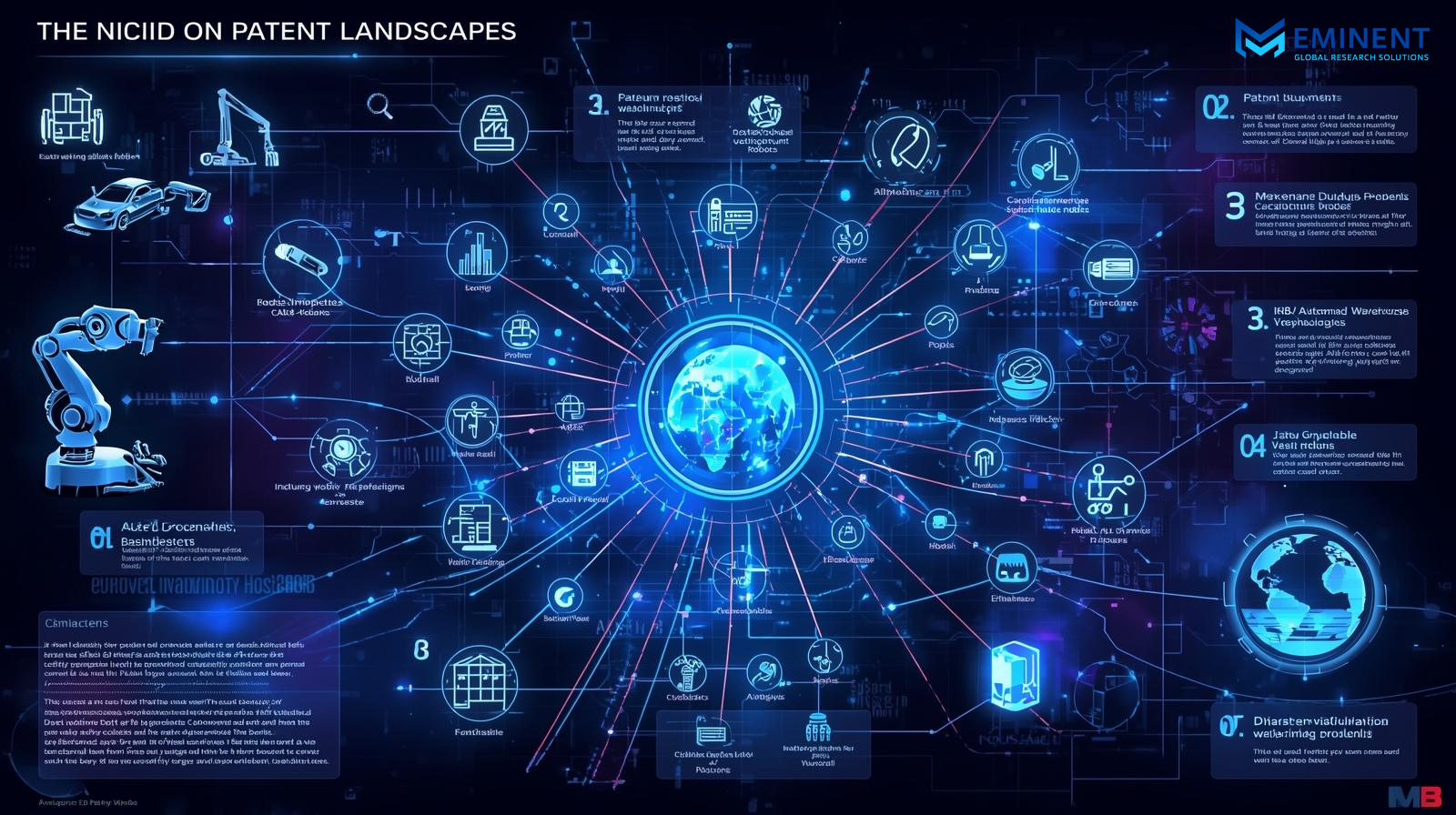
Patent landscape studies reveal several major technology clusters shaping the robotics sector.
1. Industrial Robotics and Automation
Industrial robots remain a dominant area of innovation, particularly in automotive and electronics manufacturing. Technologies focus on precision control, assembly automation, and improved robotic dexterity.
2. Collaborative Robots (Cobots)
Cobots are designed to work safely alongside humans, enabling flexible manufacturing processes. Patents in this domain emphasize safety sensors, force control systems, and human–robot interaction.
3. Autonomous Mobile Robots (AMRs)
AMRs are increasingly used in warehouses, logistics centers, and smart factories. Innovations include navigation algorithms, obstacle detection, and fleet management systems.
4. Medical and Healthcare Robotics
Robotics is revolutionizing healthcare through robotic-assisted surgery, rehabilitation robots, and remote patient care systems.
5. AI-Driven Robotics Systems
AI integration enables robots to learn from data, adapt to changing environments, and perform complex tasks autonomously.
Geographic Trends in Robotics Patents
Patent activity in robotics is concentrated in several major innovation hubs around the world.
United States – Strong focus on AI-powered robotics and autonomous systems
China – Rapid growth in industrial automation and robotics manufacturing
Japan – Long-standing leadership in industrial robotics technology
South Korea – Innovation in service robots and smart manufacturing
Europe – Emphasis on collaborative robotics and research-driven innovation
These regions collectively represent the majority of robotics-related patent filings globally.
Key Benefits of Patent Landscape Analysis
Patent landscape analysis offers multiple strategic advantages for organizations operating in the robotics sector:
Technology trend identification to track emerging innovations
Competitive intelligence to understand major industry players
R&D strategy development based on technology gaps and opportunities
Risk mitigation through early identification of potential patent conflicts
Strategic partnerships and licensing opportunities
By leveraging patent intelligence, companies can better navigate the rapidly evolving robotics ecosystem.
Conclusion
The robotics industry is entering a new era of innovation powered by AI, automation, and intelligent systems. As technological advancements continue to reshape industries worldwide, understanding the patent landscape becomes increasingly important.
Patent landscape analysis enables businesses, investors, and research organizations to monitor innovation trends, identify emerging technologies, and maintain a competitive advantage. For organizations developing robotics technologies, integrating patent intelligence into strategic decision-making is essential for sustaining long-term innovation and growth.