

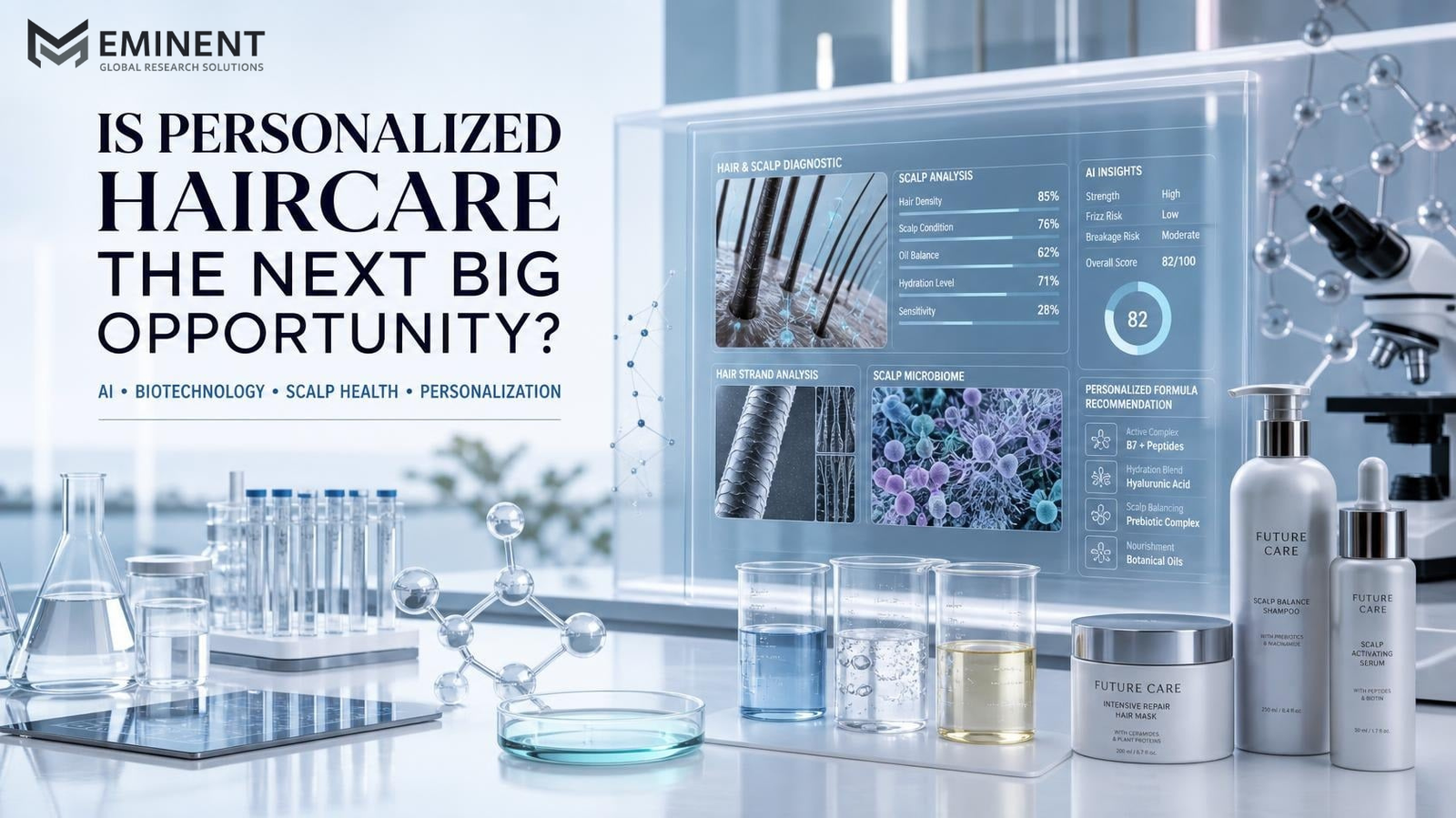
The global beauty industry is moving steadily toward personalization. Skincare has already demonstrated how diagnostics, artificial intelligence, biotechnology, and consumer data can transform a traditionally standardized category into highly individualized experiences.
Haircare may be the next major opportunity.
For decades, haircare products have largely been developed around broad categories such as dry hair, oily scalp, damaged hair, curly hair, color-treated hair, or hair loss. While segmentation has become increasingly sophisticated, most products are still designed for relatively large consumer groups rather than individual biological and environmental profiles.
That model is beginning to change.
Advances in AI-powered diagnostics, scalp analysis, microbiome research, biotechnology, and digital consumer platforms are creating opportunities to deliver more personalized haircare solutions. Instead of asking consumers to choose from dozens of products based primarily on generic hair types, brands can increasingly develop recommendations based on individual scalp conditions, hair characteristics, lifestyle, environment, and specific concerns.
This could transform haircare from a product-centric category into a personalized beauty and wellness ecosystem.
From Hair Type to Individual Hair Biology
Traditional haircare segmentation typically focuses on visible characteristics.
Consumers may be categorized according to whether their hair is straight, wavy, curly, dry, oily, thick, fine, damaged, or color-treated.
However, two consumers with the same hair type can have completely different underlying needs.
Factors such as scalp health, genetics, age, hormonal changes, climate, nutrition, styling habits, water quality, and environmental exposure can influence hair and scalp condition.
This creates an opportunity for a more sophisticated approach.
Personalized haircare could combine multiple data points to generate individualized recommendations, including:
- Hair structure and density
- Scalp condition
- Sebum production
- Environmental exposure
- Styling and chemical-treatment history
- Consumer lifestyle
- Age-related changes
- Product usage patterns
- Individual hair goals
The result is a shift from “Which product is right for my hair type?” toward “What does my hair and scalp need right now?”
That distinction could become commercially significant.
AI Could Become the Personal Haircare Advisor
Artificial intelligence is one of the technologies capable of accelerating this transformation.
Smartphone cameras and computer vision systems can increasingly analyze visible characteristics of hair and scalp. Combined with consumer questionnaires and product-use data, these systems can generate personalized recommendations without requiring consumers to visit a salon or specialist.
Future platforms could potentially assess:
Hair condition → Scalp characteristics → Environmental factors → Consumer behavior → Personalized routine
AI can also continuously refine recommendations based on consumer feedback.
For example, instead of recommending one shampoo indefinitely, a platform could adjust recommendations according to seasonal changes, changes in scalp condition, styling frequency, or consumer responses.
This creates a dynamic relationship between consumer and brand.
For beauty companies, that could translate into stronger engagement, higher repeat purchases, and greater customer lifetime value.
The Scalp Health Opportunity
One of the most promising developments is the growing focus on scalp health.
Historically, haircare marketing focused primarily on the appearance of the hair itself. Increasingly, consumers and brands are recognizing that healthy-looking hair is closely connected to the condition of the scalp.
This is creating opportunities for products and services positioned around:
- Scalp microbiome
- Scalp hydration
- Oil balance
- Sensitive scalp care
- Exfoliation
- Barrier support
- Environmental stress
- Hair-follicle wellness
The growing convergence between dermatology, biotechnology, and beauty could further accelerate this trend.
Research into the scalp microbiome, for example, could enable new approaches to formulation and product development.
This creates a potential bridge between traditional beauty and the broader skin-health and wellness movement.
Biotechnology Could Unlock New Formulations
Personalization is not only about diagnostics.
It also creates opportunities for ingredient innovation.
Advances in biotechnology, fermentation, peptides, proteins, biomaterials, and microbiome science could enable brands to develop more targeted haircare formulations.
Potential areas of innovation include:
- Bioengineered active ingredients
- Precision-fermented compounds
- Advanced peptides
- Microbiome-friendly formulations
- Targeted scalp actives
- Biomimetic ingredients
- Sustainable alternatives to conventional ingredients
This could create a new generation of premium haircare products where differentiation is based not simply on fragrance, packaging, or marketing but on measurable biological functionality.
For ingredient suppliers, this represents a potentially attractive B2B opportunity.
Companies capable of providing scientifically validated, customizable, and scalable ingredients could become strategic partners for next-generation beauty brands.
Personalization Could Accelerate Premiumization
Personalized products generally provide brands with an opportunity to move away from price-based competition.
Consumers may be willing to pay more when a product is perceived as specifically designed for their individual needs.
This creates several potential premium business models:
Personalized Product + Diagnostic
Consumers receive an assessment followed by a customized product recommendation.
Subscription-Based Haircare
Products are periodically adjusted and replenished based on changing consumer needs.
Diagnostic + Professional Services
Digital assessment is combined with salon, dermatologist, or trichology services.
Customized Formulation
Consumers receive products formulated around their specific hair and scalp profiles.
These models can create recurring revenue while strengthening the relationship between consumers and brands.
Data Could Become a Strategic Asset
Personalized haircare also introduces an important strategic dimension: data.
Every diagnostic interaction can generate valuable insights about consumer preferences, hair concerns, product performance, and purchasing behavior.
When handled responsibly and with appropriate privacy safeguards, this data can support:
- Product innovation
- Consumer segmentation
- R&D prioritization
- Personalized marketing
- Demand forecasting
- Product performance analysis
- New product development
Over time, companies with strong consumer intelligence capabilities may gain an advantage in identifying emerging haircare needs before competitors.
However, data privacy and consumer trust will be critical.
Personalization cannot succeed if consumers are uncomfortable with how their information is collected, analyzed, or used.
The Opportunity for Beauty Companies
For established beauty companies, personalized haircare represents both an opportunity and a strategic challenge.
Companies must determine whether personalization should be introduced as:
- A premium product line
- A digital diagnostic platform
- A subscription service
- A salon partnership
- A direct-to-consumer model
- A broader consumer health ecosystem
The answer will depend on brand positioning, technology capabilities, consumer demographics, distribution strategy, and regulatory considerations.
Companies also need to evaluate whether personalization genuinely improves outcomes or simply adds complexity to the customer journey.
The winners will likely be those that make personalization simple, credible, scalable, and commercially valuable.
What Should Companies Be Watching?
For beauty executives and investors, several signals deserve close attention:
1. AI-powered diagnostics
Can digital technologies accurately identify individual hair and scalp needs?
2. Scalp health innovation
Will consumers increasingly treat scalp care as a distinct category?
3. Biotechnology ingredients
Can new technologies deliver measurable improvements in hair and scalp health?
4. Personalized subscriptions
Can recurring personalized routines increase customer retention?
5. Professional integration
Will salons, dermatologists, and hair specialists become part of personalized beauty ecosystems?
6. Consumer data
Can brands build useful personalization while maintaining strong privacy and trust?
The Strategic Outlook
Personalized haircare may still be an emerging opportunity, but the underlying market forces are becoming increasingly attractive.
Consumers are becoming more knowledgeable. AI is becoming more accessible. Biotechnology is expanding the range of possible ingredients. Digital diagnostics are becoming easier to deploy. And the broader beauty industry is moving toward wellness, personalization, and science-backed products.
The biggest opportunity may therefore not be another shampoo or conditioner.
It could be the development of an end-to-end personalized hair health ecosystem combining diagnostics, products, professional services, biotechnology, AI, and ongoing consumer insights.
For beauty companies, ingredient manufacturers, investors, and technology providers, now is the time to evaluate where they can participate in this emerging value chain.
The next generation of haircare may not be about finding the best product for everyone. It may be about finding the right solution for each individual.