

A New Milestone for Rare Disease Treatment
The U.S. Food and Drug Administration (FDA) has approved FAYUVI (rebisufligene etisparvovec-hopf), developed by Ultragenyx Pharmaceutical, for pediatric patients with mucopolysaccharidosis type IIIA (MPS IIIA), also known as Sanfilippo syndrome type A. The September 17, 2026 approval represents the first FDA-approved treatment for MPS IIIA and introduces a disease-modifying gene therapy for a rare, progressive neurodevelopmental disorder.
Sanfilippo syndrome type A is an inherited lysosomal storage disorder caused by mutations in the SGSH gene. The resulting deficiency of the sulfamidase enzyme leads to accumulation of heparan sulfate, particularly affecting the brain and nervous system. Children may initially appear to develop normally before experiencing progressive cognitive, language and developmental deterioration. Until this approval, management was largely focused on symptoms rather than an FDA-approved therapy designed to address the underlying disease mechanism.
A One-Time Approach to Genetic Correction
FAYUVI represents a fundamentally different therapeutic strategy from conventional supportive treatment.
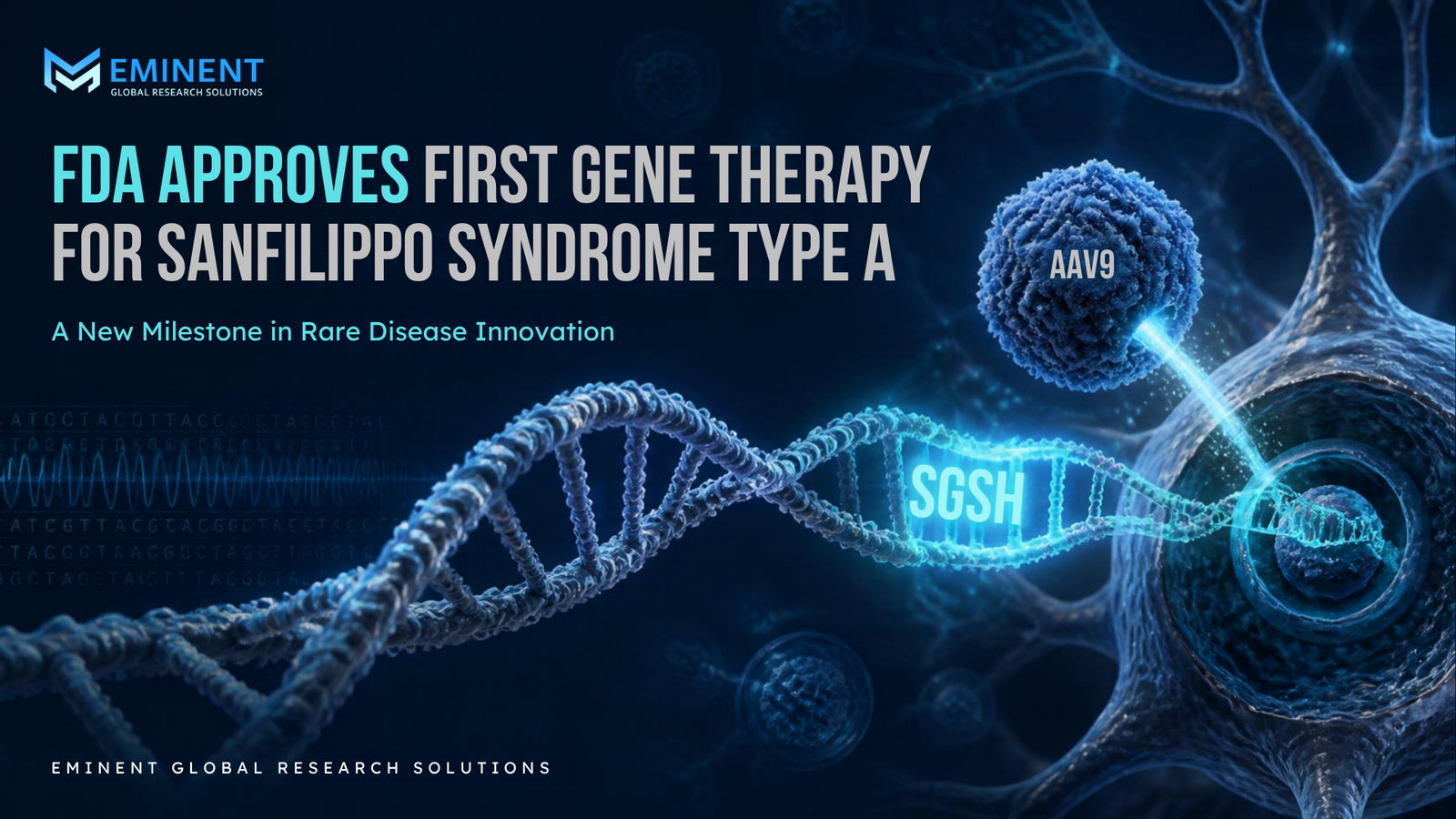
The therapy is administered as a single intravenous infusion and uses a modified, non-infectious adeno-associated virus serotype 9 (AAV9) vector to deliver a functional copy of the SGSH gene to cells. This enables cells to produce sulfamidase, supporting the breakdown of accumulated heparan sulfate in lysosomes.
The significance extends beyond the underlying genetic mechanism. One of the longstanding challenges in treating neurological genetic disorders has been delivering therapeutic material to the central nervous system at clinically relevant levels.
The FDA states that the approval demonstrates systemic AAV9-mediated gene delivery reaching the central nervous system at therapeutically relevant levels in pediatric patients.
This makes the approval relevant not only to Sanfilippo syndrome but also to the broader development of systemic gene therapies for neurological disorders.
Clinical Evidence Behind the Approval
The approval was supported by an open-label, single-arm, multicenter clinical study evaluating pediatric patients with MPS IIIA. The study assessed cognitive outcomes in children between 2 and 5 years of age. According to the FDA, treated patients maintained or improved cognitive function compared with an untreated historical control cohort, representing a divergence from the expected natural history of developmental plateau followed by decline.
Industry reporting on the Transpher A program indicates that the modified intention-to-treat population included 17 treated patients, with outcomes compared against an external untreated natural-history cohort.
This evidence model also highlights an important consideration for rare-disease development: conventional randomized controlled trials can be difficult to execute when patient populations are extremely small and disease progression is severe.
At the same time, reliance on historical controls introduces methodological considerations that companies developing other ultra-rare disease therapies will need to address carefully. The clinical evidence therefore provides both a regulatory precedent and a useful case study in rare-disease trial design.
Safety and Long-Term Monitoring Remain Important
Gene therapy does not eliminate the need for long-term clinical monitoring.
The FDA reports adverse reactions associated with FAYUVI including elevated liver enzymes, nausea and vomiting, fever, decreased appetite, reduced white blood cell and platelet counts, and increased amylase. The prescribing information also includes a warning regarding thrombotic microangiopathy (TMA).
As with other AAV-based gene therapies, the FDA also identifies a potential long-term risk associated with integration of genetic material into the genome and possible tumor development. Patients receive corticosteroid treatment beginning before infusion and continuing for at least eight weeks afterward.
For developers, this reinforces a broader lesson: regulatory approval is increasingly becoming one stage within a longer lifecycle of evidence generation, safety surveillance and patient monitoring.
What the Approval Means for the Gene Therapy Landscape
The FAYUVI approval is particularly significant because it demonstrates how gene replacement, vector engineering, clinical trial innovation and rare-disease regulatory pathways can converge to address diseases with historically limited treatment options.
FAYUVI received Orphan Drug, Fast Track and Breakthrough Therapy designations, reflecting the development program’s focus on a serious disease with significant unmet medical need.
The program also illustrates the long development timelines associated with gene therapies. Research supporting the program began years before approval, with the underlying technology subsequently progressing through licensing and development by multiple organizations. Nationwide Children’s Hospital researchers reported that the program originated from work at its Jerry R. Mendell Center for Gene Therapy, with licensing to Abeona Therapeutics in 2013 and subsequent transfer to Ultragenyx in 2022.
This creates an important strategic consideration for biotechnology companies: scientific discovery is only the beginning of the commercialization pathway. IP strategy, technology licensing, manufacturing capabilities, clinical development, regulatory strategy and market access all influence whether an innovative platform ultimately becomes an approved therapy.
Manufacturing Becomes a Strategic Component
Commercial-scale manufacturing is another important dimension.
FAYUVI is manufactured by Ultragenyx and Andelyn Biosciences. Nationwide Children’s reported that Andelyn’s viral-vector manufacturing capabilities are being used for the commercial product, making the program an example of how specialized manufacturing infrastructure can support the transition from clinical development to commercial supply.
For the broader cell and gene therapy industry, manufacturing remains a critical strategic issue. Companies must manage vector production, quality control, scalability, supply continuity and specialized treatment-center requirements alongside clinical and regulatory development.
The Broader Strategic Implications
The FAYUVI approval provides several signals for the life sciences industry.
First, rare diseases continue to create opportunities for highly targeted genetic medicines. Smaller patient populations do not necessarily eliminate the potential for transformative therapeutic approaches, although they create distinctive clinical and commercial challenges.
Second, delivery technology is becoming increasingly important. The ability to deliver a functional gene to relevant tissues remains one of the defining challenges of gene therapy. Advances in AAV vectors and other delivery platforms could influence the next generation of neurological therapies.
Third, clinical-development strategy matters. Rare-disease developers may need innovative approaches to natural-history data, external controls and endpoint selection.
Fourth, commercialization requires more than regulatory approval. Manufacturing, treatment-center infrastructure, patient identification, genetic diagnosis, reimbursement and long-term monitoring can all affect real-world adoption.
What Pharma and Biotech Companies Should Watch
For organizations active in gene therapy and rare diseases, the approval creates several areas worth monitoring:
- Emerging AAV and non-viral delivery technologies
- Gene therapies targeting neurological and neurodegenerative diseases
- Regulatory approaches for ultra-rare disease trials
- Natural-history datasets and external-control methodologies
- Manufacturing capacity for commercial-scale viral vectors
- Patient identification and genetic screening strategies
- Long-term safety monitoring requirements
- Licensing and technology-transfer opportunities
- Competitive IP landscapes surrounding gene replacement platforms
- Market-access strategies for high-complexity, potentially one-time therapies
A New Chapter for Rare Disease Innovation
The FDA’s approval of FAYUVI is more than the introduction of a new therapy for Sanfilippo syndrome type A. It provides a case study in how scientific innovation can move from gene discovery and vector engineering to clinical development, regulatory review and commercial manufacturing.
For the broader life sciences ecosystem, the key question is now how effectively similar approaches can be translated into therapies for other rare genetic diseases.
As gene therapy platforms mature, competitive advantage may increasingly depend not only on the therapeutic asset itself, but on the surrounding ecosystem of IP, technology scouting, regulatory intelligence, clinical strategy, manufacturing and commercialization planning.
For companies operating in this space, the next phase of gene therapy innovation may therefore be defined as much by strategic execution as by scientific discovery.
Eminent Global Research Solutions can support organizations across this evolving landscape through market intelligence, IP intelligence, technology scouting, regulatory intelligence, competitive intelligence and commercialization strategy.