

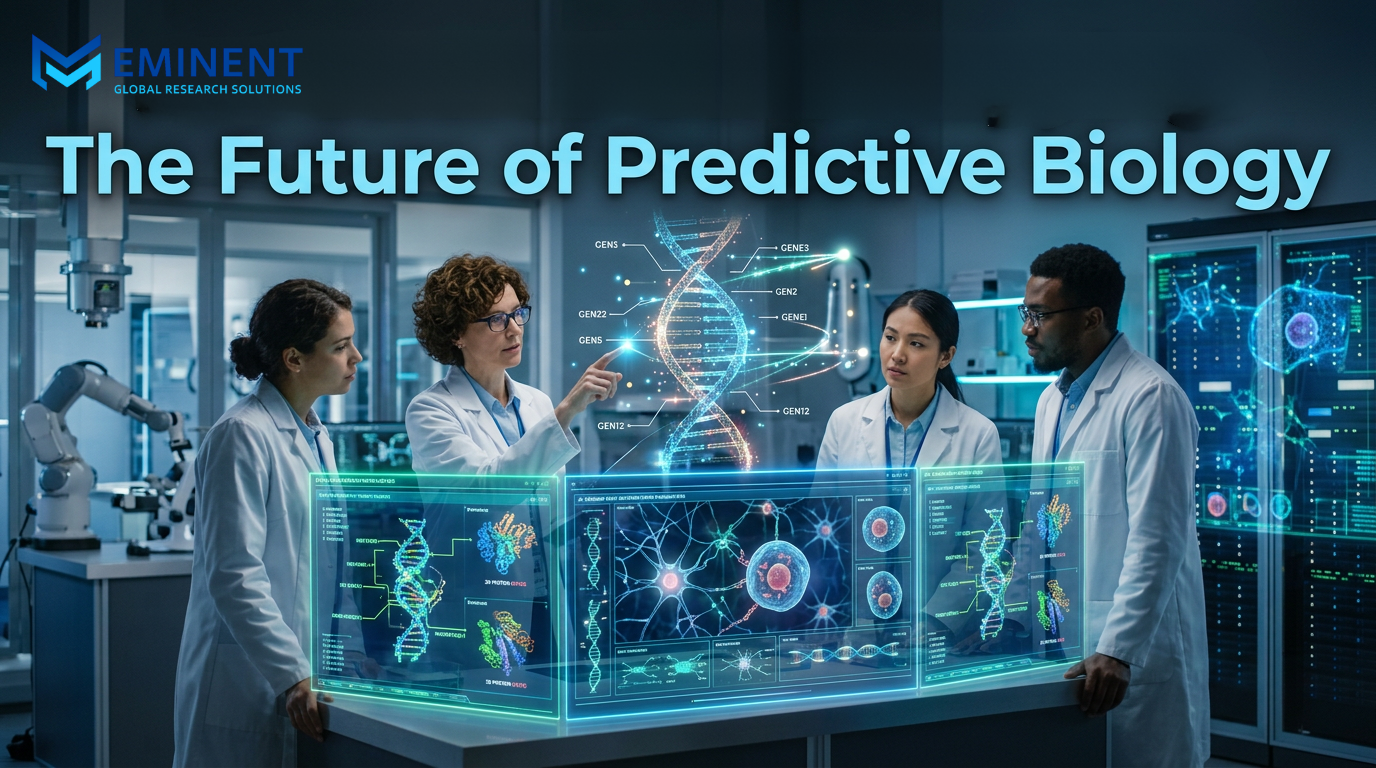
The development of advanced AI models capable of mapping how genes interact within human cells marks a major breakthrough in modern biotechnology and computational biology. By analyzing the complex relationships between genes, proteins, and cellular systems, researchers are moving closer to understanding the biological networks that drive human health, disease progression, and therapeutic response.
This innovation represents a significant evolution in how scientists approach biomedical research. Traditional genetic research often focused on studying individual genes in isolation. However, biological systems are highly interconnected, and diseases frequently emerge from complex interactions across multiple genes and cellular pathways.
AI-powered gene interaction mapping enables researchers to analyze these biological relationships at an unprecedented scale and level of complexity.
For healthcare organizations, biotechnology companies, pharmaceutical firms, and AI-driven life sciences startups, this advancement signals the growing importance of predictive biology — an emerging field where artificial intelligence is used to model, simulate, and predict biological behavior in real time.
As AI becomes increasingly integrated into biomedical research, companies that combine computational expertise, genomic data infrastructure, and precision medicine capabilities may gain substantial competitive advantages in the next generation of healthcare innovation.
The Shift from Single-Gene Research to Systems Biology
For decades, much of genetics research focused on identifying the role of individual genes linked to specific diseases or biological functions.
While this approach generated important discoveries, scientists increasingly recognize that most biological processes are controlled by highly interconnected cellular networks rather than isolated genes.
Human cells contain thousands of genes interacting dynamically through:
- Protein signaling pathways
- Regulatory networks
- Cellular feedback loops
- Environmental responses
- Metabolic systems
Diseases such as cancer, neurological disorders, autoimmune conditions, and metabolic diseases often result from disruptions across multiple biological pathways simultaneously.
This complexity makes traditional research methods difficult to scale effectively.
AI-powered biological modeling introduces a systems-level approach where researchers can analyze massive genomic datasets to identify how genes influence each other within living cells.
This allows scientists to move beyond static genetic analysis toward dynamic biological network mapping.
Why AI Is Transforming Biological Research
The human genome contains enormous amounts of biological data that are impossible to analyze efficiently using conventional methods alone.
Artificial intelligence is becoming essential because it can:
- Process large-scale genomic datasets
- Detect hidden biological patterns
- Predict gene interactions
- Simulate cellular behavior
- Accelerate hypothesis generation
- Identify therapeutic targets faster
Modern AI systems can analyze millions of biological relationships simultaneously and uncover complex molecular interactions that may not be visible through traditional laboratory research.
This dramatically accelerates scientific discovery.
AI-driven biological modeling also enables researchers to:
- Predict disease mechanisms
- Understand treatment resistance
- Identify biomarkers
- Optimize drug development
- Personalize therapies
As computational power and biological datasets continue expanding, AI may increasingly become one of the foundational tools driving the future of biomedical innovation.
Predictive Biology Is Emerging as a Strategic Industry
The ability to predict how genes interact inside cells creates the foundation for predictive biology — an emerging scientific and commercial field focused on forecasting biological outcomes using computational systems.
Predictive biology combines:
- Artificial intelligence
- Genomics
- Systems biology
- Machine learning
- Bioinformatics
- Molecular simulation
The long-term goal is to create highly accurate digital models capable of predicting how cells, tissues, and biological systems respond to:
- Disease
- Environmental changes
- Drug treatments
- Genetic mutations
- Aging processes
This could fundamentally transform healthcare by shifting medicine from reactive treatment toward predictive and preventive intervention models.
For example, future AI-driven systems may help:
- Predict disease risk before symptoms emerge
- Simulate personalized drug responses
- Identify optimal therapies faster
- Detect biological abnormalities earlier
- Accelerate precision diagnostics
Companies investing in predictive biology infrastructure today may play a major role in shaping the next generation of personalized medicine.
Precision Medicine Is Becoming More Advanced
AI-powered gene interaction mapping has particularly strong implications for precision medicine.
Current precision medicine strategies often rely on genomic sequencing to identify mutations associated with disease. However, understanding individual mutations alone is not always sufficient because disease behavior depends heavily on how genes interact within broader biological networks.
AI-based systems can provide deeper insights into:
- Disease pathways
- Cellular responses
- Therapy resistance mechanisms
- Individual biological variability
This may improve treatment personalization significantly.
For example:
- Cancer therapies could be optimized based on cellular interaction models
- Rare disease mechanisms may become easier to identify
- Drug combinations could be simulated before clinical use
- Treatment outcomes may become more predictable
The ability to model cellular systems dynamically may eventually allow healthcare providers to design highly individualized treatment strategies based on each patient’s biological profile.
Drug Discovery Could Accelerate Dramatically
One of the largest commercial opportunities associated with AI-driven biology involves pharmaceutical research and drug discovery.
Traditional drug development is expensive, time-consuming, and associated with high failure rates. Many therapies fail because researchers do not fully understand complex disease biology or unintended cellular interactions.
AI-powered gene mapping may help pharmaceutical companies:
- Identify therapeutic targets faster
- Predict drug effectiveness earlier
- Reduce experimental costs
- Improve clinical trial design
- Minimize development risk
By simulating biological interactions computationally, companies can potentially reduce reliance on lengthy trial-and-error laboratory processes.
This could significantly accelerate the pace of therapeutic innovation while improving R&D efficiency.
As competition intensifies across biotechnology markets, companies with advanced AI-driven research capabilities may achieve strong strategic advantages.
Data Infrastructure Is Becoming Critical
The rise of AI-driven biology also highlights the growing importance of biological data infrastructure.
Training sophisticated AI models requires:
- Large genomic datasets
- High-quality cellular data
- Advanced computational systems
- Cloud-scale processing infrastructure
- Secure health data management
Organizations capable of building integrated biological data ecosystems may become increasingly influential within the healthcare industry.
At the same time, growing use of genomic and health data raises important considerations around:
- Data privacy
- Ethical AI usage
- Regulatory compliance
- Algorithm transparency
- Healthcare cybersecurity
Balancing innovation with responsible data governance will become essential as predictive biology platforms scale commercially.
The Convergence of AI and Biotechnology
The development of AI systems capable of mapping gene interactions reflects a broader convergence between artificial intelligence and life sciences.
Future healthcare innovation will likely be shaped by the integration of:
- Computational biology
- AI-driven diagnostics
- Genomic engineering
- Digital therapeutics
- Predictive health systems
- Personalized medicine platforms
This convergence is transforming biotechnology into a highly data-intensive industry where computational capabilities are becoming as strategically important as laboratory research itself.
Companies that successfully combine:
- Biological expertise
- AI engineering
- Scalable data infrastructure
- Precision medicine capabilities
- Regulatory strategy
may emerge as leaders in the future healthcare ecosystem.
The Future of Predictive Healthcare
AI-powered gene interaction mapping represents another step toward a future where healthcare becomes increasingly predictive, personalized, and computationally driven.
Over the next decade, advances in:
- Machine learning
- Genomics
- Synthetic biology
- Cellular simulation
- Molecular diagnostics
- Bioinformatics
may fundamentally change how diseases are understood and treated.
For consulting firms, healthcare organizations, biotech companies, and investors, this evolution creates growing demand for expertise in:
- AI-driven healthcare strategy
- Predictive biology commercialization
- Precision medicine infrastructure
- Genomic data management
- Computational drug discovery
- Regulatory planning for AI healthcare systems
The future of medicine may increasingly depend not only on understanding individual genes — but on decoding the complex biological networks that connect them.