

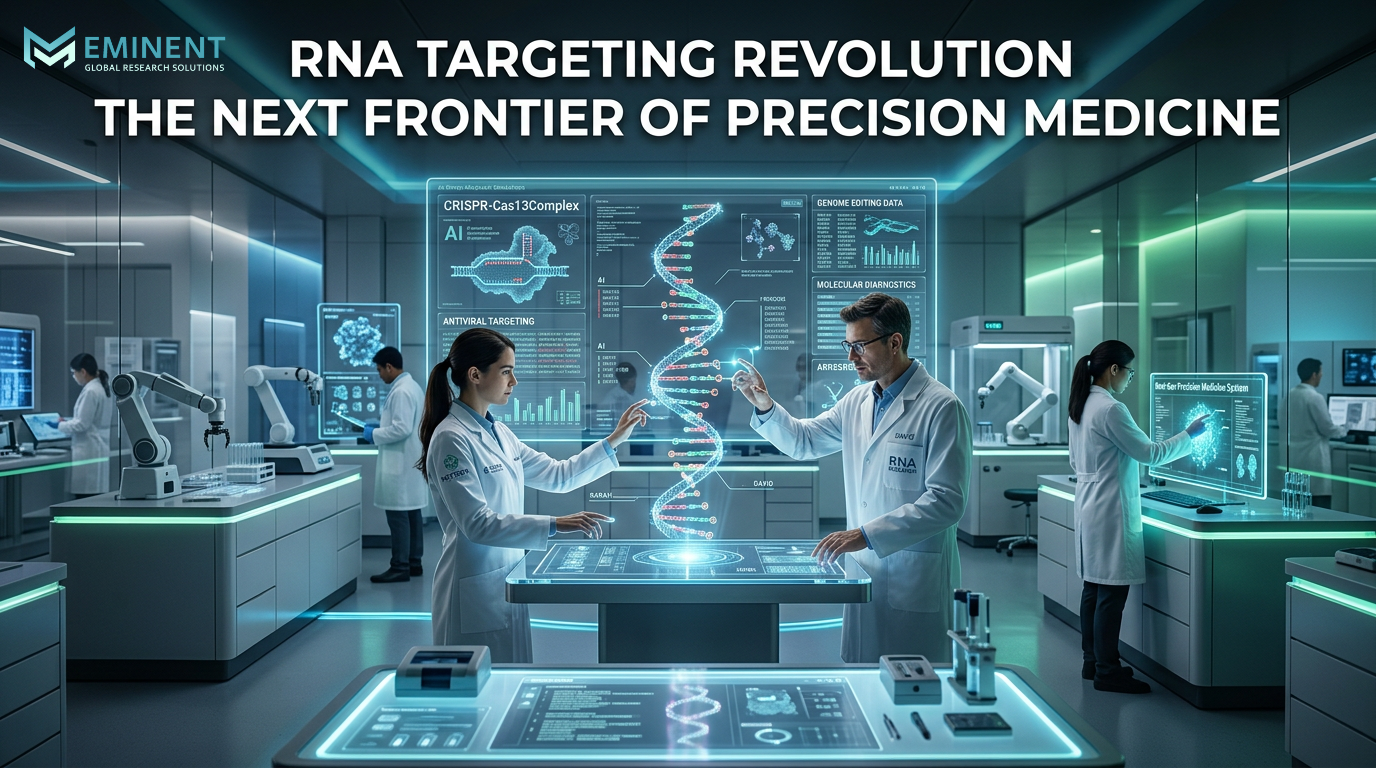
The emergence of advanced RNA-targeting CRISPR technologies represents one of the most significant shifts occurring in modern biotechnology and precision medicine. While traditional CRISPR systems transformed the life sciences industry through DNA editing capabilities, the next wave of innovation is increasingly focused on programmable RNA-targeting platforms with broader diagnostic, therapeutic, and antiviral applications.
This transition signals a major evolution in how researchers and biotechnology companies approach disease detection, treatment development, and biological engineering.
DNA-focused gene editing technologies primarily aim to permanently alter genetic material within cells. In contrast, RNA-targeting systems offer the ability to interact with gene expression dynamically and reversibly without making permanent modifications to the genome itself.
This distinction could dramatically expand the commercial and clinical applications of CRISPR-based technologies while potentially reducing some of the risks associated with permanent gene editing.
As RNA engineering capabilities advance, companies operating across biotechnology, diagnostics, pharmaceuticals, AI-driven drug discovery, and precision healthcare are entering a new competitive landscape where programmable RNA platforms may become foundational tools for next-generation medicine.
Organizations that successfully combine RNA innovation, computational biology, scalable diagnostics, and advanced bioengineering infrastructure may gain major long-term advantages in the rapidly evolving precision medicine market.
The Evolution Beyond Traditional Gene Editing
The first generation of CRISPR technologies revolutionized biotechnology by enabling precise DNA editing within living cells.
These breakthroughs created enormous opportunities across:
- Genetic disease treatment
- Agricultural biotechnology
- Drug development
- Synthetic biology
- Functional genomics research
However, DNA editing also introduced several important challenges related to:
- Permanent genomic changes
- Off-target mutations
- Ethical concerns
- Regulatory complexity
- Long-term safety monitoring
RNA-targeting systems introduce a different approach.
Rather than permanently changing the genome, RNA-targeting CRISPR technologies interact with messenger RNA (mRNA), which acts as the temporary instruction layer between DNA and protein production.
This enables scientists to:
- Regulate gene expression dynamically
- Detect viral RNA rapidly
- Target disease-causing transcripts
- Modify biological activity temporarily
- Develop programmable molecular diagnostics
The result is a more flexible and potentially safer biotechnology platform with applications extending far beyond conventional gene editing.
Why RNA Targeting Matters
RNA plays a central role in nearly all biological processes.
It acts as the messenger system translating genetic information into cellular activity, making it an ideal target for both diagnostics and therapeutics.
Advanced RNA-targeting technologies may enable:
- Real-time disease detection
- Precision antiviral therapies
- Programmable molecular diagnostics
- Reversible therapeutic interventions
- Personalized treatment optimization
One of the most important advantages of RNA-targeting systems is adaptability.
Because RNA molecules change dynamically during infection, disease progression, and cellular stress responses, RNA-focused platforms can provide highly responsive and programmable treatment approaches.
This creates opportunities for rapid therapeutic development against:
- Viral infections
- Cancer
- Neurological disorders
- Inflammatory diseases
- Rare genetic conditions
The growing importance of RNA technologies also reflects broader momentum created by mRNA vaccines, RNA therapeutics, and computational biology advancements over recent years.
The Convergence of CRISPR, AI, and Bioengineering
The next generation of RNA-targeting innovation is increasingly being shaped by the convergence of biotechnology and artificial intelligence.
Modern bioengineering platforms generate enormous amounts of biological data involving:
- RNA structures
- Protein interactions
- Cellular responses
- Molecular pathways
- Disease progression models
AI-driven computational tools are becoming essential for:
- RNA sequence design
- Target prediction
- Molecular optimization
- Drug discovery acceleration
- Diagnostic model development
Machine learning systems can rapidly analyze complex biological interactions and identify highly optimized RNA-targeting strategies that would be difficult to discover through traditional experimental methods alone.
This convergence is accelerating biotechnology innovation cycles significantly.
Companies integrating:
- AI-driven bioengineering
- CRISPR platforms
- Synthetic biology
- Cloud-scale biological computation
- High-throughput screening systems
may achieve major competitive advantages in precision medicine and therapeutic development.
The future of biotechnology is becoming increasingly computational as biological engineering evolves into a data-intensive industry.
Point-of-Care Diagnostics Are Becoming Strategically Important
One of the most commercially significant applications of RNA-targeting technologies is diagnostics.
Programmable RNA detection systems may enable highly sensitive, rapid, and portable diagnostic platforms capable of identifying diseases at extremely early stages.
This has major implications for:
- Infectious disease detection
- Pandemic preparedness
- Oncology diagnostics
- Personalized medicine
- Population health monitoring
Point-of-care diagnostics are particularly valuable because they can:
- Reduce dependence on centralized laboratories
- Improve treatment speed
- Expand healthcare accessibility
- Lower testing turnaround times
- Support decentralized healthcare systems
RNA-targeting CRISPR diagnostics could eventually support real-time disease detection directly within clinics, pharmacies, workplaces, or even homes.
The COVID-19 pandemic accelerated global interest in rapid diagnostic technologies, and RNA-targeting systems may become one of the next major platforms driving decentralized healthcare innovation.
Companies investing early in scalable point-of-care diagnostic infrastructure may benefit from growing demand for rapid and personalized testing ecosystems.
Antiviral Therapies Could Be Transformed
RNA-targeting platforms also create major opportunities in antiviral therapeutics.
Many viruses rely heavily on RNA-based replication systems. Programmable RNA-targeting technologies may allow researchers to directly identify, target, and disrupt viral RNA sequences inside infected cells.
This creates potential for:
- Rapid antiviral drug development
- Adaptive treatment systems
- Broad-spectrum antiviral platforms
- Faster response to emerging pathogens
Unlike traditional antiviral development, which often requires lengthy discovery processes, programmable RNA-targeting systems may enable faster therapeutic adaptation against evolving viral threats.
This flexibility could become strategically important in future pandemic preparedness and infectious disease management.
Governments, pharmaceutical companies, and healthcare systems are increasingly prioritizing technologies capable of supporting faster outbreak response and scalable therapeutic deployment.
Commercialization Challenges Remain
Despite enormous potential, RNA-targeting technologies still face several commercialization challenges.
Key barriers include:
- Regulatory approval complexity
- Manufacturing scalability
- Delivery system optimization
- Long-term safety validation
- Intellectual property competition
- Clinical adoption pathways
Biotechnology companies must also address reimbursement strategies, healthcare integration, and global regulatory differences as advanced RNA platforms move toward commercialization.
The market is becoming increasingly competitive as major pharmaceutical companies, biotech startups, and technology firms invest aggressively in next-generation RNA innovation.
Organizations that combine strong scientific capabilities with scalable commercialization infrastructure may emerge as leaders in the future precision medicine ecosystem.
The Future of RNA-Driven Medicine
The evolution of RNA-targeting CRISPR technologies reflects a much broader transformation occurring across healthcare and biotechnology.
Over the next decade, advancements in:
- RNA engineering
- Synthetic biology
- AI-driven drug discovery
- Molecular diagnostics
- Precision therapeutics
- Computational biology
may fundamentally reshape how diseases are diagnosed, monitored, and treated.
The healthcare industry is gradually shifting from generalized treatment models toward programmable, data-driven, and highly personalized medical interventions.
For consulting firms, healthcare organizations, biotech companies, and investors, this creates growing demand for expertise in:
- RNA technology strategy
- AI-enabled bioengineering
- Precision medicine commercialization
- Diagnostic infrastructure scaling
- Regulatory planning
- Biotech partnership development
The future of medicine may increasingly depend not only on editing genes — but on dynamically programming and interpreting the molecular language of RNA itself.