

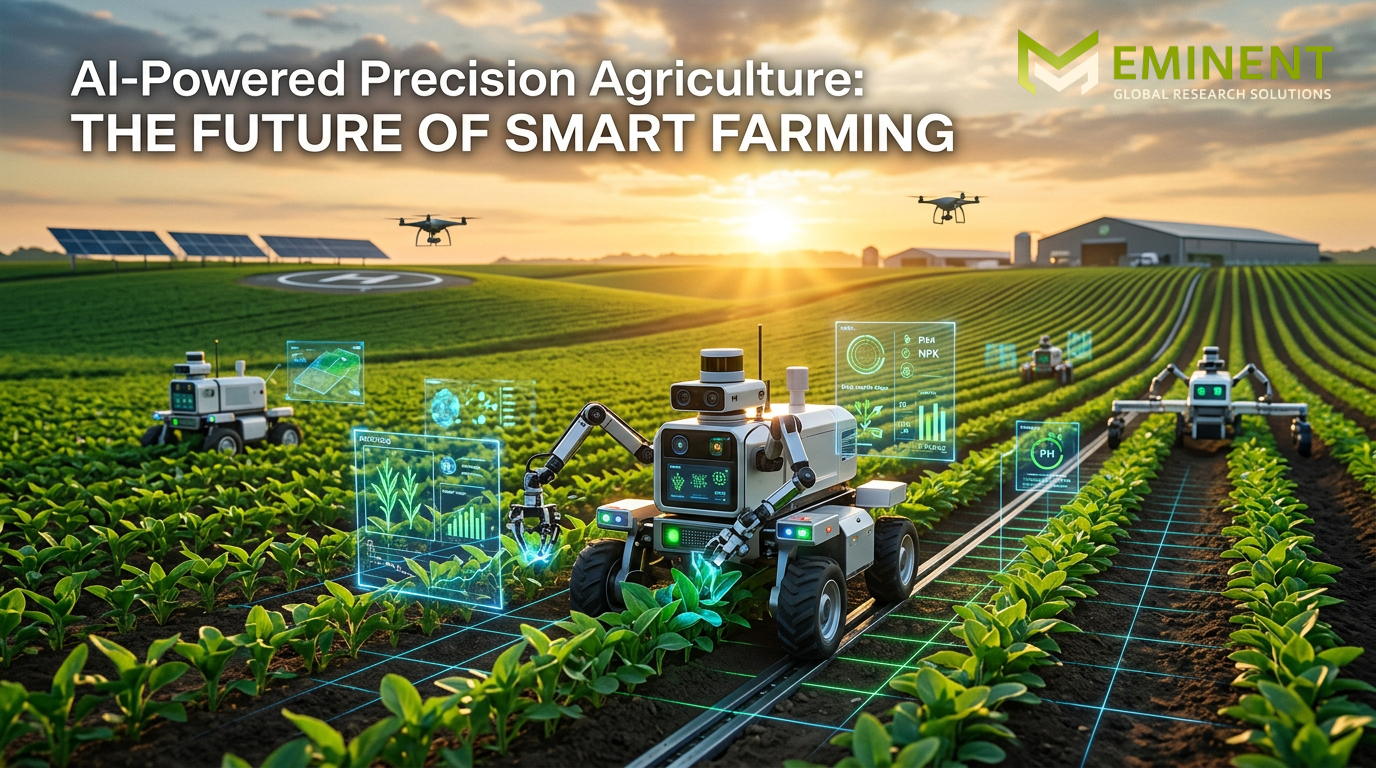
The agriculture industry is entering a new era where artificial intelligence, robotics, and large-scale data models are reshaping how farming operations are managed. Recent advancements in plant intelligence systems demonstrate that precision agriculture is no longer an experimental concept limited to research labs or pilot projects. It is becoming a commercially viable solution capable of addressing some of the world’s most pressing agricultural challenges.
The launch of a Large Plant Model trained on more than 150 million plant data points represents a major milestone in agricultural technology. Similar to how large language models transformed digital communication and automation, plant-focused AI models are now positioned to revolutionize crop management, weed control, yield optimization, and resource efficiency across global farming operations.
For agribusinesses, this development signals both opportunity and urgency. Companies that adopt AI-powered precision agriculture technologies early may gain significant advantages in productivity, sustainability, and operational efficiency. However, implementation also requires strategic planning, workforce adaptation, and careful evaluation of long-term return on investment.
The Rise of AI-Driven Agriculture
Modern agriculture faces increasing pressure from multiple directions. Rising labor shortages, climate variability, water scarcity, soil degradation, and growing food demand are forcing the industry to search for scalable and intelligent solutions.
Traditional farming methods often rely on broad operational assumptions rather than real-time plant-level analysis. Farmers may apply fertilizers, pesticides, or herbicides uniformly across large fields even though crop conditions vary significantly from one area to another. This approach can lead to unnecessary chemical usage, higher operational costs, and environmental impact.
AI-powered farming technologies aim to solve this inefficiency by enabling precise, data-driven decision-making. Advanced robotics systems equipped with computer vision and machine learning can now identify individual plants, distinguish crops from weeds, analyze plant health, and make real-time adjustments during field operations.
The introduction of a Large Plant Model dramatically enhances this capability. By training AI systems on millions of plant images and agricultural data points collected across various environments, crops, and growth stages, these models become increasingly accurate in understanding plant behavior and field conditions.
This creates a foundation for highly automated farming systems capable of operating at scale with greater precision than traditional manual methods.
Why Large Plant Models Matter
Large Plant Models function as agricultural intelligence engines. Instead of simply recognizing crops or weeds based on limited training datasets, they continuously improve their understanding through massive volumes of visual and environmental data.
This advancement matters because agriculture is highly complex. Plant appearance changes due to weather, soil conditions, growth stages, disease exposure, and regional differences. Conventional AI systems often struggle with these variables, reducing accuracy in real-world farming environments.
A large-scale AI model trained on millions of plant data points can better handle these complexities by recognizing subtle differences and patterns across diverse agricultural conditions.
The practical implications are substantial:
- More accurate weed identification
- Reduced herbicide usage
- Improved crop monitoring
- Faster field operations
- Enhanced yield prediction
- Lower labor dependency
- Better resource allocation
As these systems improve, farms can transition from reactive operations to predictive and autonomous agricultural management.
Commercial Viability at Scale
One of the most important aspects of this technological shift is that precision agriculture solutions are becoming commercially scalable.
Historically, advanced agricultural robotics faced barriers such as high hardware costs, limited AI accuracy, and operational inefficiencies. Many solutions were difficult to deploy across large farming operations without substantial customization.
Today, advancements in AI infrastructure, cloud computing, sensor technology, and robotics engineering are reducing these barriers. Large Plant Models significantly improve system accuracy, making automated solutions more reliable and practical for commercial deployment.
For large agribusinesses, the economic case is becoming increasingly compelling.
Labor shortages continue to impact farming operations worldwide. Autonomous robotic systems capable of performing tasks such as weed control or crop analysis can reduce dependency on seasonal labor while maintaining operational consistency.
At the same time, precision application technologies can minimize chemical waste and reduce input costs. This is particularly valuable as fertilizer, fuel, and agrochemical prices remain volatile in global markets.
From a sustainability perspective, AI-driven precision farming also supports environmental goals by reducing excessive chemical usage and optimizing water and energy consumption.
These combined benefits position precision agriculture as both an operational and strategic investment.
Key Considerations for Agribusinesses
While the potential advantages are significant, successful implementation requires careful evaluation.
Agribusinesses should avoid viewing AI-powered farming solutions as standalone technologies. Instead, they should assess how these systems integrate with existing operational infrastructure, workforce capabilities, and long-term business objectives.
Several factors should be considered before adoption:
1. Implementation Costs
Advanced robotics and AI systems often require substantial upfront investment. Hardware acquisition, software integration, connectivity infrastructure, and maintenance costs must be evaluated against projected productivity gains.
Organizations should conduct pilot programs and phased deployments to measure operational impact before large-scale implementation.
2. Workforce Training
The rise of intelligent farming systems changes workforce requirements. Employees must be trained to operate, monitor, and maintain AI-driven equipment.
This creates demand for new skill sets that combine agriculture knowledge with digital and technical expertise. Agribusinesses investing in workforce development may achieve smoother technology adoption and stronger long-term returns.
3. Data Infrastructure
AI systems rely heavily on high-quality data collection and processing. Farms adopting precision agriculture technologies need reliable sensor networks, data storage systems, and connectivity infrastructure.
Without strong data management capabilities, AI performance and operational efficiency may be limited.
4. Scalability and Integration
Not all agricultural technologies scale effectively across different farm sizes, crop types, or geographic regions. Businesses should evaluate whether a solution can integrate with current machinery, farm management platforms, and operational workflows.
Flexibility and interoperability will become increasingly important as agricultural ecosystems become more digitized.
The Future of Autonomous Farming
The emergence of Large Plant Models represents more than a technological upgrade—it signals the evolution of autonomous agriculture.
Over the next decade, AI-driven farming systems are expected to become increasingly intelligent, adaptive, and interconnected. Future agricultural operations may involve fleets of autonomous machines capable of continuously monitoring crops, detecting issues early, and executing targeted interventions with minimal human input.
This transformation could redefine global food production by improving efficiency, reducing waste, and increasing resilience against climate and labor challenges.
For consulting firms, technology providers, and agribusiness leaders, the focus should not only be on adopting new tools but also on building strategic roadmaps for digital agriculture transformation.
Organizations that proactively evaluate AI-powered precision agriculture solutions today may be better positioned to lead tomorrow’s agricultural economy.
As artificial intelligence continues to expand into industrial and operational sectors, agriculture stands out as one of the industries with the greatest potential for measurable real-world impact. Large Plant Models are likely to become a foundational technology driving the next generation of smart farming innovation.
Industry Overview
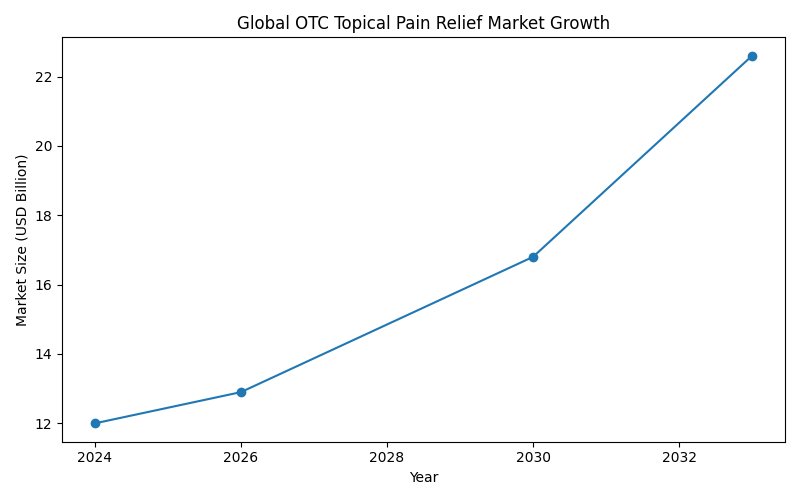
The global topical pain relief market is projected to grow significantly over the next decade, driven by increasing chronic pain conditions, aging populations, and rising self-care awareness.
Global Market Growth Projection
| Year | Market Size (USD Billion) |
|---|---|
| 2024 | 12.0 |
| 2026 | 12.9 |
| 2030 | 16.8 |
| 2033 | 22.6 |
Market Growth Graph
Key Growth Drivers
- Increasing arthritis and joint pain cases
- Rising sports-related injuries
- Aging global population
- Consumer preference for non-invasive treatment
- Higher awareness of self-medication
- Expansion of e-commerce healthcare channels
Clinical & Consumer Pain Landscape
Musculoskeletal pain remains one of the most common health complaints worldwide. Consumers increasingly prefer topical OTC therapies because they offer:
- Rapid localized relief
- Reduced gastrointestinal side effects
- Lower systemic exposure
- Convenient application
- Improved patient compliance
Scientific literature supports the efficacy of topical analgesics for musculoskeletal pain management.
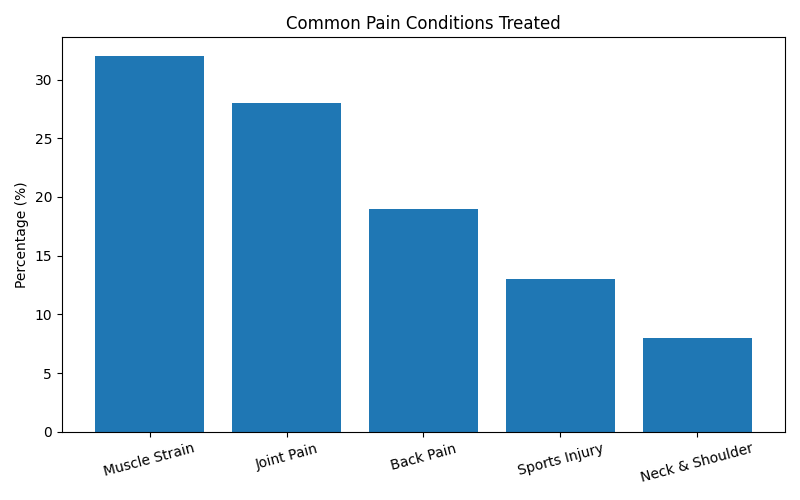
Most Common Pain Conditions Treated
| Pain Condition | Consumer Share (%) |
|---|---|
| Muscle Strain & Sprain | 32% |
| Joint Pain & Arthritis | 28% |
| Back Pain | 19% |
| Sports Injury | 13% |
| Neck & Shoulder Pain | 8% |
Product Assessment Framework
The integrated assessment evaluated OTC topical pain relief solutions across five critical dimensions.
| Assessment Parameter | Weightage |
|---|---|
| Clinical Effectiveness | 30% |
| Consumer Safety | 20% |
| Ease of Use | 15% |
| Market Acceptance | 20% |
| Innovation Potential | 15% |
Key Active Ingredients Assessment
Topical OTC pain relief products commonly include:
| Ingredient | Primary Function | Consumer Acceptance |
|---|---|---|
| Menthol | Cooling analgesic effect | High |
| Diclofenac | Anti-inflammatory relief | Very High |
| Capsaicin | Neuropathic pain reduction | Moderate |
| Camphor | Counter-irritant action | High |
| Methyl Salicylate | Deep heat relief | High |
Clinical evidence indicates diclofenac topical gel remains one of the most effective OTC topical anti-inflammatory agents for arthritis pain management.
Consumer Preference Analysis
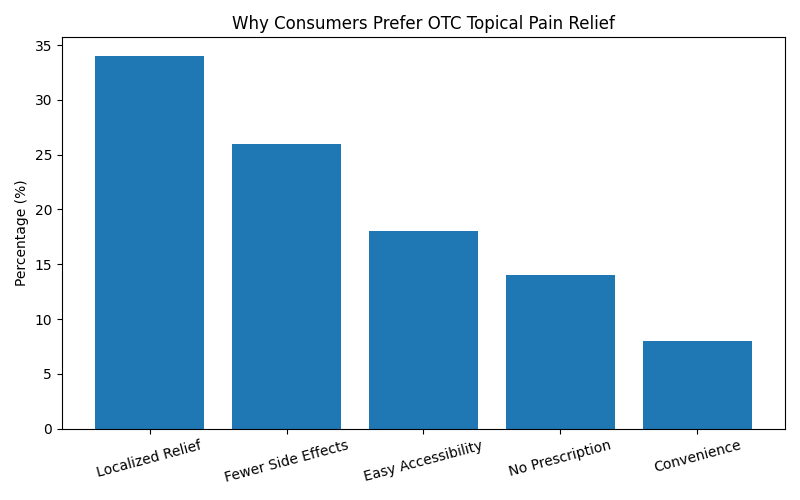
Why Consumers Prefer Topical OTC Pain Relief
| Reason | Response Rate |
|---|---|
| Faster Localized Relief | 34% |
| Fewer Side Effects | 26% |
| Easy Accessibility | 18% |
| No Prescription Required | 14% |
| Better Daily Convenience | 8% |
Consumer Preference Graph
Regional Market Insights
North America currently dominates the OTC topical pain relief segment due to high healthcare spending and strong OTC penetration. However, Asia-Pacific is emerging as the fastest-growing region because of increasing self-care adoption and retail expansion.
Regional Market Share Forecast
| Region | Estimated Share |
|---|---|
| North America | 42% |
| Europe | 26% |
| Asia-Pacific | 22% |
| Latin America | 6% |
| Middle East & Africa | 4% |
Distribution Channel Analysis
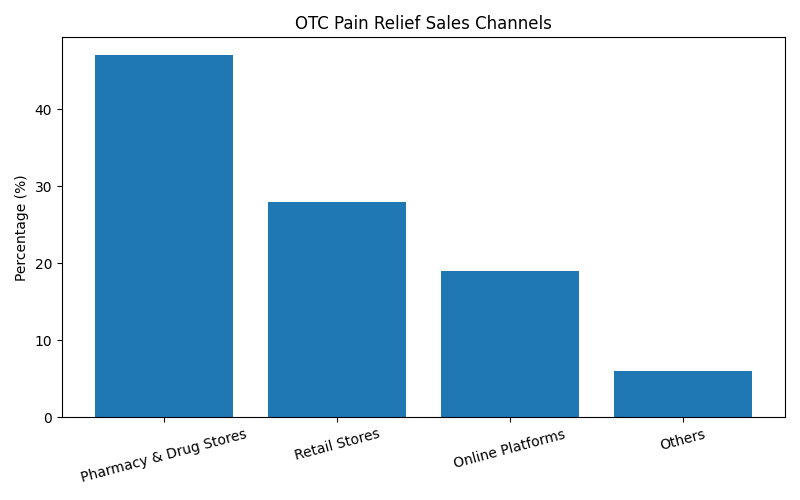
Pharmacies and drug stores remain the dominant channel for OTC topical pain relief products, while online healthcare retail is the fastest-growing segment.
Sales Channel Share
Innovation Trends
The topical pain relief industry is evolving rapidly with advancements in:
- Transdermal delivery systems
- Controlled-release patches
- Herbal & plant-based formulations
- Enhanced absorption technology
- Combination analgesic therapy
- Smart packaging & digital healthcare integration
Patch formulations are expected to become one of the fastest-growing product categories due to extended-release benefits and consistent dosing capability.
SWOT Analysis
| Strengths | Weaknesses |
|---|---|
| Strong OTC demand | Skin irritation risk |
| Rapid localized action | Limited penetration depth |
| Fewer systemic effects | Variable efficacy among users |
| High consumer convenience | Strong market competition |
| Opportunities | Threats |
|---|---|
| Growth in aging population | Regulatory changes |
| Expansion in emerging markets | Generic competition |
| Digital pharmacy growth | Price sensitivity |
| Sports medicine demand | Consumer skepticism |
Conclusion
The OTC topical pain relief segment represents a robust and expanding healthcare category supported by rising chronic pain prevalence, consumer preference for localized therapy, and increasing self-care adoption. Muscle and joint pain solutions are expected to remain a core driver of category growth over the next decade.
An integrated assessment of market trends, clinical efficacy, consumer behavior, and commercial scalability confirms that OTC topical pain relief solutions hold substantial long-term potential for manufacturers, healthcare brands, and global distributors.
With continuous innovation, strong retail penetration, and growing healthcare awareness, topical pain management products are positioned to become one of the most sustainable OTC wellness categories worldwide.
Get Full Case Study
Enter deatils to get full case study.