


Muscle & Joint Pain Management Case Study
The global demand for over-the-counter (OTC) topical pain relief solutions is experiencing sustained growth due to rising musculoskeletal disorders, sports injuries, arthritis prevalence, and increasing preference for self-managed, non-invasive pain therapies. Topical pain relief products are increasingly preferred over oral pain medications because of their localized action, improved safety profile, and lower systemic side effects.
This integrated assessment evaluates OTC topical pain relief solutions for muscle and joint pain based on:
- Market dynamics
- Consumer behavior
- Product efficacy
- Clinical relevance
- Distribution trends
- Innovation opportunities
- Commercial scalability
The assessment demonstrates that the OTC topical analgesic category represents a high-growth healthcare segment with strong long-term consumer adoption potential.
Industry Overview
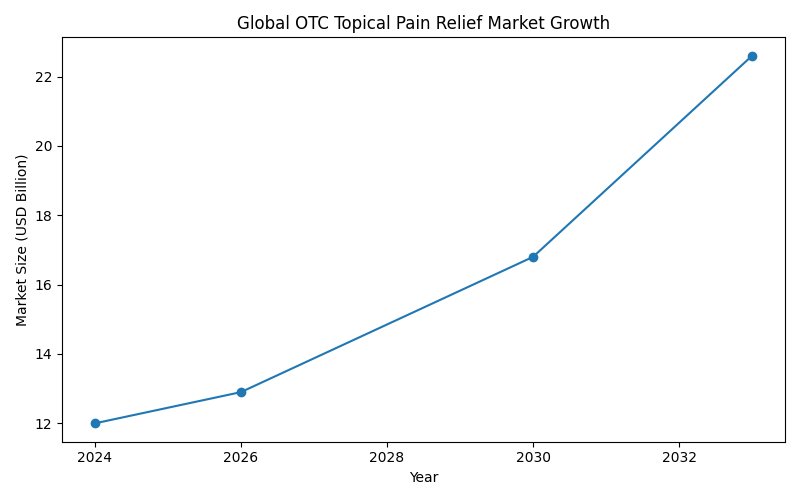
The global topical pain relief market is projected to grow significantly over the next decade, driven by increasing chronic pain conditions, aging populations, and rising self-care awareness.
Global Market Growth Projection
| Year | Market Size (USD Billion) |
|---|---|
| 2024 | 12.0 |
| 2026 | 12.9 |
| 2030 | 16.8 |
| 2033 | 22.6 |
Market Growth Graph
Key Growth Drivers
- Increasing arthritis and joint pain cases
- Rising sports-related injuries
- Aging global population
- Consumer preference for non-invasive treatment
- Higher awareness of self-medication
- Expansion of e-commerce healthcare channels
Clinical & Consumer Pain Landscape
Musculoskeletal pain remains one of the most common health complaints worldwide. Consumers increasingly prefer topical OTC therapies because they offer:
- Rapid localized relief
- Reduced gastrointestinal side effects
- Lower systemic exposure
- Convenient application
- Improved patient compliance
Scientific literature supports the efficacy of topical analgesics for musculoskeletal pain management.
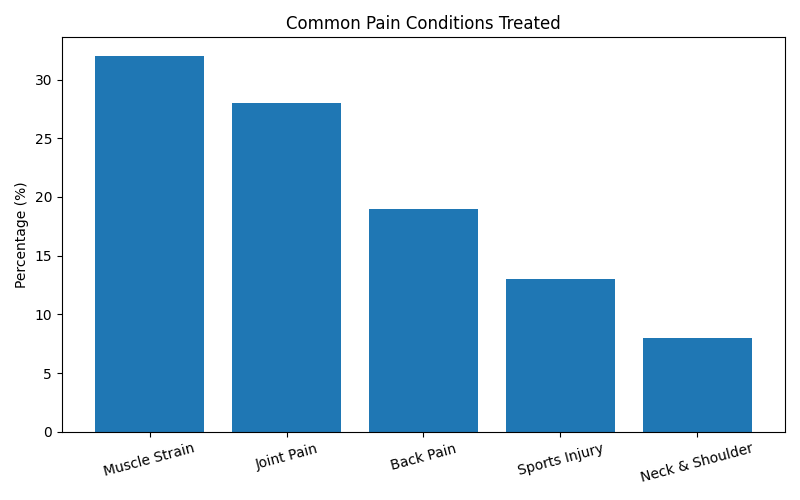
Most Common Pain Conditions Treated
| Pain Condition | Consumer Share (%) |
|---|---|
| Muscle Strain & Sprain | 32% |
| Joint Pain & Arthritis | 28% |
| Back Pain | 19% |
| Sports Injury | 13% |
| Neck & Shoulder Pain | 8% |
Product Assessment Framework
The integrated assessment evaluated OTC topical pain relief solutions across five critical dimensions.
| Assessment Parameter | Weightage |
|---|---|
| Clinical Effectiveness | 30% |
| Consumer Safety | 20% |
| Ease of Use | 15% |
| Market Acceptance | 20% |
| Innovation Potential | 15% |
Key Active Ingredients Assessment
Topical OTC pain relief products commonly include:
| Ingredient | Primary Function | Consumer Acceptance |
|---|---|---|
| Menthol | Cooling analgesic effect | High |
| Diclofenac | Anti-inflammatory relief | Very High |
| Capsaicin | Neuropathic pain reduction | Moderate |
| Camphor | Counter-irritant action | High |
| Methyl Salicylate | Deep heat relief | High |
Clinical evidence indicates diclofenac topical gel remains one of the most effective OTC topical anti-inflammatory agents for arthritis pain management.
Consumer Preference Analysis
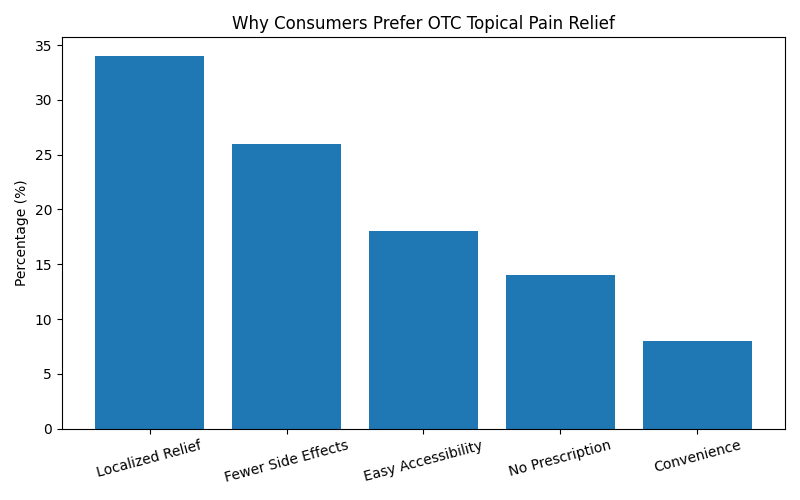
Why Consumers Prefer Topical OTC Pain Relief
| Reason | Response Rate |
|---|---|
| Faster Localized Relief | 34% |
| Fewer Side Effects | 26% |
| Easy Accessibility | 18% |
| No Prescription Required | 14% |
| Better Daily Convenience | 8% |
Consumer Preference Graph
Regional Market Insights
North America currently dominates the OTC topical pain relief segment due to high healthcare spending and strong OTC penetration. However, Asia-Pacific is emerging as the fastest-growing region because of increasing self-care adoption and retail expansion.
Regional Market Share Forecast
| Region | Estimated Share |
|---|---|
| North America | 42% |
| Europe | 26% |
| Asia-Pacific | 22% |
| Latin America | 6% |
| Middle East & Africa | 4% |
Distribution Channel Analysis
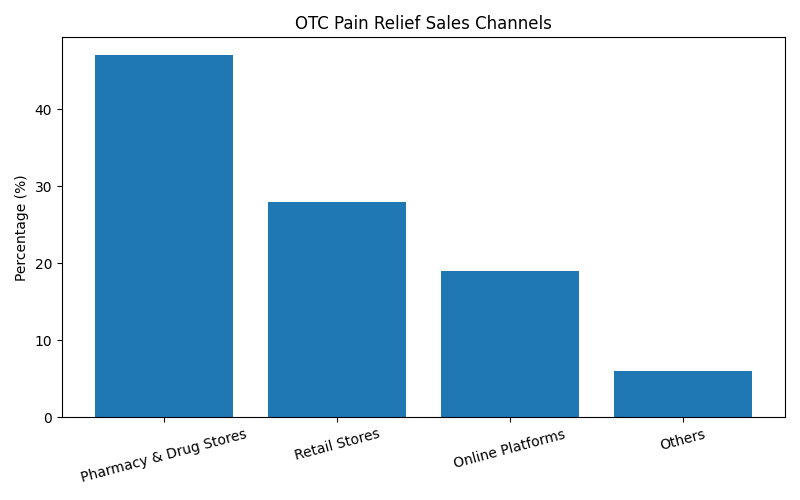
Pharmacies and drug stores remain the dominant channel for OTC topical pain relief products, while online healthcare retail is the fastest-growing segment.
Sales Channel Share
Innovation Trends
The topical pain relief industry is evolving rapidly with advancements in:
- Transdermal delivery systems
- Controlled-release patches
- Herbal & plant-based formulations
- Enhanced absorption technology
- Combination analgesic therapy
- Smart packaging & digital healthcare integration
Patch formulations are expected to become one of the fastest-growing product categories due to extended-release benefits and consistent dosing capability.
SWOT Analysis
| Strengths | Weaknesses |
|---|---|
| Strong OTC demand | Skin irritation risk |
| Rapid localized action | Limited penetration depth |
| Fewer systemic effects | Variable efficacy among users |
| High consumer convenience | Strong market competition |
| Opportunities | Threats |
|---|---|
| Growth in aging population | Regulatory changes |
| Expansion in emerging markets | Generic competition |
| Digital pharmacy growth | Price sensitivity |
| Sports medicine demand | Consumer skepticism |
Conclusion
The OTC topical pain relief segment represents a robust and expanding healthcare category supported by rising chronic pain prevalence, consumer preference for localized therapy, and increasing self-care adoption. Muscle and joint pain solutions are expected to remain a core driver of category growth over the next decade.
An integrated assessment of market trends, clinical efficacy, consumer behavior, and commercial scalability confirms that OTC topical pain relief solutions hold substantial long-term potential for manufacturers, healthcare brands, and global distributors.
With continuous innovation, strong retail penetration, and growing healthcare awareness, topical pain management products are positioned to become one of the most sustainable OTC wellness categories worldwide.
Get Full Case Study
Enter deatils to get full case study.