

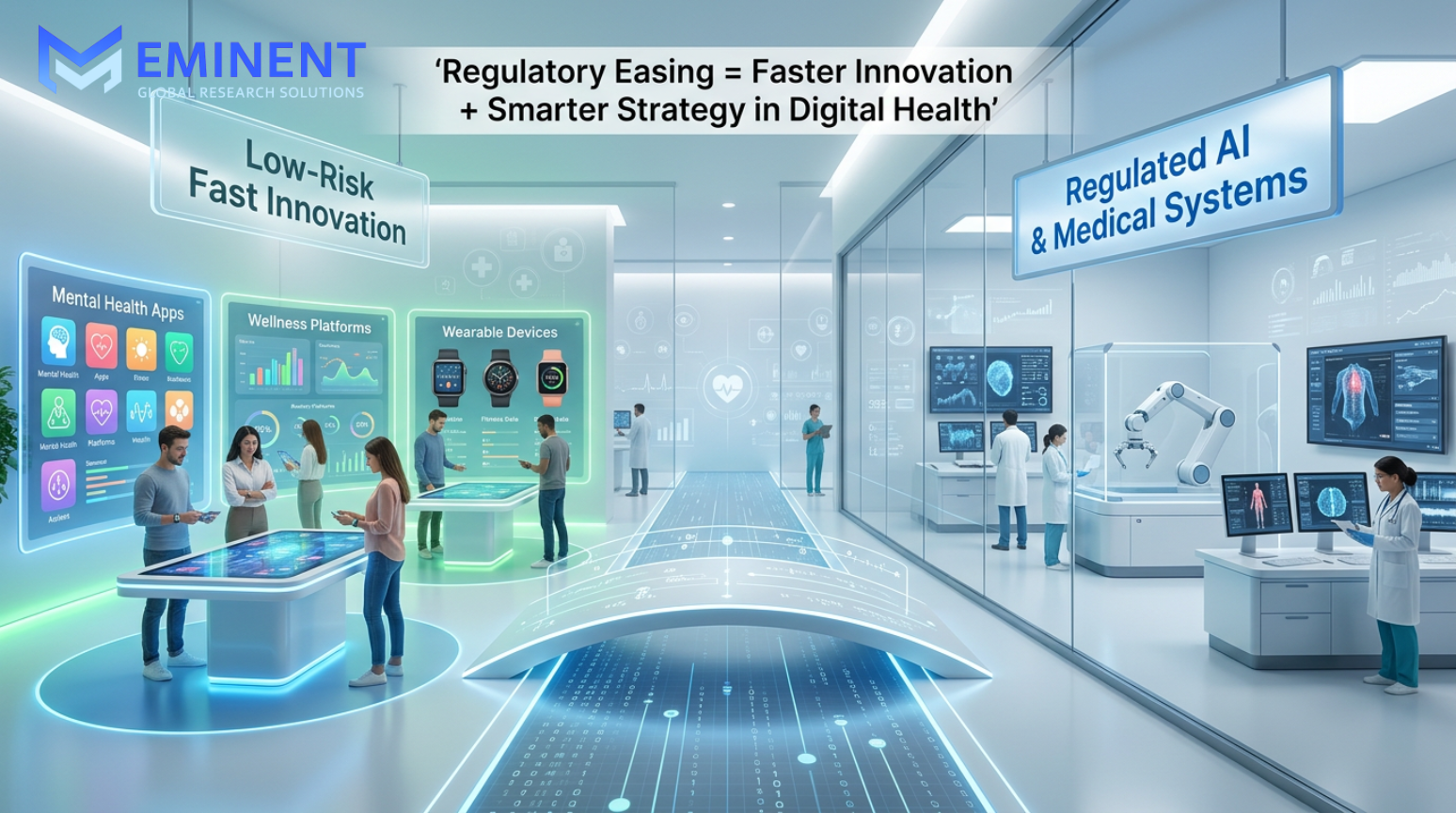
The evolving regulatory landscape in digital health is entering a pivotal phase. The U.S. Food and Drug Administration (FDA) is signaling a more flexible approach toward low-risk digital health tools, while maintaining rigorous oversight for high-risk, AI-driven clinical systems and software that functions as a medical device. At first glance, this may appear to be a straightforward compliance update. In reality, it represents a deeper strategic shift—one that forward-thinking organizations can leverage to accelerate innovation, optimize product portfolios, and gain competitive advantage.
For consulting firms and digital health leaders alike, this regulatory recalibration is not just about doing less compliance work—it’s about doing smarter business.
Understanding the Shift
Historically, regulatory frameworks have struggled to keep pace with the rapid evolution of digital health technologies. Mobile health apps, wellness platforms, remote monitoring tools, and AI-powered diagnostics have blurred traditional boundaries between consumer products and regulated medical devices.
The FDA’s updated stance reflects a risk-based approach:
- Low-risk tools (e.g., wellness apps, basic health trackers) face lighter regulatory scrutiny
- Moderate to high-risk systems, especially those influencing clinical decisions or powered by AI, remain tightly regulated
This distinction is crucial. It effectively creates a dual-track innovation ecosystem—one fast-moving and lightly regulated, the other controlled but essential for clinical-grade solutions.
Beyond Compliance: A Strategic Opportunity
For organizations operating in digital health, regulatory easing should not be viewed as a passive benefit. Instead, it offers three active strategic levers:
1. Portfolio Reconfiguration
Companies can reassess their product portfolios to identify which offerings can be repositioned as low-risk tools. This doesn’t mean diluting value—it means redefining how value is delivered.
For example:
- A diagnostic-support tool might be redesigned as a decision-support aid rather than a prescriptive system
- A monitoring solution could emphasize patient engagement and awareness, avoiding clinical claims
This repositioning allows faster market entry, reduced regulatory burden, and broader scalability.
2. Accelerated Time-to-Market
Reduced regulatory friction directly translates into faster development cycles. Organizations can:
- Launch MVPs (Minimum Viable Products) quicker
- Test features in real-world environments
- Iterate based on user feedback without prolonged approval delays
This agility is especially critical in competitive segments like digital therapeutics, remote care, and AI-enabled health insights.
3. Innovation Sandbox for AI
While AI-driven clinical systems remain regulated, the easing around low-risk tools creates a “sandbox” for experimentation.
Companies can:
- Pilot AI features in non-clinical contexts
- Collect data to strengthen future regulatory submissions
- Build user trust and adoption before scaling into regulated domains
In effect, low-risk pathways become a feeder system for high-impact, regulated innovations.
Implications for Consulting Strategy
For consulting firms like Eminent Global Research Solutions, this regulatory shift opens new advisory opportunities across multiple dimensions:
Strategic Advisory
Clients need guidance on how to:
- Reclassify products within the regulatory spectrum
- Align product features with risk categories
- Identify untapped low-risk innovation opportunities
This requires a blend of regulatory insight, product strategy, and market intelligence.
Go-to-Market Optimization
Regulatory easing enables new GTM strategies:
- Direct-to-consumer launches for wellness tools
- Partnerships with employers, insurers, and fitness platforms
- Subscription-based models instead of clinical reimbursement pathways
Consultants can help clients redesign commercialization strategies that align with reduced regulatory constraints.
Risk and Governance Frameworks
Even with easing, reputational and ethical risks remain. Organizations must:
- Maintain transparency in claims and functionality
- Ensure data privacy and cybersecurity
- Avoid “regulatory arbitrage” that could backfire
Advisory services around governance frameworks will become increasingly important.
The AI Factor: Where Regulation Still Holds Strong
It’s important not to misinterpret the FDA’s position. While low-risk tools benefit from flexibility, AI-driven systems that:
- Diagnose conditions
- Recommend treatments
- Influence clinical decision-making
are still firmly within regulatory oversight.
This creates a strategic balancing act:
- Move fast in low-risk domains
- Move carefully in high-risk AI applications
Organizations that master this balance will outperform competitors who either over-cautiously delay innovation or recklessly bypass compliance.
Redefining Competitive Advantage
The companies that win in this new environment will not simply be the most compliant—they will be the most adaptive.
Key differentiators will include:
- Regulatory intelligence embedded in product design
- Modular product architectures that allow quick repositioning
- Data strategies that support both low-risk and high-risk pathways
- Cross-functional alignment between legal, product, and commercial teams
In other words, regulation is no longer a bottleneck—it’s becoming a design parameter.
A Call to Action for Digital Health Leaders
This moment demands proactive leadership. Organizations should immediately:
- Conduct a regulatory impact audit of existing products
- Identify opportunities for low-risk repositioning
- Redesign product roadmaps to incorporate faster innovation cycles
- Build dual-track strategies for low-risk and high-risk offerings
- Engage consulting partners to align regulatory shifts with business growth
Conclusion
The FDA’s move toward regulatory easing for low-risk digital health tools is more than a policy update—it’s a structural shift in how innovation can be pursued in healthcare.
For organizations willing to rethink their strategies, this is a rare opportunity to:
- Accelerate product development
- Expand market reach
- Build smarter, more adaptive portfolios
At Eminent Global Research Solutions, we see this not as a relaxation of rules, but as an invitation to lead differently. The future of digital health will belong to those who understand that compliance and innovation are no longer opposing forces—they are interconnected drivers of growth.