

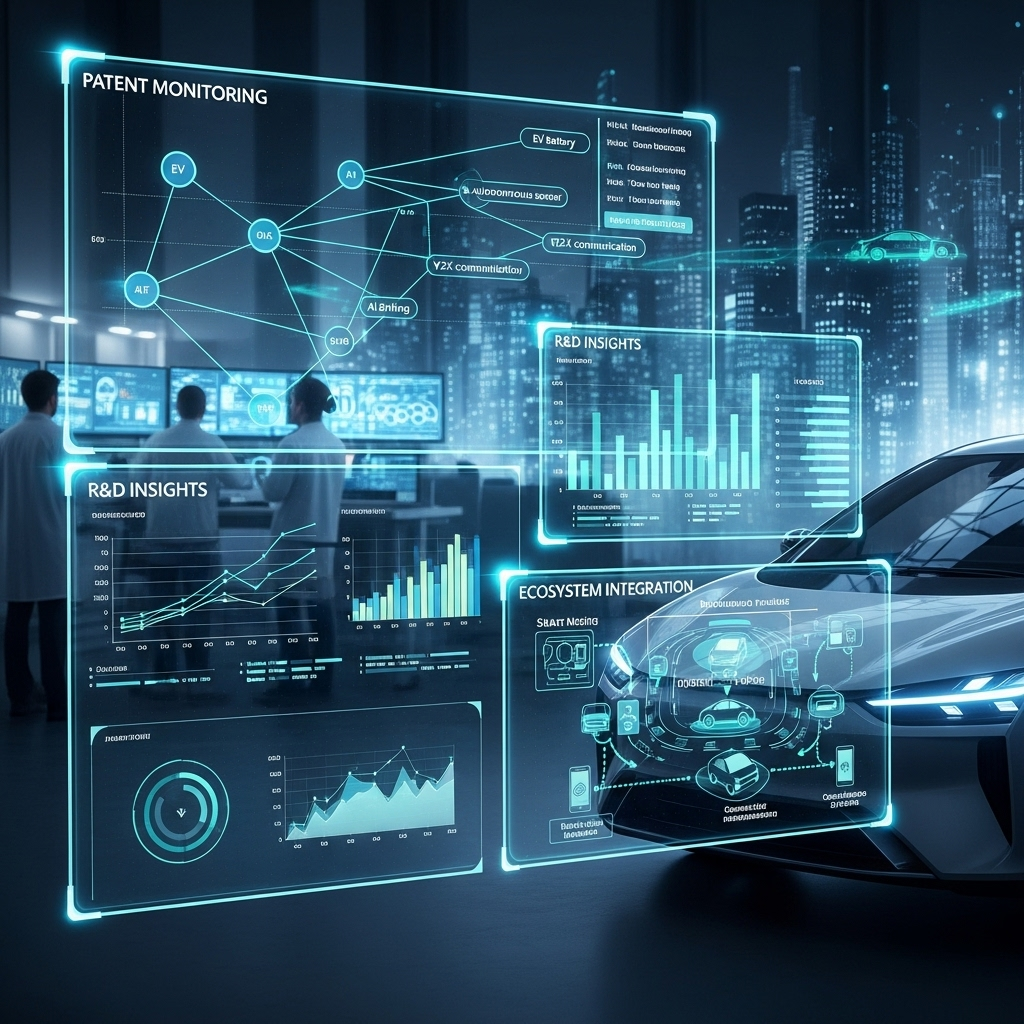
The automotive industry is undergoing one of the most disruptive transformations in its history. From electric vehicles (EVs) and autonomous driving to connected car ecosystems, innovation is accelerating at an unprecedented pace. But behind every breakthrough lies a web of patents, research, and strategic investments. This is where technology intelligence—the systematic monitoring and analysis of patents, R&D activities, and emerging technologies—becomes a powerful tool for industry leaders.
Why Technology Intelligence Matters in Mobility
Automotive innovation is not just about designing better engines or sleeker models anymore. It is about anticipating the technologies that will define future mobility. Technology intelligence helps companies:
Identify white spaces where new innovations can thrive.
Benchmark competitors to understand their R&D priorities.
Track emerging technologies before they reach commercial maturity.
Guide investment decisions with data-driven insights.
By turning complex patent and R&D data into actionable intelligence, automotive companies can avoid blind spots and maintain a competitive edge.
Driving Forces in Future Mobility
1. Electric Vehicles (EVs) and Battery Technology
The EV revolution is reshaping the global mobility landscape. Companies are racing to develop:
Solid-state batteries for higher energy density and safety.
Fast-charging solutions to reduce range anxiety.
Recycling technologies for sustainable battery lifecycles.
Through patent monitoring, organizations can track who is leading in next-gen battery innovation and identify potential partners or acquisition targets.
2. Autonomous Driving and Smart Mobility
Autonomous vehicles (AVs) are no longer science fiction. With advancements in AI algorithms, LiDAR, radar, and sensor fusion, the industry is progressing toward safe, self-driving mobility.
Technology intelligence helps uncover where the major patent clusters are forming—whether in perception systems, decision-making software, or safety frameworks—giving companies the ability to anticipate market leaders and regulators’ priorities.
3. Connected Car Ecosystems
Tomorrow’s vehicles will not just transport people—they will connect seamlessly with cities, devices, and infrastructure. From vehicle-to-everything (V2X) communication to in-car infotainment powered by AI, connectivity is becoming a critical competitive battleground.
Tracking global R&D insights allows businesses to stay ahead of cybersecurity risks, interoperability standards, and evolving customer demands.
The Competitive Advantage of Technology Intelligence
In such a fast-moving environment, gut feeling is no longer enough. Companies that use technology intelligence effectively can:
Spot emerging startups and disruptive technologies early.
Align R&D strategies with market demand.
Strengthen IP portfolios to defend against litigation.
Position themselves as innovation leaders in a crowded market.
Conclusion: Data-Driven Innovation is the Road Ahead
The future of mobility will be defined by electrification, autonomy, and connectivity. But the companies that succeed will be those that harness technology intelligence to transform raw data into strategic foresight. By leveraging patent monitoring and R&D insights, automotive leaders can accelerate innovation, reduce risks, and shape the next generation of mobility.