

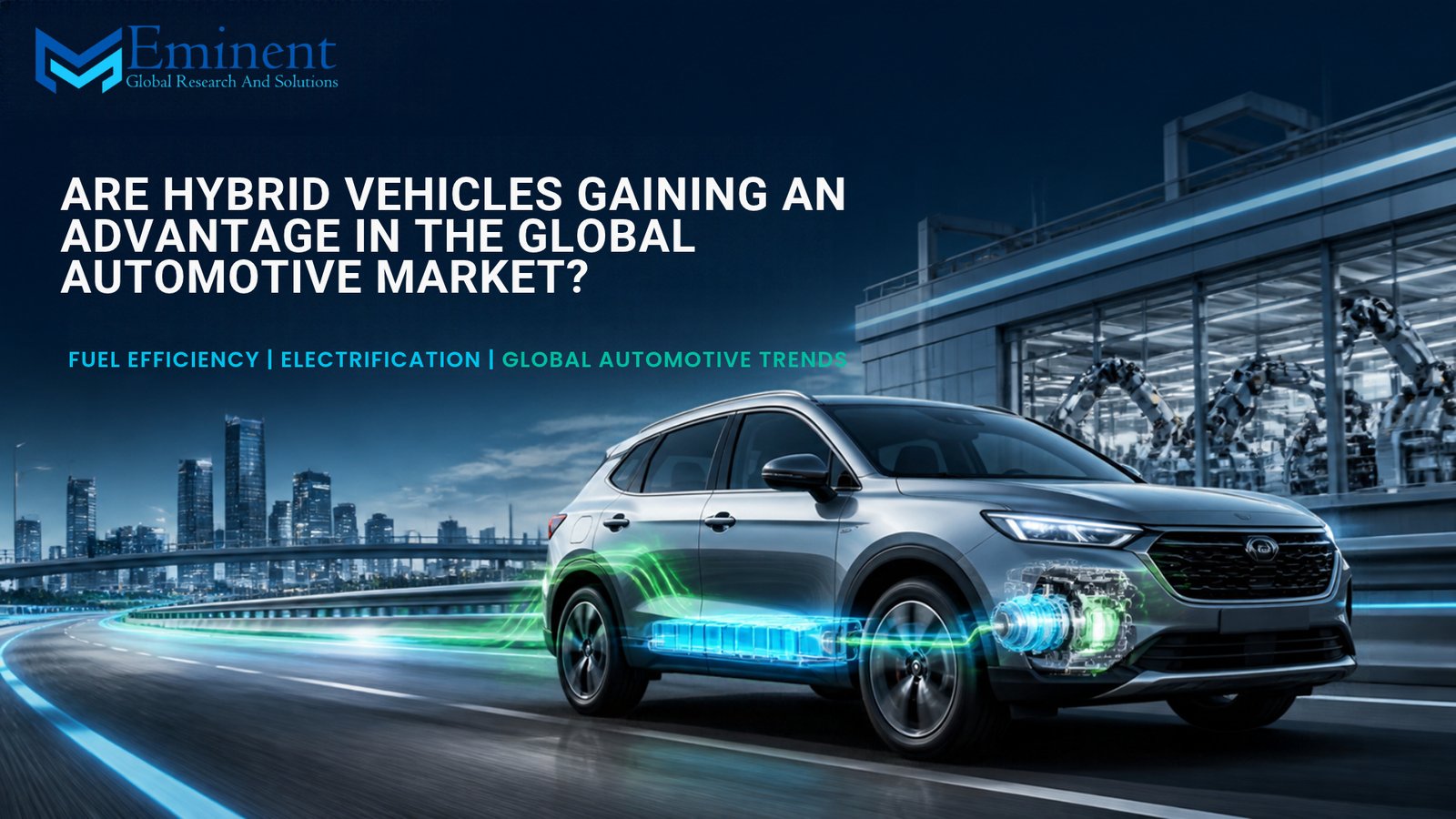
Are Hybrid Vehicles Gaining an Advantage in the Global Automotive Market?
Published: 11 November 2026
Introduction
The global automotive industry is undergoing a major transformation as manufacturers explore different technologies to improve fuel efficiency, reduce emissions and meet changing consumer expectations. While battery-electric vehicles (BEVs) have received considerable attention, hybrid vehicles are gaining renewed interest across several important automotive markets.
Hybrid vehicles combine an internal combustion engine with an electric motor, allowing them to use fuel more efficiently than many conventional petrol-powered vehicles. Unlike fully electric cars, conventional hybrids do not require external charging, making them an attractive option for consumers who want improved fuel economy without changing their driving habits.
Recent sales developments from Toyota and Hyundai suggest that hybrid technology is becoming an increasingly important part of automotive manufacturers’ growth strategies. This raises an important question: Are hybrid vehicles gaining a competitive advantage in the global automotive market?
Why Is Demand for Hybrid Vehicles Increasing?
Several factors are contributing to the growing interest in hybrid vehicles.
1. Improved Fuel Efficiency
Fuel economy remains an important consideration for vehicle buyers. Hybrid systems allow electric motors to support petrol engines during acceleration and low-speed driving.
Regenerative braking also captures energy that would otherwise be lost during braking and uses it to recharge the battery.
These technologies can help reduce fuel consumption, particularly in urban driving conditions.
2. No Dependence on External Charging
One of the main advantages of conventional hybrid vehicles is that they do not require external charging infrastructure.
Drivers can refuel at existing petrol stations while benefiting from electric assistance. This makes hybrids particularly attractive in regions where public charging networks are still developing.
3. Changing Consumer Preferences
Consumers are increasingly comparing vehicle ownership costs, fuel efficiency, maintenance requirements and environmental impact before purchasing new cars.
Hybrid vehicles provide an intermediate option for buyers who are interested in electrification but are not yet ready to move entirely towards battery-electric transportation.
4. Expanding Manufacturer Portfolios
Automotive manufacturers are introducing more hybrid models across passenger cars, SUVs and commercial vehicle segments.
Companies are also investing in improved battery systems, electric motors and powertrain technologies to make hybrid vehicles more efficient and competitive.
What Do Recent Automotive Developments Reveal?
Recent announcements from major manufacturers demonstrate the growing importance of hybrid technology.
Toyota Strengthens Its Hybrid Strategy
On 5 November 2026, Toyota raised its annual operating-profit forecast by 15% to 3.9 trillion yen for the financial year ending March 2027.
The company’s July–September operating income increased by 34%, supported by stronger demand for higher-margin hybrid vehicles, a weaker yen and lower US tariff-related costs.
Toyota’s performance highlights how its long-standing investment in petrol-electric hybrid technology is helping it respond to changing consumer demand and competitive pressure in the global automotive industry.
Hyundai Reports Strong Hybrid Sales Growth
Hyundai Motor reported that its global hybrid vehicle sales increased by 19% to 524,437 units during the first nine months of 2026.
North American hybrid sales grew by 56% during the same period.
The company is expanding its product portfolio and investing in local production capacity to respond to changing demand across international markets.
These developments demonstrate that hybrid vehicles are becoming an important component of manufacturers’ broader electrification strategies.
How Are Hybrid Vehicles Different from Fully Electric Vehicles?
Although both technologies support automotive electrification, their operating systems and infrastructure requirements differ.
Conventional Hybrid Electric Vehicles (HEVs): Combine a petrol engine with an electric motor and a relatively small battery. The battery is charged through regenerative braking and the engine.
Plug-in Hybrid Electric Vehicles (PHEVs): Combine an internal combustion engine with a larger rechargeable battery. They can travel a certain distance using electric power before the combustion engine becomes necessary.
Battery Electric Vehicles (BEVs): Operate entirely through electric motors and rechargeable batteries, without a conventional petrol or diesel engine.
Each technology serves different consumer requirements. Hybrid vehicles can offer convenience where charging infrastructure is limited, while fully electric vehicles eliminate direct exhaust emissions during driving.
Which Regions Are Driving Hybrid Vehicle Demand?
North America
North America has become an important growth market for hybrid vehicles. Demand for fuel-efficient SUVs and passenger cars has encouraged manufacturers to expand their hybrid portfolios.
Recent sales growth reported by Toyota and Hyundai demonstrates the commercial importance of this market.
Asia-Pacific
Asia-Pacific remains a major region for hybrid vehicle manufacturing and adoption.
Japan has a well-established hybrid automotive industry, while China and India are important markets where manufacturers are competing across conventional, hybrid and fully electric vehicle categories.
Growing urbanisation, fuel economy requirements and changing consumer preferences are influencing the development of these markets.
Europe
European automotive manufacturers are navigating stricter environmental requirements and changing consumer demand.
Hybrid and plug-in hybrid vehicles continue to form part of several manufacturers’ electrification strategies, although battery-electric vehicles remain central to the region’s long-term transition towards lower-emission transportation.
What Challenges Could Affect Hybrid Vehicle Growth?
Despite their advantages, hybrid vehicles face several commercial and technological challenges.
Battery and Component Costs: Hybrid powertrains require batteries, electric motors, power electronics and additional control systems. These components can increase manufacturing complexity and vehicle costs.
Competition from Electric Vehicles: Battery-electric manufacturers continue to improve driving range, charging technology and vehicle affordability. This could limit hybrid market expansion in regions with developed charging infrastructure.
Dependence on Fossil Fuels: Conventional hybrids still use petrol or diesel. They reduce fuel consumption but do not eliminate dependence on fossil fuels.
Manufacturing Complexity: Automakers must develop and maintain expertise in both combustion engines and electric powertrains. This can increase engineering, production and supply-chain requirements.
Regional Market Differences: Consumer preferences, government policies, fuel prices and charging infrastructure vary considerably across countries. A powertrain strategy that succeeds in one market may not perform equally well in another.
What Is the Future Outlook for the Hybrid Vehicle Market?
The hybrid vehicle industry is expected to remain an important part of the global automotive transition.
According to Fortune Business Insights’ October 2026 market report, the global hybrid vehicle market was valued at approximately USD 312.52 billion in 2025 and is projected to reach USD 335.21 billion in 2026. The report forecasts that the market could reach USD 570.78 billion by 2034.
Manufacturers are likely to continue developing more efficient hybrid powertrains, advanced battery systems and improved vehicle platforms.
The future automotive market may not be dominated by a single powertrain technology. Instead, manufacturers could increasingly adopt diversified strategies involving conventional vehicles, hybrids, plug-in hybrids and battery-electric vehicles.
Eminent’s Perspective
Hybrid vehicles are becoming an important strategic opportunity for automotive manufacturers as global markets move towards electrification at different speeds.
Their commercial appeal comes from the balance between fuel efficiency, driving convenience and compatibility with existing refuelling infrastructure. For manufacturers, hybrid technology also provides an opportunity to diversify product portfolios while responding to regional consumer requirements.
However, long-term competitiveness will depend on manufacturing costs, battery technology, regulatory developments and the pace of battery-electric vehicle adoption.
Eminent Global Research Solutions believes that understanding these market differences is essential for automotive businesses evaluating investment opportunities, product development strategies and international market expansion.
Market research, competitive intelligence and technology assessment can help manufacturers identify emerging opportunities and make informed decisions in an increasingly competitive automotive environment.
Conclusion
Hybrid vehicles are gaining an advantage in several global automotive markets because they offer a practical balance between conventional fuel-powered transportation and full electrification.
Recent sales growth from Toyota and Hyundai demonstrates that hybrid technology continues to attract consumer demand and strategic investment.
Nevertheless, hybrids are not a universal replacement for battery-electric vehicles. Their long-term success will depend on regional market conditions, fuel prices, technological improvements and evolving environmental regulations.
For automotive manufacturers, maintaining a flexible powertrain strategy may be essential to competing successfully in the next phase of global automotive transformation.
Post a Comment